Socio-Religious Reform Movements
Overview
| Cue Words | Notes |
|---|---|
| 19th Century Reform Movements | 19th-century "Indian Renaissance" was a quest for social and religious modernization divided into Reformist (Brahmo, Prarthana, Aligarh) and Revivalist (Arya, Deoband) movements targeting social evils like Sati, child marriage, and caste hierarchy. |
1. Hindu Reform: The Pioneers (Brahmo & Prarthana)
| Cue Words | Notes |
|---|---|
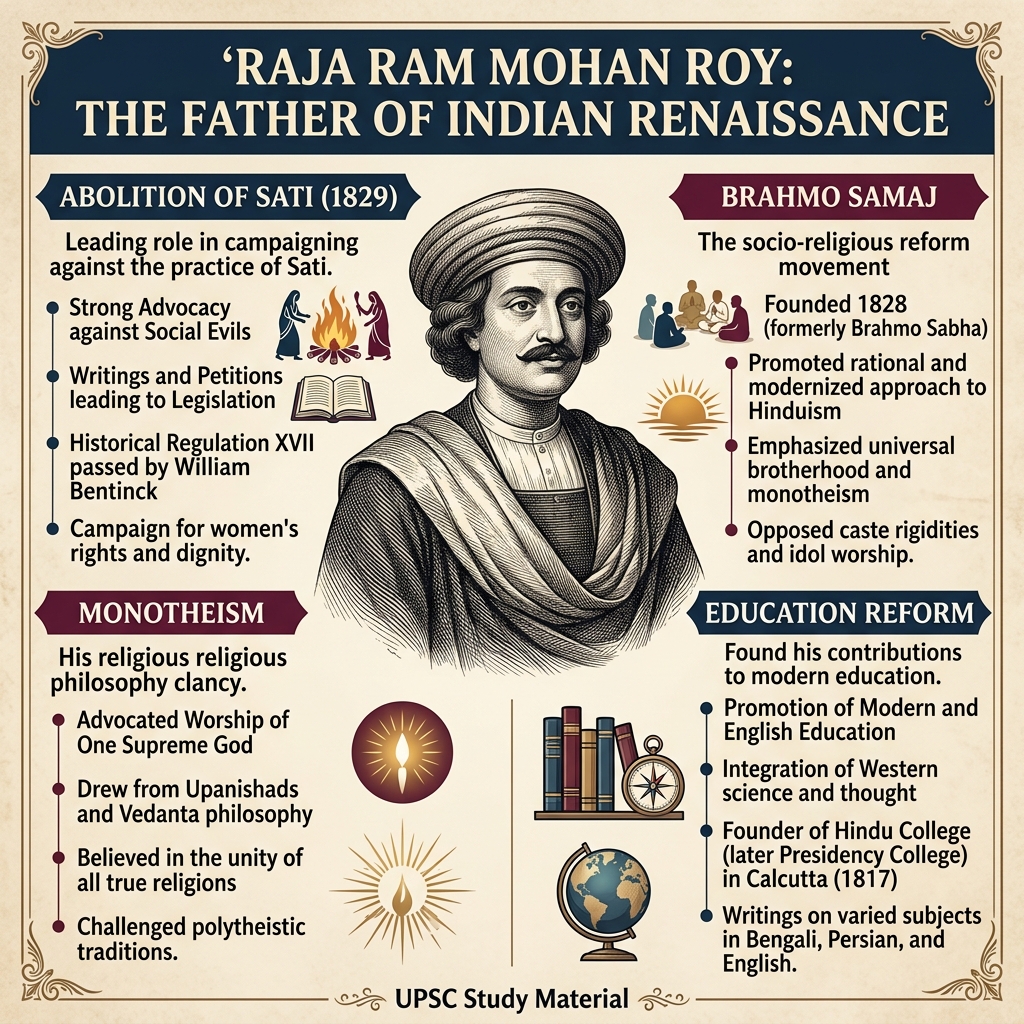
| Brahmo Samaj (1828) | Founded by Raja Ram Mohan Roy ("Father of Indian Renaissance"). Promoted monotheism and reason, opposing idol worship and ritualism. |
| Abolition of Sati (1829) | Regulation XVII passed by Lord William Bentinck due to Ram Mohan Roy's campaigning. |
| Brahmo Samaj Splits | Debendranath Tagore (Adi Brahmo Samaj) vs Keshub Chandra Sen (Brahmo Samaj of India). Sen's faction split into Sadharan Brahmo Samaj (1878). |
| Prarthana Samaj (1867) | Founded by Atmaram Pandurang in Bombay; later led by M.G. Ranade and R.G. Bhandarkar, focusing on social reform in Maharashtra. |
2. Hindu Reform: Revivalists & Ramakrishna Mission
| Cue Words | Notes |
|---|---|
| Arya Samaj (1875) | Founded by Dayananda Saraswati. Slogan: "Back to the Vedas". Introduced Shuddhi (reconversion) and DAV schools; authored Satyarth Prakash. |
| Theosophical Society | Founded by Blavatsky & Olcott (USA); led by Annie Besant in Adyar (Madras). Founded Central Hindu College (Banaras). |
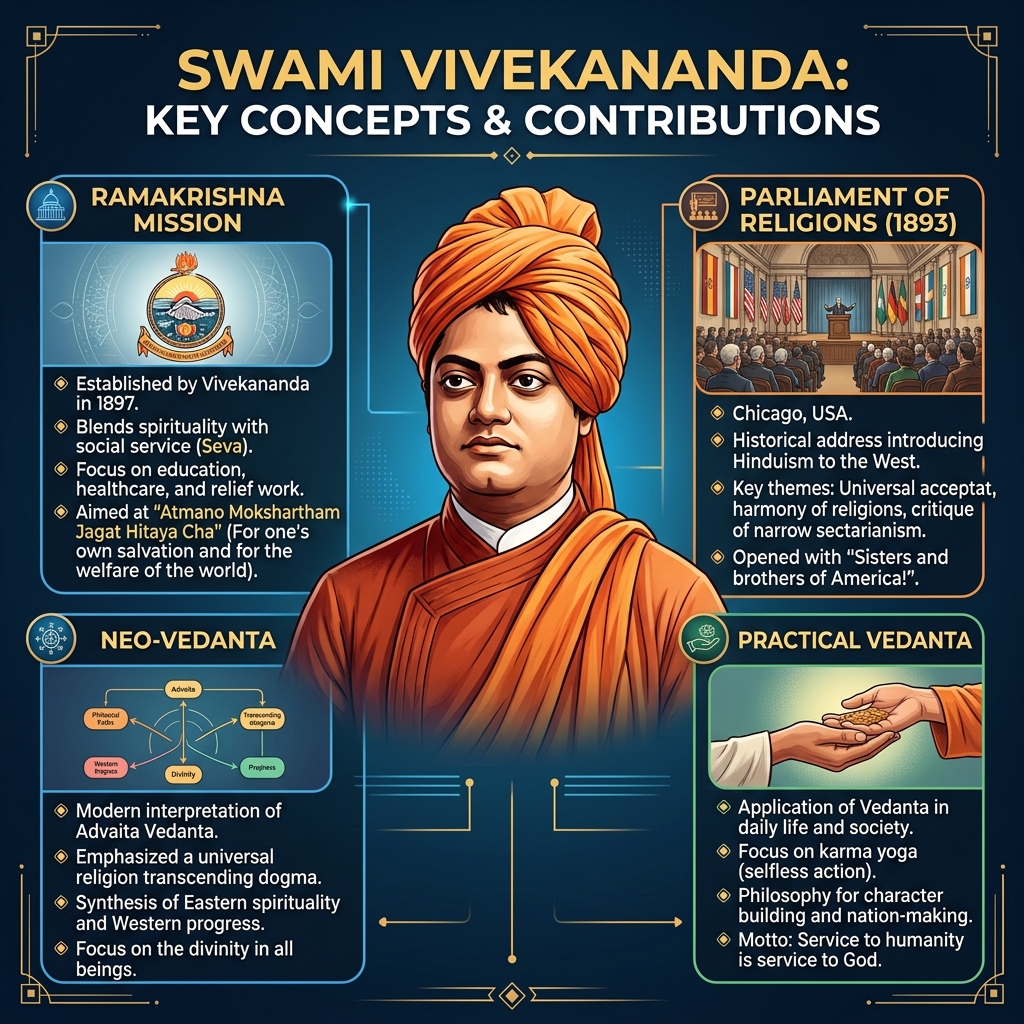
| Ramakrishna Mission (1897) | Founded by Swami Vivekananda ("Practical Vedanta"—service to humanity is service to God). Address at Chicago Parliament of Religions (1893). |
3. Muslim, Sikh & Parsi Reforms
| Cue Words | Notes |
|---|---|
| Aligarh Movement | Founded by Sir Syed Ahmad Khan. Promoted Western science/education; established MAO College (1875) (later AMU). |
| Deoband & Ahmadiyya Movements | Deoband (1866): Revivalist anti-British school founded by Nanautavi & Gangohi. Ahmadiyya (1889): Founded by Mirza Ghulam Ahmad. |
| Sikh & Parsi Reforms | Akali Movement (1920s): Liberated Gurdwaras from corrupt Mahants, leading to Sikh Gurdwaras Act 1925. Parsi Reform (Rahnumai Mazdayasnan Sabha 1851): Naoroji Furdonji & Dadabhai Naoroji (journal Rast Goftar). |
4. Lower Caste Assertions & Women's Legislation
| Cue Words | Notes |
|---|---|
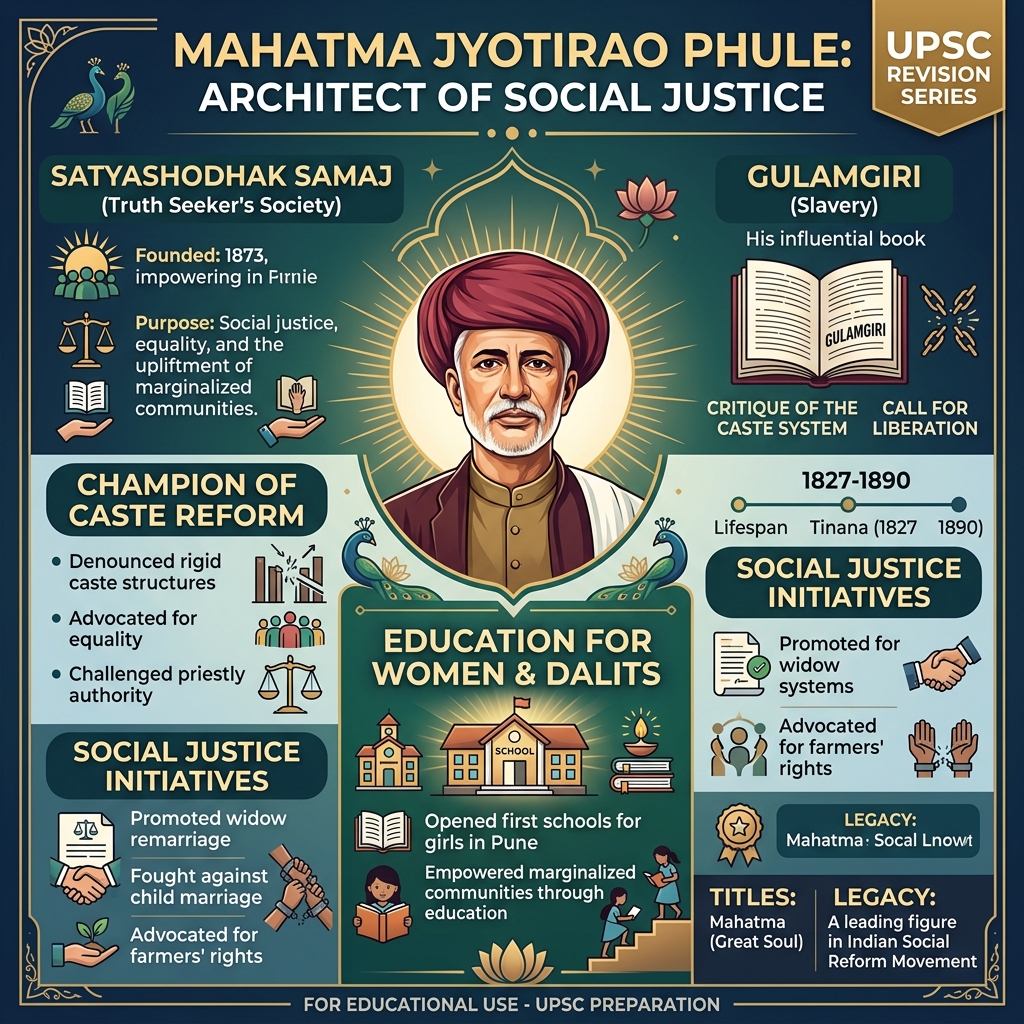
| Satyashodhak Samaj (1873) | Founded by Jyotirao Phule (authored Gulamgiri) to liberate Bahujans from Brahmanical hegemony. |
| Sri Narayana Guru & Self-Respect Movement | Sri Narayana Guru: "One Caste, One Religion, One God for Man" (SNDP movement in Kerala). Self-Respect Movement: Periyar (E.V. Ramasamy) in Tamil Nadu. |
| Key Women's Legislations | 1829: Sati Abolition (Bentinck). 1856: Widow Remarriage Act (Lord Dalhousie/Canning & Ishwar Chandra Vidyasagar). 1891: Age of Consent Act (12 yrs, Behramji Malabari). 1930: Sarda Act (14 girls, 18 boys). |
UPSC High-Yield Recall & Exam Traps
| Cue Words | Notes |
|---|---|
| Ram Mohan Roy Philosophy | Did not advocate total Westernization; sought synthesis of Western rationalism and Indian monotheistic scriptures. |
| Arya Samaj Dual Nature | Revivalist in religious doctrine ("Back to Vedas") but modern in social/educational reform. |
| Vidyasagar Focus | Promoted female education and widow remarriage alongside traditional Sanskrit scholarship. |
| Self-Respect Movement Distinction | Explicitly anti-religious and anti-caste, unlike traditional religious reform groups. |
🎓 Young Bengal & Conservative Reaction
- Young Bengal Movement: Led by Henry Louis Vivian Derozio (Anglo-Indian teacher at Hindu College, Calcutta) in the late 1820s–30s; his radical students ("Derozians") championed free thought, rationalism, and questioned religious orthodoxy.
- Dharma Sabha (1830): Founded by Radhakanta Deb as a conservative Hindu counter-organization opposing Ram Mohan Roy's campaign against Sati and other reforms — illustrating that reform faced organized orthodox resistance, not just administrative hurdles.
Supplemental Asset Directory
- Raja Ram Mohan Roy: Father of Indian Renaissance Infographic:
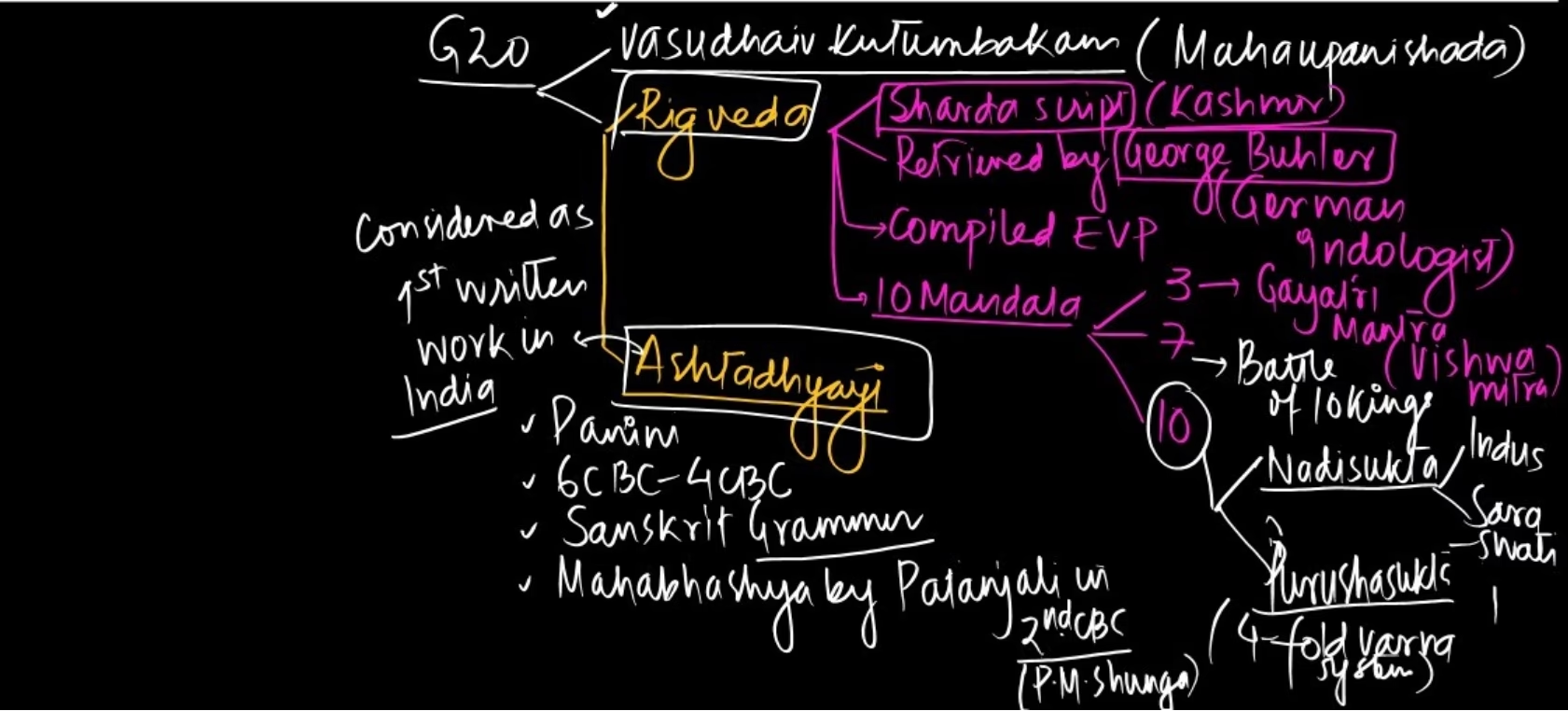
- Rigveda Manuscript: UNESCO Global Heritage:
- Shankaracharya Peethas: Centers of Philosophical Revival:
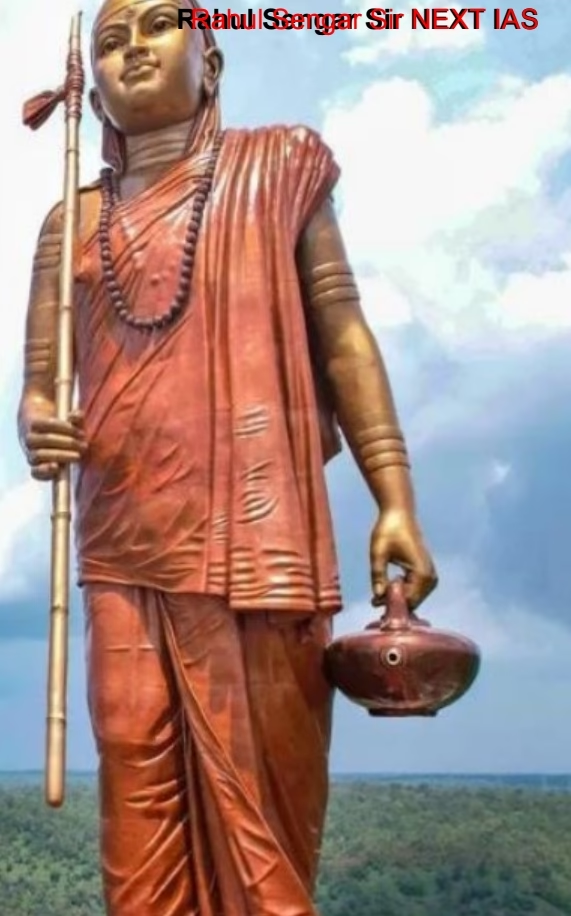
- Statue of Oneness: Adi Shankaracharya Heritage:
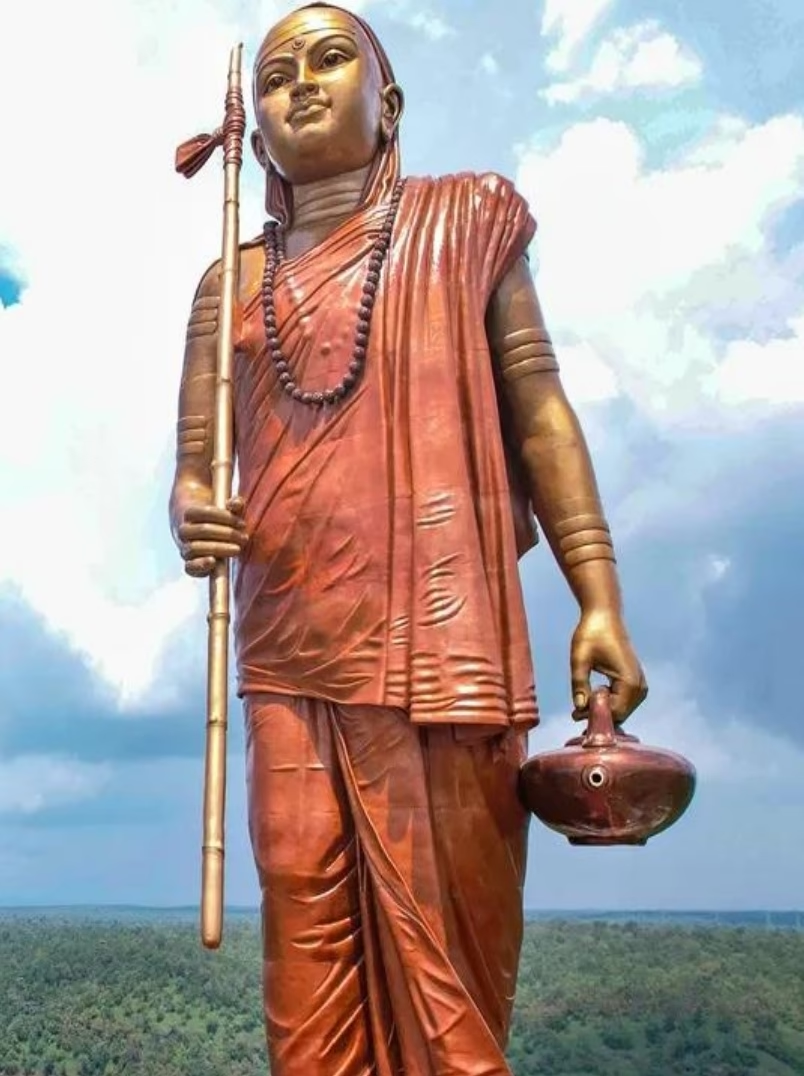
- Swami Vivekananda: Neo-Vedanta and Ramakrishna Mission Infographic:
- Jyotirao Phule: Social Justice and Caste Reform Infographic: