Vedic Period (1500–600 BCE)
Overview
| Cue Words | Notes |
|---|---|
| Vedic Period Overview | Critical transition from pastoral, semi-nomadic Indo-Aryan tribes in Sapta Sindhu to settled agrarian society in Ganga-Yamuna doab. Composition of Vedas, evolution of varna system, and rise of Janapadas. |
1. Early vs Later Vedic — Comparison
| Cue Words | Notes |
|---|---|
| Geography & Economy | Early: Punjab/Sapta Sindhu; Pastoralism, cattle wealth, barley (Yava), voluntary tax (Bali), Ochre-Coloured Pottery (OCP). Later: Ganga-Yamuna doab; Agrarian (wheat Godhuma, rice Vrihi), iron tools (krishna ayas), regular taxes (Bali, Bhaga, Shulka), Painted Grey Ware (PGW). |
| Polity & Assemblies | Early: Tribal chief (Rajan, elected), tribal unit (Jana), active assemblies (Sabha, Samiti, Vidatha). Later: Hereditary monarch (Rajasuya, Ashvamedha, Vajapeya rituals), territorial state (Janapada, Rashtra), Vidatha disappeared. |
| Society & Women | Early: Egalitarian, occupation-based Varna, high status of women (attended assemblies, poetesses Apala, Ghosha, Lopamudra). Later: Birth-based rigid Varna (Dwija vs Chandalas), decline in women's status, Gotra & 4 Ashramas established. |
| Religion & Deities | Early: Naturalistic polytheism (Indra, Agni, Varuna, Soma). Later: Complex rituals/sacrifices, supreme deities (Prajapati, Vishnu, Rudra). |
2. Important Vedic Terminology & Rituals
| Cue Words | Notes |
|---|---|
| Key Terminology | Gavisthi (search/war for cows); Duhitri (daughter/cow milker); Goghna (guest); Sangrihitri (treasurer); Bhagadugha (tax collector); Spasa (spy); Panis (traders). |
| Royal Rituals & Sacrifices | Ashvamedha (unhindered horse movement for territorial sovereignty); Vajapeya (chariot race for royal prestige); Rajasuya (consecration ritual legitimizing kingship). |
| Rigvedic Rivers | Sindhu (Indus), Vitasta (Jhelum), Asikni (Chenab), Parusni (Ravi), Vipasa (Beas), Sutudri (Sutlej), Drishadvati (Chautang). |
3. Vedic Literature — Vedas & Upanishads
| Cue Words | Notes |
|---|---|
| Four Vedas | Rigveda (Hymns/lyrics, priest Hotri, Aitareya/Kausitaki); Samaveda (Chants, priest Udgatri); Yajurveda (Rituals, priest Adhvaryu, Satapatha Brahmana); Atharvaveda (Spells/charms, priest Brahman). |
| Key Upanishads & Sayings | Mundaka Upanishad: "Satyameva Jayate". Brihadaranyaka: Yagnavalkya-Gargi debate, Aham Brahmasmi. Chandogya: Tat Tvam Asi. Katha: Nachiketa-Yama dialogue. Mahopanishad: Vasudhaiva Kutumbakam. |
| Rigveda Mandalas | Mandala III (Visvamitra, Gayatri Mantra for Savitri); Mandala VII (Vashistha, Ten Kings War / Dasrajan on Parusni river); Mandala X (Purushasukta, first mention of Varna). |
👑 Vedic Political Offices & Social Units
- Key Offices (beyond Rajan): Purohita (chief priest-advisor), Senani (military commander), Gramani (village head, later a provincial official).
- Assemblies (age order): Vidatha (oldest, folk assembly for all activities) → Sabha (council of elders) → Samiti (general assembly, could elect/depose the Rajan).
- Social Units (ascending): Kula (family) → Grama (village) → Vish (clan) → Jana (tribe).
UPSC High-Yield Recall & Exam Traps
| Cue Words | Notes |
|---|---|
| Satyameva Jayate Source | Originates from Mundaka Upanishad (Atharvaveda). |
| Gayatri Mantra & Dasrajan | Gayatri Mantra in Mandala III (Visvamitra); Dasrajan War in Mandala VII (Vashistha, fought on Parusni/Ravi). |
| Varna System Origin | Purushasukta in 10th Mandala of Rigveda. |
| Iron Age Introduction | Iron (krishna ayas) introduced in Later Vedic period (~1000 BCE, Atranjikhera). |
🐎 Sinauli Chariot Burials & the OCP-Copper Hoard Debate
- Sinauli (Baghpat, UP, 2018 ASI excavation): Full-sized solid-disk-wheel bullock/horse-drawn carts and coffin burials with copper anthropomorphic figures, dated by ASI to c. 2000–1800 BCE — pre-dates the conventional Later Vedic spoked-wheel chariot/horse complex, so its cultural identity (post-Harappan vs. early Vedic) remains actively debated among archaeologists rather than settled.
- Ochre Coloured Pottery (OCP) & Copper Hoard cultures: Found across the Ganga-Yamuna doab (Bisauli, Rajpur Parsu) roughly contemporary with Late Harappan decline; some scholars associate them with early Rigvedic-period migrants, but the identification is a hypothesis, not a proven link — a genuine ongoing historiographical debate, not a settled fact.
Supplemental Asset Directory
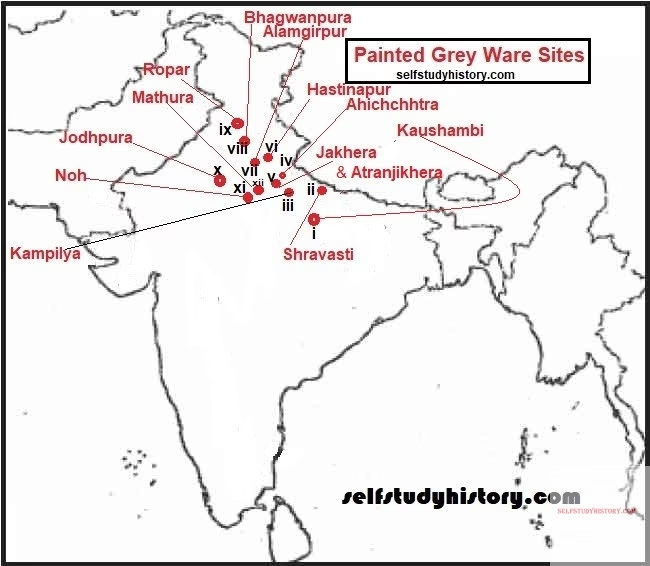
- Painted Grey Ware (PGW) Distribution Map:
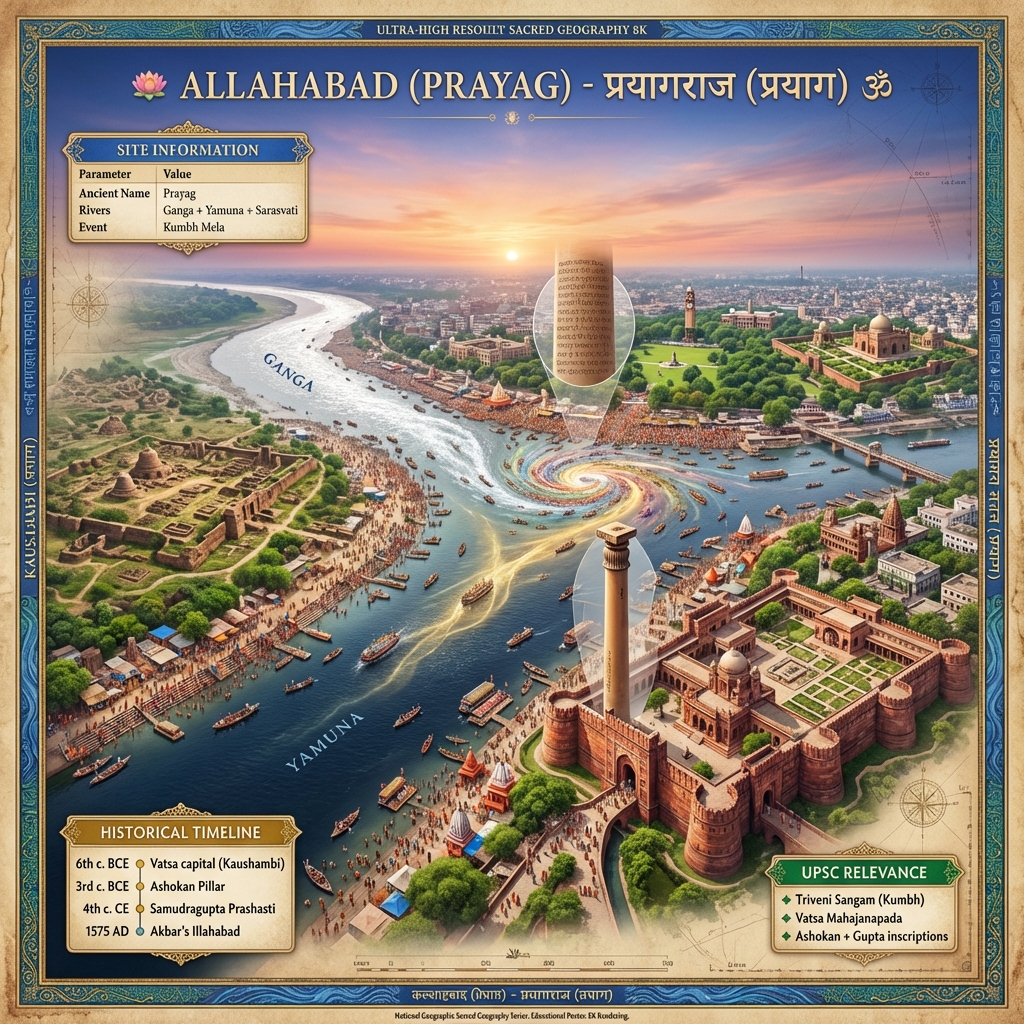
- Prayag Sangam Allahabad:
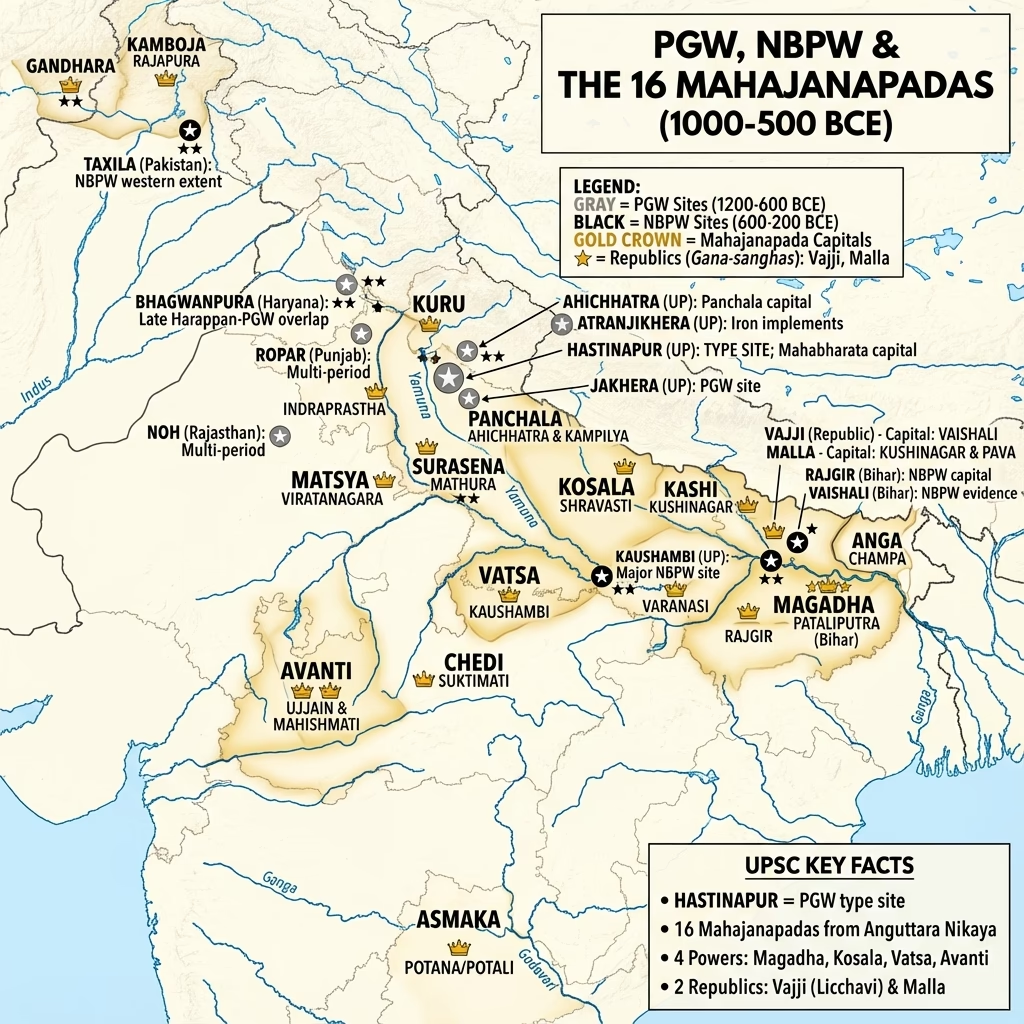
- PGW & NBPW Cultures Map:
I'll inspect existing Cornell Notes examples so the converted sections match the project's VitePress format exactly.Parsing the source carefully and producing zero-loss Cornell/VitePress markdown. Writing the full conversion to a file for completeness.Zero-loss Cornell conversion is ready (tags balanced: 28 sections · 115 rows). Full markdown: