Skip to content

History Current Affairs (2023-2025) - Prelims

> Source: Rahul Sengar Sir (Next IAS) - Ancient and Art & Culture Prelims 2025

Ancient Universities
Identify the key current affairs updates regarding Ancient Universities.
  • Location Godala (Bihar), 8-12 km from Bhagalpur
  • Established by King Dharmapala of Pala Dynasty (late 8th - early 9th century AD)
  • Purpose Response to perceived decline in educational standards at Nalanda University
  • Specialization Leading hub for Tantric Buddhism and Vajrayana Buddhism
  • Students Over 1,000 students and 100 teachers from across India and beyond
  • International reputation Major center of learning
  • Destruction Bakhtiyar Khalji around 1203 AD

Important Temples
Identify the key current affairs updates regarding Important Temples.
  • Also called Dakshina Meru (Meru of the South)
  • Location Banks of Kaveri River, Thanjavur
  • Builder Emperor Rajaraja Chola I (985 CE - 1015 CE)
  • Distinction First all-granite temple in the world
  • Style Fully realised Dravidian architecture
  • Principal deity Shiva (Dakshinamurthi form - Teaching pose)
  • UNESCO Status Part of "Great Living Chola Temples" (with Gangaikonda Cholapuram and Airavatesvara temples)
  • Kumbhabhishekam Only 5 ceremonies held so far
  • Later additions Shrines added by Pandyas, Vijayanagara rulers, and Marathas

Rajaraja Chola I (Arulmozhi Varman):
  • Title: Ulakalanda Perume (the great one who measured the earth like Trivikrama)
  • Titles: Jayangonda, Pandya-kulasani, Singalantaka, Colamartanda, Telingakulakala
  • Military expeditions: Sri Lanka (Rajaraja I), SriVijaya (Rajendra I)
  • Encouraged Sri Mara Vijayottungavarman (Sailendra ruler of Sri Vijaya) to build Buddhist Vihara at Nagapattinam
  • Innovation: Started prefacing stone records with official prasasti

  • Temples 5 temples (11th-12th CE)
  • Style Hemadpanthi style of architecture
  • Location Near Satara; Sangam Mahuli at meeting of Krishna and Yenna rivers
  • Notable structures Samadhis of Maratha queens Rani Tarabai Bhosle and Rani Yesho Bai Bhosle
  • NMA To submit report on comprehensive development

  • Location Garhwal Himalayas, on Mandakini River (between Rudraprayag and Sonprayag)
  • Belief Temple built by Pandavas
  • Modern structure Built by Adi Shankaracharya in 8th century
  • Recent renovation Sanctum sanctorum covered with 230 kg silver (2017), gold makeover completed
  • Winter closure Temple closed in winter; deity brought to village Ukhimath
  • Char Dham One of four: Badrinath, Dwarka, Puri, Kedarnath

4 Mathas by Shankaracharya:
  • Badrinath (North)
  • Dwarka (West)
  • Puri (East)
  • Sringeri (South)

  • Ancient name Avantika
  • Deity form Anand Tandav Swaroop (dance form of Lord Shiva)
  • Unique feature Only jyotirlinga facing South (direction of death) to prevent untimely death
  • Kalidasa mention Described in Meghadutam (4th century) with stone foundation and wooden pillar ceiling
  • Geography Zero meridian of longitude and Tropic of Cancer intersect at Ujjain
  • Vedh Shala / Jantar Mantar Built by Maharaja Jai Singh II (18th century); 13 astronomical instruments
  • Destruction Shams-ud-din Iltutmish in 13th century
  • Present structure Built by Maratha general Ranoji Shinde in 1734
  • Style Bhumija, Chalukya, and Maratha styles
  • Marble walkways Restored by Scindias (19th century)

12 Jyotirlingas:

Mahakaleshwar (MP) - Only South-facing

Somnath (Gujarat)

Nageshwar (Gujarat)

Mallikarjuna (Andhra Pradesh)

Omkareshwar (MP)

Kedarnath (Uttarakhand)

Bhimashankar (Maharashtra)

Triyambakeshwar (Maharashtra)

Grishneshwar (Maharashtra)

Viswanath (Varanasi)

Baidyanath (Jharkhand)

Rameshwar (Tamil Nadu)


  • Location Village of Sharda in valley of Mount Harmukh, along Neelam River
  • Period 6th-12th centuries CE - foremost centre of higher learning
  • Notable scholars Kalhana, Adi Shankara, Vairotsana
  • Sanskrit grammar Panini and Hemachandra completed and stored writings here
  • Religious significance Most revered place for Kashmiri Pandits
  • Tripartite embodiment Sharada (goddess of learning), Saraswati (goddess of knowledge), Vagdevi (goddess of speech)
  • Raja Lalitaditya Believed to have built Sharada Peeth to contain Buddhist influence
  • Status One of 18 Maha Shakti Peethas commemorating fallen body parts of Sati

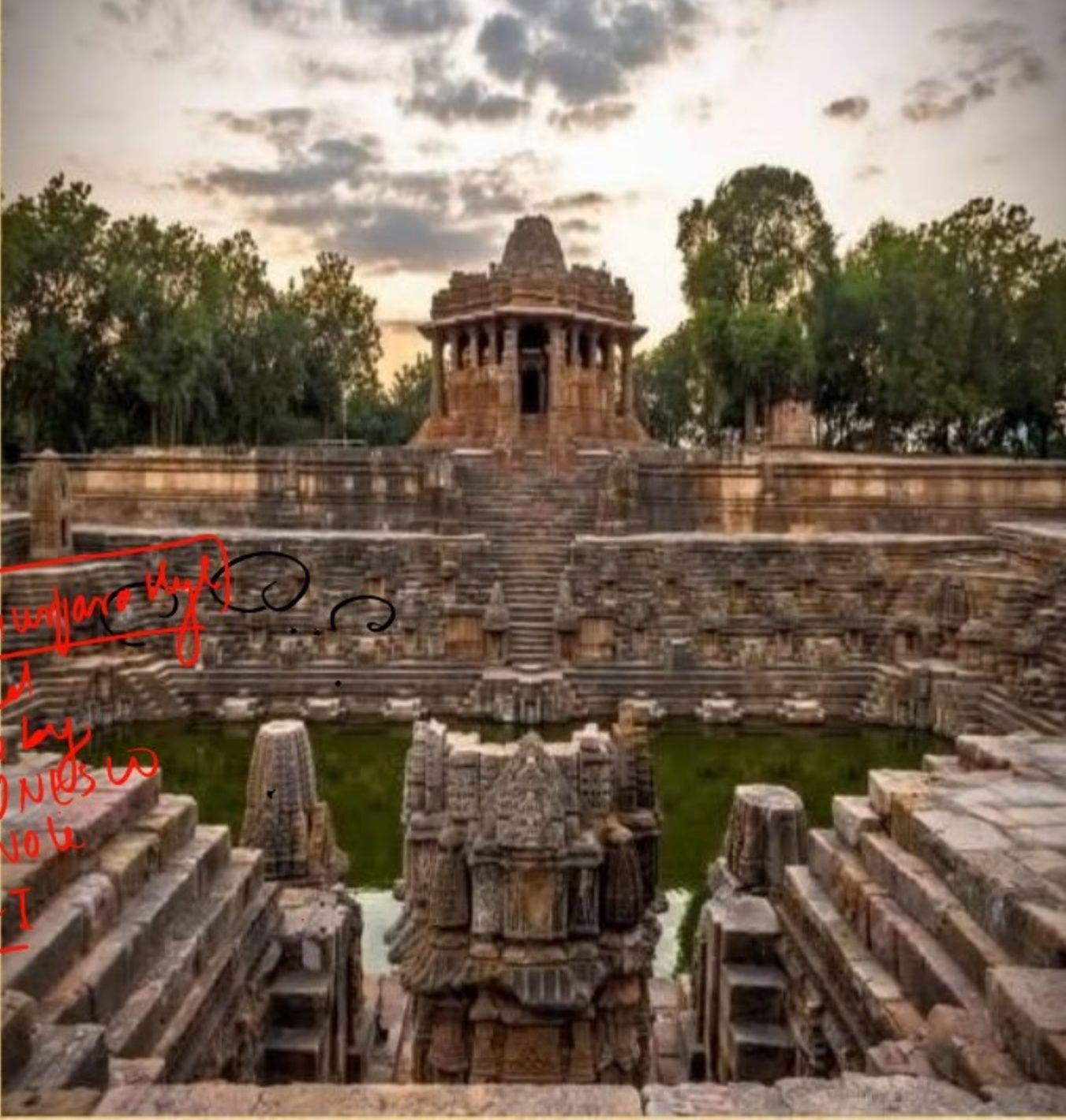
  • Built by Bhima-I of Solanki/Chalukya Dynasty of Gujarat (1026-27)
  • Style Solanki School / Maru-Gurjara style
  • Location Banks of Pushpavati River
  • Status No worship offered now; ASI protected monument
  • Three components:
  • Gudhamandapa Shrine hall
  • Sabhamandapa Assembly hall
  • Kunda Reservoir


UNESCO World Heritage Sites
Identify the key current affairs updates regarding UNESCO World Heritage Sites.
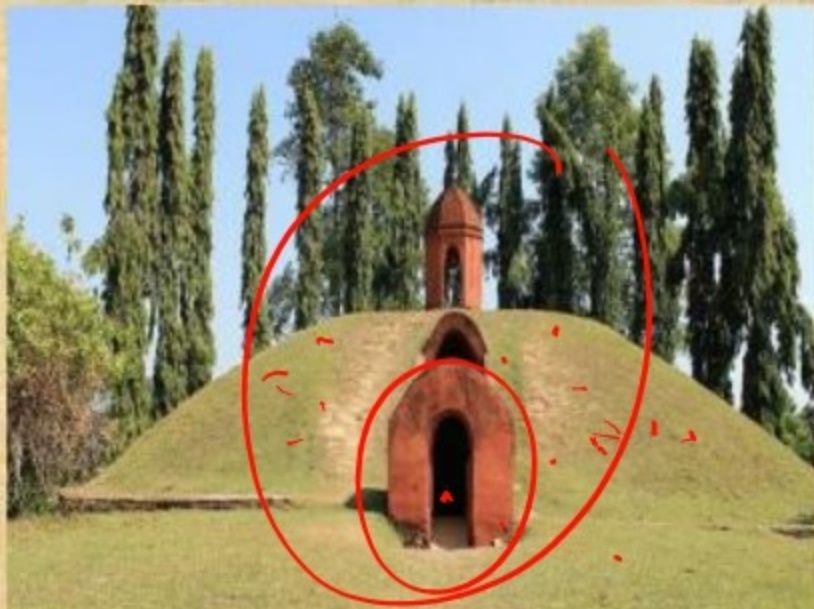
  • Period 13th-19th century
  • Comparison Resemble Egyptian pyramids and Chinese royal tombs
  • Location Royal Moidams in Charaideo district; others in Jorhat, Dibrugarh, eastern Assam

Structural Features:
  • Design: Earthen mounds with vaulted chambers
  • Covered with grassy dome topped with octagonal pavilion (Chow Chali)
  • Surrounded by low octagonal wall with single entrance

Burial System:
  • Contained kings, grave goods, animals, and servants for afterlife

Sacred Elements:
  • Special trees, water bodies
  • Tai-Ahom rituals (Me-Dam-Me-Phi) still practiced

Forts
Identify the key current affairs updates regarding Forts.
  • Built 1565 under Emperor Akbar
  • Material Red sandstone
  • Location On Yamuna River, 5 km from Taj Mahal
  • Shape Crescent-shaped with straight wall facing Yamuna
  • Residence Main residence of Mughal emperors till 1638 (capital shifted to Delhi)
  • Previous name Badalgarh (renovated by Akbar); Shahjahan made modifications
  • Four gates Khizri Gate, Amar Singh Gate, Delhi Gate, Ghazni Gate
  • UNESCO Status World Heritage Site (1983)

  • Built by Rana Kumbha (15th century AD)
  • Location Western Aravalli Hills
  • Status Second most important citadel after Chittorgarh in Mewar
  • Wall Second-longest wall in world after Great Wall of China
  • UNESCO Status Part of Hill Forts of Rajasthan World Heritage Site
  • Contains Seven fortified gateways, several Jain temples
  • Lakhola Tank Most famous tank, built by Rana Lakha
  • Birthplace Maharana Pratap
  • Breached only once By combined armies of Mughals and Amber, due to water scarcity
  • Defeated by Babur Sultan Khalil bin Deham Al Qagran at Battle of Khanwa

Buddhist Sites
Identify the key current affairs updates regarding Buddhist Sites.
  • Context Mahastupa collapsed last year
  • Features Remnants of stupas, chaitya grihas, viharas atop Thotlakonda Hill
  • Type Hinayana Buddhist mahastupa

Historical Controversies
Identify the key current affairs updates regarding Historical Controversies.
  • 5th century BC Sambhal was home to Panchal rulers, later part of Ashoka's empire
  • Delhi Sultanate Important place under Qutb-ud-din Aibak, Tughlaq, and Lodis
  • After 1st Battle of Panipat (1526) Under Mughals

Sambhal Mosque:
  • Built by Hindu Beg in 1526 (official under Babur)
  • One of only 3 mosques from Babur's reign surviving:

Jama Masjid, Sambhal

Kabuli Bagh mosque, Panipat (1527-28)

Babri Masjid, Ayodhya (1529)


Claims:
  • Some claim it was Hari Mandir
  • Based on A.C.L. Carlyle (First Assistant of ASI) - "Tours in the Central Doab and Gorakhpur" (not agreed by Alexander Cunningham)
  • Features more like Pathan architecture than Mughal
  • Abul Fazl's Ain-e-Akbari Sambhal as place where last avatar of Vishnu would be born

Sculptures & Iconography
Identify the key current affairs updates regarding Sculptures & Iconography.
  • Started by Chalukyas; reached climax in Cholas
  • Cosmic dance Creation and destruction

Elements:
  • Jata Dhaara Matted hair (destroys heavenly bodies)
  • Damaru 2 sides = Akasa & Sabda = Sound = Creation
  • Abhaya Mudra Fearlessness
  • Gaja Hasta Mudra Freedom from fear
  • Bhujanga Trasa Mudra Liberation (leg lifted as if snake seen)
  • Tiruvashi/Prabhavali Arch of Flames = Motion of Earth / Endless Cycle of Births & Deaths
  • Ganga Source of Life
  • Trayambaka 3 Eyed = Sun, Moon, Fire
  • Pralayagni Destroys the world
  • Ardha Chandra Mudra Half moon
  • Trasu (Snake) Poison; Victory over wickedness
  • Apasmara Purusa Illusion & Ignorance (demon under foot)

  • Dedicated to Shankaracharya
  • Philosophy Advaita (Non-dualism)
  • God = Brahman
  • World = Maya (illusion)
  • Formless (Neti-Neti)
  • Bhakti up to certain level, but ultimate thing is KNOWLEDGE to get Salvation
  • Dasnam Sampradaya 10 monastic orders established by Shankaracharya
  • 4 Pithas Badrinath, Dwarka, Puri, Sringeri

  • Form: Description
  • Panchanana Shiva: Five faces: Isana, Tatpurusha, Aghora, Vamadeva, Sadyojata
  • Anugrahamurthi: Most peaceful aspect; surrounded by devotees and family
  • Ugramurthi: Most ferocious state to destroy evil forces
  • Thandavamurthi (Nataraja): Performs tandava; dynamic rhythmic dance to reduce sufferings
  • Bhikshathana Murthi: Ascetic form; wandering with skull begging bowl
  • Hridaya Murthi: State of friendliness with Lord Vishnu
  • Dakshinamurthi: Teacher of mystic secrets, art forms, alchemy, yantras, tantras
  • Lingodbhavamurthi: Infinite form with no beginning/end; Supreme Self as Linga
  • Ardhanariswara: Half man + Half woman = Gender equality
  • Kalyan Sundara Murthi: Marriage of Shiva

10th Century items:
  • Bas relief panel of Revanta in sandstone
  • Three headed Brahma
  • Chariot Driving Surya
  • Vishnu and his Consorts
  • Shiva as Dakshinamurti (Teaching phase)
  • Dancing Ganesha
  • Bodhisattva Manjushri
  • Tara
  • Jaina Choubisi
  • Amorphous couple in Samabhanga
  • Chowri Bearer
  • Female playing drum
  • Guru Hargobind Singh

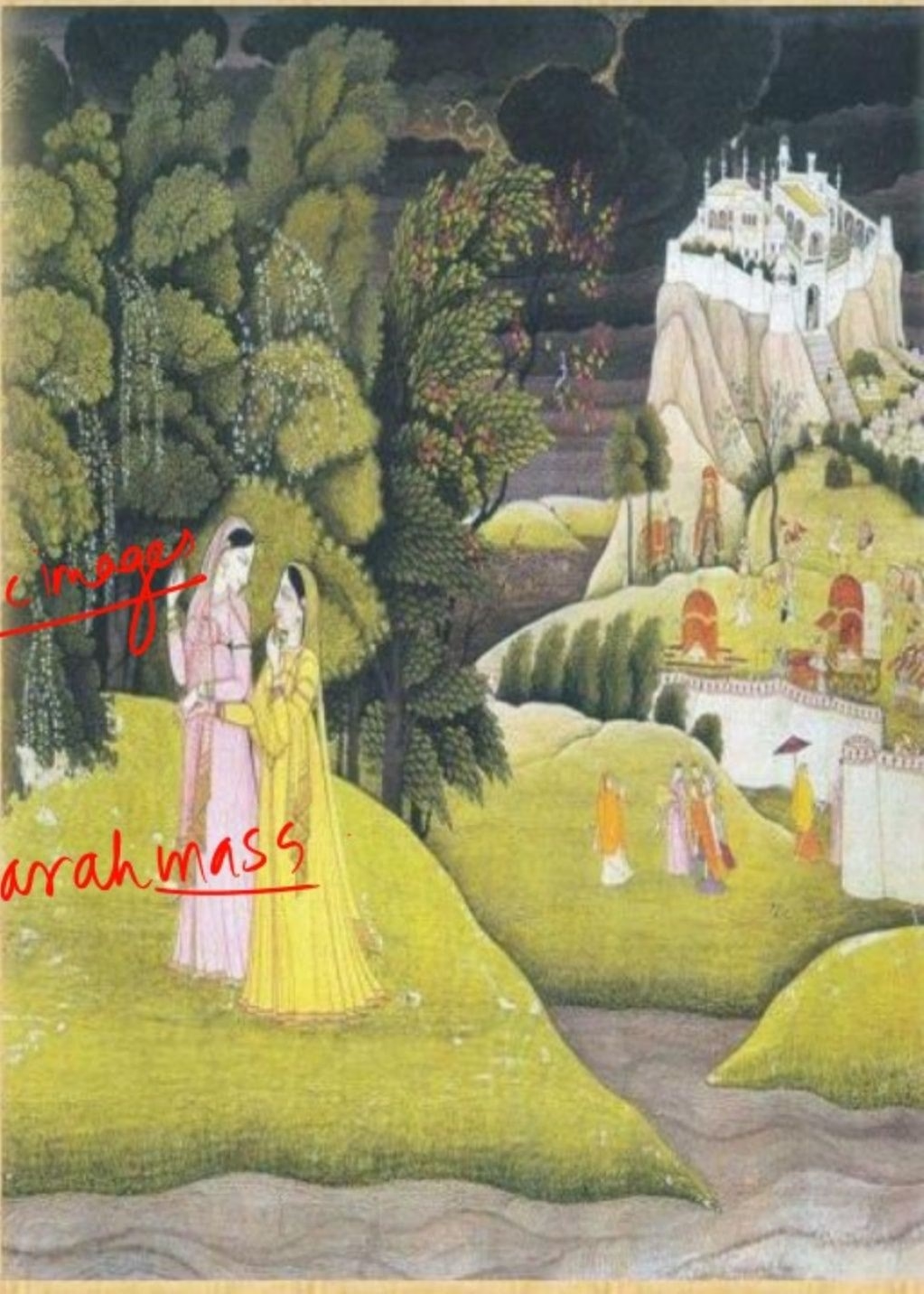
Kangra Painting
:::details **Paintings**
Identify the key current affairs updates regarding Paintings.

> Visual references available for: Kangra, Pichwai, Madhubani, Kaavi, Rogan, and Mandala paintings in ./images/ folder


  • Early patronage Raja Govardhan Singh (1774)
  • Evolution First in Guler, then Kangra
  • Zenith Under Raja Sansar Chand
  • Characteristics Marked with sensuality and intelligence
  • Themes Gita Govinda, Bhagavata Purana, Satsai of Biharilal, Nal Damyanti, Love scenes of Krishna
  • Famous group 'Twelvemonths' / Barah Maas paintings
  • Parent school To Kullu, Chamba, and Mandi ateliers

  • Subset of Mewar School of painting (17th-18th century)
  • Location Nathdwara (Rajsamand)
  • Subject Figure of Shrinathji as manifestation of Krishna as 7-year-old child (Balak)
  • Famous episode Krishna holding Govardhan Hill on last finger
  • Motifs Iconic cow and lotus motifs (revival in fashion/interior design)
  • Famous artist Sahidin (earliest); later Pichwai paintings most popular

  • Time period 10,000-4,000 BC
  • Themes Forest, people, and animals
  • Occasion Sohrai (harvest festival) coinciding with Diwali/Kali Puja

Regions:
  • Keonjhar and Mayurbhanj (Odisha)
  • East Singhbhum and Seraikela-Kharsawan (Jharkhand)
  • Purulia (West Bengal)

Communities: Santhals, Bhumij

Material: Morrum (termite resistant, doesn't fade with rain)


  • State Tamil Nadu
  • Status GI Tags granted

  • Region Konkan region
  • Form Murals (dying art form)
  • Pigment Kaav (Indian red pigment from laterite soil) - only color used
  • Technique Painted on wet plaster (similar to frescoes)

  • Themes Religious motifs: Krishna, Rama, Durga, Lakshmi, Shiva
  • Symbols Fish = good luck and fertility
  • Characteristics:
  • No shading (two-dimensional)
  • No gaps (filled with flowers, trees, animals)
  • Double line border
  • Bold use of colours
  • Ornate floral patterns
  • Exaggerated facial features
  • Traditional base Cow dung and mud walls; rice paste and vegetable colours
  • Modern Handmade paper, clothes, canvas (still natural colours)
  • Status GI Tag granted

  • Location Kutch district
  • Name origin Persian word meaning "oil varnishing"
  • Technique Paint made from boiled oil and vegetable dyes laid on fabric
  • Methods Metal block (printing) or stylus (painting)
  • Status Nearly died out in late 20th century; practiced by only one family
  • PM Modi Gifted hand-carved box with Rogan painting to Japan's Fumio Kishida

  • Meaning "Circle" or "centre" in Sanskrit
  • Pattern Geometric configuration with interconnected circular/square shapes
  • Origin Rooted in Hinduism and Buddhism
  • Time period First appeared in Vedas (c. 1500-500 BC)
  • Spread Buddhist missionaries along Silk Road

Forms:
  • Hindu Usually square with circle at centre
  • Buddhist Circular painting to discover true self

Elements:
  • 8 spokes (Dharmachakra) Eight-fold path of Buddhism; liberation from birth-death cycle
  • Lotus flower Balance
  • Sun Universe
  • Triangles facing up Action and energy
  • Triangles facing down Creativity and knowledge

Modern: Central in Thangka paintings; adopted by SH Raza and neo-tantric artists


:::

Classical Dances
Identify the key current affairs updates regarding Classical Dances.

> Visual references available for: Kathak, Sattriya, Bharatanatyam, and Cham Dance in ./images/ folder


  • Origin Kathakars (story-tellers) narrating episodes from epics, myths, legends
  • Evolution Early oral tradition — Mime and gestures added — Vaishnavism influence (15th century)
  • Theme Krishna and his leela; Raslila extension of mime
  • Popularity Both Hindu and Muslim courts

Elements:
  • Equal distribution of body weight along horizontal/vertical axis
  • Full foot contact; no sharp bends of upper/lower body
  • Only classical dance with Muslim culture links Unique Hindu-Muslim synthesis
  • Only classical dance wedded to Hindustani music (North Indian)

Features:
  • Jugalbandi Competitive play between dancer and tabla player
  • World famous: Spectacular footwork, spins, Nazakat, Padhant (chanting bols)
  • Kramalaya Concluding piece with intricate fast footwork
  • Gat Bhaav Dance without music to outline mythological episodes
  • Ghunghrus Heavy bells producing sounds like running train, rain, horse riding (Ghode ki chaal)

  • Introduced by Vaishnava saint Mahapurusha Sankaradeva (15th century)
  • Preserved by Sattras (Vaishnava monasteries)
  • Sattras Dance community halls (namghar) of monastery temples

Themes: Radha-Krishna and other myths; Dramas by Sankardev


Two Styles:
  • Paurashik Bhangi Masculine (energetic with jumps)
  • Stri Bhangi Feminine (Lasya/delicate)

Costumes:
  • Male: Dhoti, chadar, paguri (turban)
  • Female: Ghuri, chadar, Kanchi (materials from Assam)
  • Masks For special characters (demons)

Music: Borgeet of Sankardev and Madhavdev

Instruments: Khol (two-faced asymmetrical drum), Manjira, Bhortal, Flute, Violin, Harmonium


  • Name meaning Bha (bhaav/expression) + Ra (raag/melody) + Ta (taal/rhythm)
  • Mention Silappatikaram (ancient Tamil epic)
  • Major center Brihadeeshwara Temple since 1000 CE
  • Gopurams of Chidambaram (Nataraja) Display poses, chaaris, karanas carved in stone
  • Also known as "Poetry in motion" / Ekcharya Lasyam (one dancer, many roles)
  • Devadasis Kept dance alive; hence called DASSIATTAM
  • Guides Abhinaya Darpan and Sangeet Ratnakar for technique and grammar

Features:
  • Heavy emphasis on abhinaya (mime) Dancer expresses sahitya through movement
  • Thanjavur Quartet (Tanjor Natyam) Chiniah, Ponniah, Vadivelu, Shivanandam
  • Called the 'fire dance'
  • Principal mudra: Kataka Mukha Hasta Three fingers joined symbolizing 'Om'

Three Elements:
  • Nritta Pure dance
  • Nritya Expressive dance
  • Natya Dramatic dance

Nattuvanar — Person who conducts dance recitation

Instruments: Mridangam, Violin/Veena, Flute, Cymbals


Yamini Krishnamurti — Classical dancer trained in Bharatnatyam and Kuchipudi; wrote "Passion for Dance"


  • Origin Yogachara School of Kashmir (4th century) by Asanga and Vasubandhu
  • Development Into sophisticated Vajrayana Buddhism
  • Started 8th century by Padmasambhava (who introduced Tantric Buddhism to Tibet)
  • Nature Deepest form of meditation of Lamas
  • Type Elaborate masked and costumed dance

Additional Temples
Identify the key current affairs updates regarding Additional Temples.
  • Built by Aditya Karikalan II (father of Rajaraja Cholan)
  • Later additions Dalavai Ariyanadha Mudaliar (viceroy of Krishnadevaraya) built Rajagopuram, compound wall, 16-pillar Mandap (1501)
  • Style Dravidian architecture; 5-tier Rajagopuram
  • Legend Named after Nandi Deva (Singhi) who played Mridangam during Shiva's dance at Tiruvalangadu

  • Deity Lord Sri Venkateswara (incarnation of Vishnu)
  • Location Venkata Hill, one of Saptagiri (7 hills) of Tirumala
  • Puranic reference Garuda Purana, Brahma Purana
  • Style Dravidian architecture (from ~300 AD)
  • GI Tag Tirupati Laddu
  • Gopuram 50 ft gateway at entrance
  • Parikrama Two circumambulation paths
  • Main shrine Gold-plated tower called Ananda Nilayam

  • Location Banks of Phalgu River
  • Built by Queen Ahilya Bai Holkar of Indore
  • Style Nagara-style (Northern Indian architecture)
  • Features:
  • Octagonal sanctum Houses Lord Vishnu's footprint
  • Black basalt stone Intricately carved designs
  • Multiple rows of pillars
  • Significance Pind Daan rituals for deceased ancestors

  • Built by Kakatiya King Rudra Deva (12th century)
  • Type Star-shaped Trikutalayam (triple shrine)
  • Dedicated to Vishnu, Shiva, and Surya

  • Style Dravidian architecture with 3 shrines (Veerabhadra, Shiva, Vishnu)
  • Legends Rama meeting Jatayu; Agasthya establishing idol of Papanaseswara
  • Built by Virupanna and Veeranna (favored by Achyuta Devaraya, Vijayanagara) - 16th century
  • Famous attractions:
  • Biggest mural painting of Veerabhadra Swamy in Asia
  • Hanging pillar (doesn't touch ground)
  • Sculpture of Padmini
  • 7-headed Nagalingam
  • World's largest monolithic Nandi

  • Built by Lakkana Dandesha (nayaka under King Deva Raya II)
  • Design Panchayat hall with 12 pillars
  • Dedicated to Lord Shiva
  • Style Vijayanagara-Dravidian with Indo-Islamic and European influence
  • Features Kalyana Mandapa (Marriage Hall)
  • UNESCO Status Hampi is World Heritage Site

  • Dedicated to Vishnu, Devi Subhadra, Lord Balabhadra
  • Built by Anantavarman Chodaganga Deva (Ganga dynasty) - 12th century
  • Also called Yamanika Tirtha (neutralizes Yama's influence)
  • Features 20-foot high chakra visible from anywhere in Puri
  • Status One of Char Dhaams, UNESCO World Heritage Site

Architecture (Kalinga Style):
  • Pancharatha design with four components:
  • Vimana (Garbhagriha) Rekha deula with curved shikhar
  • Jagamohana Pidha deula with diminishing platforms
  • Natamandapa Audience & dancing hall
  • Bhogamandapa Offerings hall

Four Gates:
  • Singhdwara (Lions), Ashwadwara (Horses), Vyaghra Dwara (Tigers), Hastidwara (Elephants)
  • 24 forms of Vishnu carved on walls

  • Built by Keshri rulers (Jajati and Lalatendu Keshri)
  • Deity Hari-hara (Vishnu + Shiva)
  • Significance Blend of Vaishnavism and Shaivism
  • Status Part of Golden Triangle of Odisha

  • Built by Narsimhadeva-I (Eastern Ganga dynasty) - 1250 AD (13th century)
  • Location Ancient river Chandrabhaga
  • Design Ratha-shaped (chariot)
  • Features Erotic sculptures, Odissi dance carvings
  • R.N. Tagore quote "Language of stone surpasses the language of man"
  • Status Part of Golden Triangle of Odisha

  • Built by Rachela Rudra (general of Kakatiya King Ganapati Deva) - 1213 AD
  • Unique Only temple in India named after its sculptor (Ramappa)
  • Design Star-shaped platform
  • Kakatiya titles Raya Gajakesari, Daya Gaja Kesari
  • Technology Floating bricks (stay afloat in water)
  • Features Sarigama pillars (musical notes)

  • Built by Lalitaditya Muktapida of Karkota dynasty (8th century)
  • Dynasty founder Durlabhvardhana
  • Style Kashmiri architecture with Greek, Roman, Gandharan, Chinese, Egyptian influences
  • Material Wood and Stone
  • Destroyed by Sultan Sikandar Shah Miri in 1401

Cave Sites
Identify the key current affairs updates regarding Cave Sites.
  • Location Sanjay Gandhi National Park, Mumbai
  • Name origin 'Kanhagiri' in Prakrit (Nasik inscription of Vasisthiputra Pulumavi)
  • Foreign accounts Mentioned by Fa-Hein
  • Religion Hinayana, Mahayana, Vajrayana Buddhism
  • Patronage Satavahana, Traikutakas, Vakatakas, Silaharas
  • Features Podhis (water cisterns for conservation)
  • Distinction 2nd largest Chaitya griha

  • Patronage Rashtrakuta, Chalukya, Kalchuris, Yadava
  • Period 5th-11th century CE
  • Caves:
  • Buddhist (1-12) Vajrayana Buddhism
  • Hindu (13-29)
  • Jain (30-34)
  • Unique Triple storey caves (Ajanta has only double storey)
  • Carved on Sloping side of hill

Notable caves:
  • Vishwakarma Cave Buddha in Vyakhyana Mudra with Bodhi tree
  • Ravan ki Khai, Dashavatar Temple (by Dantidurga)
  • Kailashnath Temple Built by Rashtrakuta Krishna I; Ravana shaking Mount Kailash
  • Dhumal Lena, Rameshwar Temple
  • Indra Sabha, Jagannath Sabha Jain caves

  • Location Trashmi Hills
  • Religion Buddhism + Jainism (mainly)
  • River Godavari (tributary of Tapti)
  • Legend Pandavas visited during exile
  • Features Chaitya (worship place) + Vihara (residential halls)
  • 3rd Cave Financed by Gautami Balashri (mother of Gautamiputra Satakarni)

  • Named after Narasimhavarman I (Mamallan) - Pallava King (630-668 AD)
  • UNESCO Status World Heritage Site (1984) - "Group of Monuments at Mahabalipuram"

Monuments:
  • Pancha Rathas (7th century) Dharmaraja, Bhima, Arjuna, Nakula-Sahadeva, Draupadi Ratha
  • No connection with actual Pandavas
  • Dharmaraja Ratha is largest
  • Adivaraha Cave Sculptures of Simhavishnu and Mahendra Varman
  • Rock-cut caves Varaha, Krishna, Panchapandava, Mahishasuramardini Mandapa
  • Open Air Relief Descent of the Ganges / Arjuna's Penance / Bhagiratha's Penance
  • Shore Temple Dedicated to Shiva with Anantashayana Vishnu
  • Krishna's Butter Ball Famous balancing rock

Stupas
Identify the key current affairs updates regarding Stupas.
  • Significance Site of Buddha's Enlightenment
  • River Niranjana River
  • Built by Emperor Ashoka; present temple from 5th/6th century
  • UNESCO Status World Heritage Site (2002)
  • Distinction One of India's earliest brick structures; earliest Buddhist temple entirely in brick
  • Features:
  • Sculpted stone balustrades
  • Vajrasana (diamond throne) - Ashoka's stone slab marking Buddha's exact position

  • River Betwa
  • Commissioned by Emperor Ashoka (3rd century BCE)
  • Later expansion Shunga and Satavahana rulers
  • Material Bricks and Stone
  • Features:
  • 4 Toranas with sculptures on both sides
  • Vessantara Jataka story
  • Symbolic representation of Buddha
  • Gajalakshmi, Shalabhanjika
  • Mention of Satkarni-I
  • Ivory merchant donation
  • Discovered by Sir Henry Taylor (1818)
  • Inscriptions Ashokan Lion Capital; Brahmi and Kharosthi scripts
  • UNESCO Status World Heritage Site (1989)

  • Built by Ashoka (3rd century BCE); major work by Satavahanas
  • Material White marble
  • Unique feature Ayaka pillars (5 pillars at cardinal points)
  • Rediscovered by Colin McKenzie (1797)
  • Size Bigger than Sanchi
  • Buddhism Hinayana + Mahayana
  • Features 5 major life events of Buddha depicted

  • Distinction Tallest and largest Buddhist stupa in the world
  • Construction 3rd century BCE (Ashoka)
  • Current structure Gupta Dynasty, Raja Chakravarti (4th century)
  • Legend Inaugurated during Buddha's time; Licchavis of Vaishali built it to house Buddha's alms bowl
  • Foreign accounts Faxian (Fahien) and Xuanzang
  • Discovery Gold coins with seal of Kanishka (Kushan dynasty)

Inscriptions
Identify the key current affairs updates regarding Inscriptions.
  • Period Parantaka Chola (907-953 AD)
  • Subject Local Self-governance
  • Location Vaikunta Perumal Temple, Kanchipuram (built by Nandivarman-II, Pallava ruler, 8th century)

Sabha (Assembly):
  • Exclusively of Brahmans with specialized committees
  • 30 wards selecting one representative each for village assembly

Qualifications:
  • Ownership of certain land (exception for those knowing one Veda and four Bhashyas)
  • Own house
  • Age 35-70
  • Knowledge of mantras and Brahmanas
  • Well-versed in business and virtuous

Disqualifications:
  • Not submitting accounts while in committee
  • First four of five great sins (killing brahman, drinking, theft, adultery)
  • Association with outcastes
  • Eating forbidden dishes

Selection method: Draw of lots by priests from palm leaf tickets


Committees:
  • Garden committee, Tank committee, Annual committee (executive)
  • Supervision of justice, Gold committee, Five-fold committee
  • Tenure: 360 days

Religious Movements
Identify the key current affairs updates regarding Religious Movements.
  • Patronage King Bijjala of Kalachuri dynasty
  • Founded Lingayata sect
  • Anubhav Mandapa 1st parliament of India discussing Kayaka (work as per skill), Dasoha (equal pay), Kaykave Kailasa (work is worship)
  • Principles Ariva (True knowledge), Achara (Right conduct), Anubhava (Divine experience)

Lingayata practices:
  • Ishtalinga wearing, Burials (not cremation)
  • No rebirth belief, No temple worship, No child marriage

Veerashaivism:
  • Origin from 5 great teachers: Renuka, Daruka, Ghantakarna, Dhenukarna, Vishwakarma
  • Believed in Shaktivishistadvaita (qualified non-duality)
  • Ashtavarna rules to be observed

  • Santhara / Samlekhana Fast unto death (Sallekhana)
  • Kayotsarga "Dismissing the body" - meditation posture (as in Gommateshwara at Shravanabelagola, dedicated to Lord Bahubali, son of Rishabhadeva)
  • Basadi Jain temples in South India
  • Kirti Stambh at Ellora Pillar with message "Jio aur jine do" (live and let live)

  • Sites Udayagiri, Ratnagiri, Lalitgiri (URL)
  • Buddhism Vajrayana (Diamond Vehicle)
  • Features:
  • Offshoot of Mahayana
  • Tantra and Mantra
  • Tantric Buddhism
  • Tara (female Bodhisattva)
  • 7th century AD origin
  • Patronage Pala dynasty

Universities
Identify the key current affairs updates regarding Universities.
  • Founded by Kumaragupta-I (427 CE, 5th century)
  • Earliest evidence Coin with Shakraditya (Kumaragupta I), 415-455 CE
  • Harshavardhana support Xuanzang (Hiuen Tsang) studied here for 5 years under Shilabhadra
  • I-tsing Gave description of Nalanda
  • Destroyed by Bakhtiyar Khilji (12th century)
  • Rediscovered Francis Buchanan-Hamilton (1812); confirmed by Alexander Cunningham (1861)
  • Teacher-student ratio 1:5
  • Famous scholars Nagarjuna, Aryabhatta, Dharmakirti, Dinnaga, Xuanzang, Silabhadra, Atisha
  • Source Tabaqat-i-Nasiri by Minhaj-us-Siraj (13th century)

Vijayanagara Architecture
Identify the key current affairs updates regarding Vijayanagara Architecture.
  • Influence Combined Chola, Hoysala, Pandya, Chalukya + Indo-Islamic (Bijapur)
  • Features:
  • Highly decorated walls with carvings and geometrical patterns
  • Gopurams on all sides (previously only front)
  • Yali (mythical horse-creature) on temple pillars
  • Central Kalyan Mandap (Marriage hall)
  • Concept of secular buildings (e.g., Lotus Mahal)

Examples: Vittalswami Temple, Lotus Mahal, Virupaksha Temple, Raghunatha Temple


Vijay-Vithala Temple features:
  • Devi shrine, Maha Mantapa (Sabha Mantapa)
  • Ranga Mantapa 56 musical pillars (SAREGAMA pillars)
  • Kalyana Mantapa, Utsava Mantapa
  • Famous Stone Chariot (other two at Konark and Mahabalipuram)

Forts
Identify the key current affairs updates regarding Forts.
  • Earlier name Rairi (renamed by Shivaji)
  • European name Gibraltar of the East
  • Dynasties Bahamanis — Nizamshahis — Adilshahis
  • 1656 Shivaji captured from More's of Javli (under Adilshahi)
  • 1664 Seat of Shivaji's government
  • 1674 Shivaji took title of Chhatrapati
  • 1680 Shivaji's death

Modern Heritage
Identify the key current affairs updates regarding Modern Heritage.
  • Architect Bimal Patel
  • Shape Triangular
  • Themes:
  • Lok Sabha hall Peacock
  • Rajya Sabha hall Lotus
  • Courtyard Banyan Tree
  • Murals Samudra Manthan (Ocean churning)

Old Parliament (1921-1927):
  • Style: Neo-Roman Architectural, Circular Building
  • Architects: Edwin Lutyens and Herbert Baker
  • Theme: "Churning of Ideas"

  • Derived from Tamil word "Semmai" meaning "Righteousness"
  • History:
  • C. Rajagopalachari suggested tradition of Chola kings' power transfer
  • First given to Lord Mountbatten by Thiruvavaduthurai Adheenam priests
  • Then handed to Pt. Jawaharlal Nehru
  • Sacred song "Kolaru Padhigam" by 7th century Tamil Saiva saint Thirugnanasambandar (one of 63 Nayanars)
  • Made by 20th Guru of Thiruvavaduthurai Adheenam

Adheenams:
  • Ancient mathas devoted to worship of Lord Shiva
  • Non-Brahmin orders
  • Thiruvavaduthurai Adheenam formed in 15th century

Symbolism:
  • Nandi Justice and Strength
  • Lakshmi Wealth and Prosperity
  • Kodimaram Growth and Fertility

  • Architects Chandrakant Sompura (and son Nikhil)
  • Style Nagara Architecture
  • Design Panchayatana style (3rd stage of Gupta Era) - 1 main shrine + 4 subsidiary shrines

Features:
  • Octagonal Garbha Griha
  • Boundary Wall (Jagati)
  • Shikhara - Amalaka - Kalash

Materials:
  • No use of Steel/Iron
  • Copper plates + Gold + Granite
  • 7 Types of Rocks + Bricks

Indus Valley Civilization Sites
Identify the key current affairs updates regarding Indus Valley Civilization Sites.
  • River Bhogava River (tributary of Sabarmati)
  • Famous for:
  • Artificial Brick Dockyard (first known in history)
  • Double Burial
  • Terracotta model of Ship and Horse
  • Five Altars
  • Evidence of Rice (also at Rangpur)

  • River Ghaggar River
  • Period 3000-2750 BC
  • Famous for:
  • Ploughed field (perhaps oldest in world)
  • Two crops in same field
  • Fire Altars (worship of fire)
  • Evidence of earthquake around 2600 BC
  • Terracotta model of Charging Bull (realistic folk art)
  • Cylindrical seal with women and two men

Structure:
  • Early Harappan Mud-brick structure
  • Mature Harappan Fired bricks

  • Distinction Largest IVC site in India
  • Evidence:
  • Human burial (8000 years ago)
  • Bowl brick + Mud brick
  • Ceramic industry
  • Couple burial
  • Five altars
  • Gold and Silver evidences
  • Evidence of cloth, spinning, weaving
  • Cylindrical seal with colorful cloth

  • Type Necropolis site (burial ground)
  • Near Jura Khatiya (another necropolis site of Gujarat)

Buddhist Sites
Identify the key current affairs updates regarding Buddhist Sites.
  • Findings:
  • Mahastupa, Apsidal Chaityagrihas, Votive Stupas
  • Congregation hall viharas
  • Life-size Stucco of Bodhisattva
  • Rare octagonal-shaped Stupa
  • Inscriptions Brahmi (Satavahana and Ikshvaku times, 2nd-3rd century AD)
  • Coins Punch-marked, Kshatrapas, Romans, Mahatalavara chiefs
  • Sculptures Life of Siddhartha-Gautama, Jataka tales, Buddhapada slabs

Ikshvaku Dynasty:
  • Capital: Vijayapuri-Nagarjunakonda
  • Founder: Vashishthaputra Shantamula
  • Religion: Shaivites (performed Vedic rites)
  • Indigenous people: Chenchus in Nallamala Hills

Kathak Gharanas
Identify the key current affairs updates regarding Kathak Gharanas.
  • Feature Lucknow — Jaipur — Banaras
  • Style Lasya (soft bhavas) — Purity of footwork — Tandava (spirit of bravery)
  • Theme Thumris used — Devotion — Prayers of Shiva and Krishna
  • Poetry Kavitts nominal; Thumris & Ghazals — Kavitts more often — Kavitts and Thumris equally
  • Bols 'Tigda Dig Dig' — 'Ta Thai Thai Tat' — Same as Lucknow; 6 feet taps
  • Costume Angarkha and Paijama (Muslim influence) — Bandi, Dhoti (male); Lehanga, Choli (female) — Dhoti only (male); Lehanga, Dhoti (female)
  • Bhramari Not much used — More often — More often

Folk Dances & Theatre
Identify the key current affairs updates regarding Folk Dances & Theatre.
  • Origin Kakatiya dynasty
  • Dedicated to Lord Shiva
  • Purpose Performed before soldiers set to war
  • Evidence Sculpture in Garbha Gudi (Sanctum Sanctorum) of Ramappa Temple, Warangal

  • Base Sanskrit theatre traditions
  • Meaning "Kuti" (combined/together) + "Attam" (acting)
  • Features:
  • Netra abhinaya (eye expression)
  • Hasta abhinaya (language of gestures)
  • Venue Traditionally performed in Kuttampalams

Performers:
  • Male: Chakyars
  • Female: Nangiars
  • Drummers: Nambiars

Special techniques:
  • Pakarnattam Switching between masculine/feminine, multiple roles
  • Nangiar Koothu Solo female section (UNESCO Masterpiece of Oral and Intangible Heritage)

  • Period 2nd Century BC
  • Similar to Yakshagana of Karnataka
  • Type Theatre combining dance, music, dialogue, costume, make-up
  • Meaning "Chindu" means "jump" in Telugu
  • Community Chindu Madiga (sub-caste of Madiga among SCs)

  • Similar to Bhuta Kola of Karnataka
  • Venue Open theatre in front of local temples
  • Purpose Honor spirit of ancestors and gods
  • Themes Vaishnavism, Shaktism, Shaivism
  • Features Elaborate headgear and colorful costumes

Bhuta Kola (Karnataka):
  • Annual ritual performance worshipping local spirits/deities
  • Performer believed to temporarily become the god
  • Practiced in Tulu-speaking belt (Dakshina Kannada, Uttara Kannada, Udupi)

  • Devotees of God Mahadeshwara
  • Instrument Kamsale (brass musical instrument)
  • Two parts: Adi Battalu (cup-shaped) and Gari (flat)
  • Type Religious fervor + Martial dexterity

  • Type Dialogue/debate performance
  • Region Karavali and Malnad regions
  • Features Sitting position, No dance or costumes
  • Meaning "Tala" (cymbal) + "Maddale" (drum)

  • Type Masked dance depicting Ramlila scenes
  • Features:
  • Golden masks
  • No dialogues
  • Background voices narrate story of Ramayana
  • India connection First training and performance programme held in India

Martial Arts
Identify the key current affairs updates regarding Martial Arts.
  • Type Ancient weapon-based martial art
  • Mentioned in Silappatikaram, Sangam literature
  • Origin ~1000 BC by Sage Agastya Munivar
  • Age Archaeological surveys suggest 10,000 BC
  • Meaning "Silam" (mountain) + "Bam" (bamboo)
  • Key elements:
  • Foot movement
  • Kutta Varisai (empty hand version)

Musical Instruments
Identify the key current affairs updates regarding Musical Instruments.
  • Type Bowed string instrument
  • Community Manganiyar (Muslim musicians), also called Merasi
  • Material:
  • Body: Mango tree
  • Bow stick: Khejari wood
  • Bow hair: Horse tail
  • Bow shape: Concave
  • Strings 17 total:
  • 3 main (goat intestine - Roda and Joda)
  • 14 Jhara (5 copper + 9 steel wire)

Festivals
Identify the key current affairs updates regarding Festivals.
  • Distinction:
  • Largest tribal religious congregation in world
  • 2nd largest fair in India (after Kumbh Mela)
  • Tribe Koya (Dravidian language family)
  • Frequency Once in 2 years (month of Magha/February)
  • Location Medaram in Eturnagaram Wildlife Sanctuary (part of Dandakaranya)
  • Legend Tribal women Sammakka and Saralamma fought against Kakatiya rulers

  • Location Jagadambika Temple on Golconda Fort
  • Meaning "Bonalu" from "Bhojanalu" (food offered to goddess)

  • Distinction Largest congregation of women for a festival worldwide
  • Location Attukal Temple
  • Ritual "Pongala" (to boil over) - women prepare sweet payasam (rice, jaggery, coconut, plantains)
  • Only performed by Women
  • Goddess Attukalamma (Bhagavathy)
  • Guinness Record Largest gathering of women (2009)

  • Type Ritualistic sacred dance
  • Theme Victory of good over evil (legend of Lord Ayyappa)
  • Recent news Chemical-based colours proposed to be banned; organic vermilion suggested

Historical Debates
Identify the key current affairs updates regarding Historical Debates.
  • Meluhha Name given to IVC people by Mesopotamians in their inscriptions
  • Bharat:
  • Rigveda Jan Mandala — Dashrajan Yuddh (Battle of Ten Kings)
  • Ravi River (Purushani), 5th century BC
  • Mahabharata Bharat Tribe (Aryan tribe)
  • Vishnu Purana Joint forces of 5 Aryans and Non-Aryans
  • Hind Used by Persians (Achaemenid dynasty)
  • Ind Arabs — Al-Hind (first invaders of India)
  • Naqsh-e-Rostam inscription
  • Hindustan Sassanid Empire (3rd century AD)

G20 Summit Exhibits:
  • 500-year-old Rigveda copy
  • Handwritten Panini's Ashtadhyayi (preserved at LBS Institute, New Delhi)

Chola Administration
Identify the key current affairs updates regarding Chola Administration.

Founder: Vijayalaya Chola


Hierarchy:
  • Central: Peruntaram (higher officials), Siruntaram (lower officials)
  • Provincial:
  • Mandalam (Provinces)
  • Kottams/Valanadu (subdivisions)
  • Nadu Head: Nattar, Council: Nattavai
  • Ur (Village) Managed by Variyams (committees of male members)

Philosophers
Identify the key current affairs updates regarding Philosophers.
  • Philosophy Advaita Vedanta (Non-dualism)
  • Core belief Brahma (formless entity) is ultimate reality; World is maya (illusion)
  • Mahavakyas:
  • Tattvamasi (Chandogya Upanishad)
  • Aham Brahmasmi (Brihadaranyaka Upanishad)
  • Salvation Through knowledge (Jnana)
  • 4 Peethas:
  • Badrinath (North)
  • Dwarka (West)
  • Puri (East)
  • Sringeri (South)

Additional Monuments
Identify the key current affairs updates regarding Additional Monuments.
  • Legend Believed to be Indraprastha established by Pandavas
  • Built by Humayun (1533-38); some work by Sher Shah Suri
  • Contains Qila-i-Kuhna Mosque (by Sher Shah)
  • Recent excavation Found PGW (Painted Grey Ware) connected artifacts
  • Coverage 60% of Delhi's archaeological finds

  • Ancient names Avimukta (Shankaracharya called it Vimuktinagari)
  • Also mentioned in Satapatha Brahmana, Gopatha Brahmana, Brihadaranyaka Upanishad
  • Foreign travelers:
  • Fa-Hien
  • Xuanzang (Hiuen Tsang)
  • I-Tsing (Polonise)
  • Peter Mundy (1632)

  • Built by Sawai Pratap Singh (Kachhwaha Rajput ruler) in 1799
  • Architect Lal Chand Usta
  • School Amber-Jaipur school (Dept. of painting)
  • Material 5-storey Red Sandstone
  • Style Blend of Rajput and Mughal architecture
  • Design Shape of Krishna's crown
  • Storeys:
  • Top 3: Vichitra Mandir, Prakash Mandir, Hawa Mandir
  • Prakash Mandir provides open terrace
  • Unique feature No steps to upper floors; ramps for palanquins of royal ladies

  • Built by Sawai Jai Singh II (founder of Jaipur)
  • Completed 1734
  • Distinction One of oldest astronomical observatories; world's largest stone sundial
  • Instruments 19 stone assemblies for celestial observation
  • Purpose Calculate local time, interpret positions of celestial bodies
  • Astronomical tradition Ptolemaic positional astronomy
  • Publication Zij-Muhammad Shahi (astronomical tables by Sawai Jai Singh II)

  • Built by Raja Man Singh in 1592; expanded by Raja Jai Singh I
  • Ancient name Dhundar
  • Material Pale yellow and pink sandstone + white marble
  • Style Blend of Hindu and Muslim architecture
  • Important buildings:
  • Diwan-i-Aam
  • Sheesh Mahal (Hall of Mirrors)
  • Sukh Mahal
  • Shila Devi Temple
  • Ganesh Pol (gate to private palaces)

  • Built by Widow Begha Begum in 1570
  • Distinction Precursor of Taj Mahal; first garden-tomb in Indian subcontinent (UNESCO)
  • Prototype for Mausoleum of Jahangir at Shahdara, Lahore
  • Style Synthesis of Persian architecture and Indian traditions
  • Features:
  • No minarets
  • Double dome
  • Chaharbagh (garden squares) with pathways and water channels
  • Chhatris (kiosks) giving pyramidal shape
  • Necropolis of Mughals
  • Material Red sandstone + White and black marble borders

  • Game origin Substantially pre-dates Mughal rule
  • Equipment Cowrie shells used
  • Evolution Early European variations include Ludo (British game, late 19th century)

Temple Schools
Identify the key current affairs updates regarding Temple Schools.
  • Rulers Chandela dynasty (founder: Nannuka)
  • Sculptures Erotic (inspired by Vatsyayana's Kamasutra)
  • Material Sandstone
  • Direction North or East facing
  • Style Panchayatana style
  • Features:
  • Rekhaprasad shikharas (mountain range effect)
  • High platform
  • Hindu + Jain + Tantric influences

Hindu Temples:
  • Kandariya Mahadeva (grandest)
  • Lakshman Temple (built by Dhanga)
  • Chaturbhuja Temple (lacks erotic sculpture, faces west)
  • Chausatha Yogini Temple

Jain Temples:
  • Parshvanath, Adinath, Shantinath, Ghantai

Cave Sites
Identify the key current affairs updates regarding Cave Sites.
  • Patronage Ashoka (Mauryan period)
  • Number 4 caves: Sudama, Lomas Rishi, etc.
  • Meaning "Barabar" means "on par with one another"
  • Material 7 rock-cut caves carved from granite
  • Purpose Donated to Ajivika ascetics

Lomas Rishi Cave:
  • Elaborately decorated doorway (dwaara-torana)
  • Row of elephants progressing towards stupa emblems
  • Makara (crocodile) motif on torana ends

Nagarjuni Hills (Dasaratha, 232-224 BCE):
  • 3 caves: Gopika, Vadathi, Vapiya
  • Naga-arjuni Divine White Elephant (naaga = elephant/serpent, arjuna = white)

  • Founder Goshala Maskariputra (5th century BC)
  • Contemporary of Mahavira and Gautama Buddha
  • Philosophy Niyati (fate/determinism) - no impact of karma
  • Practice Nudity (similar to Digambara Jains)
  • Disappeared After 14th century
  • Patronage Mauryan emperors donated Barabar and Nagarjuni caves

Stupas
Identify the key current affairs updates regarding Stupas.
  • Period 2nd century BCE - 2nd century CE
  • Patronage Satavahanas
  • River Banks of Gundlakamma River
  • Buddhism Centre of Hinayana Buddhism
  • Features:
  • Events of Buddha's life: Great Renunciation, Bodhi Tree, Throne
  • Pillar of Fire, Dharmachakra on four sides
  • Current status In dire need of tourism infrastructure

National Symbols & Architecture
Identify the key current affairs updates regarding National Symbols & Architecture.
  • Architect Ganesh Bhikaji Deolalikar (chief architect)
  • Style Indo-British style
  • Seal design Reproduced from wheel on abacus of Sarnath Lion Capital (24 spokes)
  • Motto "Yato Dharmastato Jayah" (from Mahabharata)
  • Sculpture "Mother and Child" by Chintamoni Kar

4 Animals facing 4 Directions:
  • Direction Animal — Symbolism
  • West Horse (Kanthaka) — Buddha's departure from princely life
  • East Bull — Zodiac sign Taurus (Buddha's birth month)
  • South Elephant — Queen Maya's dream of white elephant
  • North Lion — Attainment of enlightenment

Other Elements:
  • Satyameva Jayate From Mundaka Upanishad
  • Dharma Chakra Buddha's first sermon (Dhammachakraparivartana)

  • Built 1639 by Shah Jahan (5th Mughal Emperor)
  • Material Red sandstone + White marble (NOT only red sandstone)
  • Name origin Red sandstone enclosing walls
  • Original purpose Palace of Shahjahanabad (fortified capital)
  • Main entrance Lahori Gate opening at Chatta Chowk
  • Drum House Naubat Khana
  • Halls Diwan-i-Am (public), Diwan-i-Khas (private)
  • Moti Masjid Built by Aurangzeb (NOT Shah Jahan)

Heritage Sites
Identify the key current affairs updates regarding Heritage Sites.
  • Location Banks of erstwhile Saraswati River (NOT Narmada)
  • Built by Queen Udayamati as memorial to King Bhima I (Solanki dynasty, 11th century)
  • UNESCO Status World Heritage Site (2014)
  • Design Inverted Temple
  • Style Maru-Gurjara (subset of Nagara style)
  • Recognition On Rs 100 note; "Cleanest Iconic Place" (INDOSAN 2016)

  • Site State — Key Features
  • Badshahi Ashoorkhana Telangana (Hyderabad) — Shia mourning place built by Muhammad Quli Qutb Shah (1611); enamel tiles
  • Tirumala Temple Andhra Pradesh (NOT Telangana) — Dravidian style, Ananda Nilayam, Saptagiri
  • Asurgarh Fort Odisha — 2,300-year-old artefacts; 4 gates with guardian deities

  • Established 1984
  • Type Non-profit NGO (NOT intra-government)
  • Registration Societies' Registration Act, 1860
  • UN Status Special consultative status with ECOSOC (2007)
  • Scope Tangible AND Intangible heritage (NOT only tangible)
  • HQ New Delhi
  • Achievements:
  • Developed Raghurajpur (Odisha) as heritage village
  • Pattachitra artists and Gotipua dance troupes

Key Temples:
  • Achyuta Raya (1534) Exemplary Vijayanagara architecture
  • Hazara Rama Ramayana panels carved in stone
  • Hemakuta group Cluster of Shiva shrines
  • Kodanda Rama Near Virupaksha Bazaar
  • Virupaksha Main Shiva temple (living temple)

Other Structures:
  • Lotus Mahal Secular building, Indo-Islamic style
  • Rock-cut Narasimha on Shesha Monolithic marvel
  • Stone Chariot At Vittala Temple

Vijayanagara Style Features:
  • Combination of Chola, Hoysala, Pandya, Chalukya + Indo-Islamic
  • Yali (mythical horse) on pillars
  • Rayagopurams (wood, brick, stucco)
  • Central Kalyan Mandap

Temples
Identify the key current affairs updates regarding Temples.
  • Temple Builder — Period — Key Feature
  • Brihadeshwara (Thanjavur) Rajaraja I — 1003-1010 CE — Dakshina Meru; Sivaganga Fort
  • Brihadeshwara (Gangaikondacholapuram) Rajendra I — 1012-1044 CE — Bhogasakti & Subrahmanya bronzes; Saurapitha
  • Airavatesvara (Darasuram) Rajaraja II — 1143-1173 CE — Chariot-shaped mandapa; 63 Nayanar friezes

Chronology: Thanjavur (earliest) — Gangaikondacholapuram — Darasuram

NOT in this group: Virupaksha Temple, Hampi (Vijayanagara period)


Key Features:
  • Exterior walls Lavishly decorated with intricate carvings
  • Interior walls Plain (opposite of statement in MCQ)
  • Shikharas Called Rekhadeuls
  • Mandaps Called Jagmohan (NOT Rekhadeuls)
  • NO pillars in porch; iron girders support roof
  • Ground plan Square
  • Surrounded by boundary wall (like Dravidian style)

Example: Konark Sun Temple
  • Built by Narasimhadeva I (Eastern Ganga, 1250 CE)
  • Black Pagoda
  • Materials: Chlorite (doorframes), Laterite (platform), Khondalite (main)
  • Chandrabhaga Mela (February)
  • Golden Triangle of Odisha: Konark + Jagannath (Puri) + Lingaraj (Bhubaneswar)

  • Core Unburnt brick
  • Outer surface Burnt brick
  • Medhi and Toran Decorated by wooden sculptures
  • Toranas (decorated gateways) Introduced by Shunga dynasty (NOT Dasratha)
  • Triratna symbol Buddha (Enlightenment), Dharma (Doctrine), Sangha (Order)
  • Oldest stupa in India Piprahwa (Uttar Pradesh)

  • Founded 1680-81 by Merak Lama Lodre Gyatso (Gelug sect, Mahayana)
  • Tibetan name Gaden Namgyal Lhatse ("celestial paradise in a clear night")
  • Rank Largest in India, 2nd largest in world (after Potala Palace, Lhasa)
  • NOT built at request of 5th Dalai Lama (Incredible India campaign error)

  • Location Near Lahore, Pakistan (NOT Himachal Pradesh)
  • Architecture Similar to Kashmiri temples
  • Dentils, fluted pillars, trefoil arches, pointed rooflines
  • Lake Temple complex around sacred Lake Katas
  • Buddhist remains Also present in area
  • 7 temples built on square platforms

  • Built 1213 AD by General Recherla Rudra
  • Ruler Kakatiya King Ganapati Deva
  • Unique Only temple named after its sculptor (Ramappa)

Special Features:

Floating bricks — Roof made of bricks that float on water

Sandbox technology — Foundation dug 3m, filled with sand + granite + jaggery + Karakkaya — Earthquake resistant

Musical flute — At entrance, produces Sa-Ri-Ga-Ma when hit

Dolomite carvings — So intricate that hair can pass through

11 Devanarthakis (female musicians) and Nagini as supporting beams

13 significant carvings on pillars (indicating 13th century)


Dance Forms
Identify the key current affairs updates regarding Dance Forms.
  • Type Ancient dance drama (NOT 8-fold path, NOT martial art)
  • Based on Gita Govinda by 12th century poet Jayadeva
  • Theme Divine romance
  • Meaning "Ashtapathi" = Eight steps (each hymn has 8 couplets)
  • Related forms Mohiniattam, Kathakali (Kerala), Bharatanatyam (TN), Kuchipudi (AP), Manipuri, Odissi

  • Inscription UNESCO Representative List of ICH (2010)
  • Themes Ramayana, Mahabharata, Puranas

Three Styles:
  • Style Location — Special Feature
  • Seraikella Chhau Jharkhand — Evolved from Parikhanda (martial art)
  • Purulia Chhau West Bengal — Mask has GI Tag
  • Mayurbhanj Chhau Odisha — No mask

  • Type Brass musical instrument (NOT martial art)
  • Devotees of God Mahadeshwara
  • Structure:
  • One part: Cup-shaped with broad base (adi battalu)
  • Other part: Slightly flat (gari)
  • Nature Religious fervor + martial dexterity

  • Performed for Rain goddess Mariamman
  • Nature Erotic
  • Karakam structure:
  • Pot filled with water or rice
  • Three tiers of green, white, pink flowers
  • Topped with green parrot model

Two Types:
  • Aatta Karakam Joy and happiness; entertainment
  • Sakthi Karakam Temple offering; spiritual

  • Also known as Jogai
  • Theme Radha-Krishna Raslila
  • Influence Indian + South-East Asian culture
  • Repertoire:
  • Ras (5 principal forms, 4 seasonal)
  • Sankirtana (Kirtan-based)
  • Thang-Ta (martial dance)

Unique Features:
  • No Ghunghrus (bells) - unique among classical dances
  • Nagbhanda Mudra Body connected through curves (figure-8)
  • Focus on hands and upper body (NOT facial movement)
  • Expressions from Jayadeva, Vidyapati, Chandidas, Govindadas

Instruments: Pung (barrel drum), Kartals (cymbals), Sembong, Pena, Flute, Esraj, Shankh


Costume:
  • Female: Barrel-shaped stiff skirt, velvet blouse, traditional veil
  • Male: Dhoti-kurta, white turban, folded shawl
  • Krishna: Yellow dhoti, dark velvet jacket, peacock feather crown

  • Meaning Katha (story) + Kali (performance)
  • Roots Kutiyattam + Krishnattam (dance-drama of Krishna stories)
  • Language Manipravalam (Malayalam + Sanskrit mixture)
  • Traditionally Male-dominated (now females welcomed)
  • Timing Night-long performances ending in early morning

Unique Features:
  • Eyebrow and eye-ball movement Most extensive among all dance forms
  • Movement of lower eye-lids (as per Natya Shastra)
  • Weight on outer edges of feet (slightly bent and curved)

Character Types:
  • Satvika Noble, heroic, generous
  • Rajasika Dynamic
  • Tamasika Evil

Make-up (Chutti):
  • Rice paste + lime mixture for chutti
  • Prominent lips, eyelashes, eyebrows
  • Green Noble characters
  • Tati (Red) Evil (like Ravana)
  • Kari (Black) Hunters, monsters
  • Yellow Women

Famous Artists: Kalamandalam Krishna Prasad, Kalamandalam Kesavan, Kalamandalam Gopi


  • Ekcharya Lasyam One dancer taking many roles in single performance
  • Silappatikaram Ancient Tamil epic mentioning Bharatanatyam
  • Devadasis Kept dance alive (Dassiattam)
  • Thanjavur Quartet Chiniah, Ponniah, Vadivelu, Shivanandam
  • Fire Dance Another name for Bharatanatyam
  • Kataka Mukha Hasta Principal mudra symbolizing 'Om'

Famous Artist: Mrinalini Sarabhai (trained in Bharatanatyam and Kathakali; founded Darpana Academy, Ahmedabad)


  • State: Dance
  • Tamil Nadu: Karakattam
  • Maharashtra: Taakala/Koli
  • Arunachal Pradesh: Gungtey (NOT Kashmir)
  • Assam: Satoiya Nitya
  • Sikkim: Tamang Selo (Damphu instrument)
  • Tripura: Mamita (harvest festival)
  • J&K: Fusim Dance (NOT Arunachal)
  • Gujarat: Misra Raas/Gop Raas
  • Uttarakhand: Hudka Chhudka

Music
Identify the key current affairs updates regarding Music.
  • Meaning "Idea or imagination" (Persian)
  • Origin Attributed to Amir Khusrau
  • Popularity Greater scope for improvisation
  • Composition Called Bandish (short songs of 2-8 lines)
  • Unique feature Use of Taan
  • Alap Given lesser room than in Dhrupad

Types:
  • Bada Khyal Slow tempo (vilambit)
  • Chhota Khyal Fast tempo (drut)

Bhendibazaar Gharana:
  • Founded by Chhajju Khan, Nazir Khan, Khadim Hussain Khan (19th century)
  • Known for breath control (long passages in single breath)
  • Uses some Carnatic ragas

Festivals
Identify the key current affairs updates regarding Festivals.
  • Celebrated by Women with flowers
  • Arrangement Flowers in brass plate (taambalam) in circular rows, alternate colors
  • Timing During Navaratri after monsoon
  • Goddess Made of flowers each year, immersed on 10th day
  • Symbolism Life, eternity, impermanence

  • Temple Sabarimala (Ayyappa shrine)
  • Occasion Makar Sankranti
  • Features:
  • Thiruvabharanam procession (sacred ornaments of Ayyappan)
  • Congregation at hill shrine
  • Makara Vilakku Light lit at Ponnambalamedu

  • Celebrated by Koya tribe (NOT a dance form/music)
  • Location Medaram, Eturnagaram Wildlife Sanctuary
  • Frequency Bi-annual (every 2 years)
  • Scale Largest tribal festival in Asia (~1 crore attendees)
  • Honors Twin goddesses Sammakka and daughter Sarakka
  • History Tribal women who fought Kakatiya rulers

  • Festival Location — Key Feature
  • Owl Festival Purandar, Pune (Maharashtra) — First owl festival; awareness against superstitions; by Ela Foundation
  • Flamingo Festival Pulicat Lake, Nelapattu BS — Migratory birds
  • Waders Festival Mansagar, Jaipur — Indian Birding Fair

Paintings & Crafts
Identify the key current affairs updates regarding Paintings & Crafts.
  • Location Gujarat-Maharashtra border (Warli tribe)
  • Resemblance Bhimbetka (NOT Ajanta)
  • Geometry Geometrical patterns using:
  • Triangle Conical trees
  • Circle Sun/Moon
  • Square Sacred enclosure/piece of land

Central Motif: Chaukat/Chauk surrounded by scenes of fishing, hunting, farming, dances, animals, festivals


Goddess: Palaghata (goddess of fertility)


Colors:
  • Base Mixture of mud, branches, cow dung — Red ochre colour
  • Painting Only white pigment (gum + rice powder mixture)

  • Meaning Patta (canvas/cloth) + Chitra (picture)
  • Style Mix of classical and folk elements
  • Colors Natural sources including burnt coconut shells, Hingula, Ramaraja, lamp black
  • No pencil/charcoal used
  • Finish Lacquer coating for glossy finish
  • Themes Jagannath and Vaishnava cult, Shakti and Shaiva cults
  • Palm leaf version Talapattachitra
  • GI Tag Granted

  • Location Mathura and Vrindavan (Vrajabhoomi)
  • Type Art of paper stencilling
  • Age 400 years old
  • Origin Temples of Mathura and Vrindavan
  • Association Vallabhacharya Sect of Vaishnavism
  • Technique:
  • Composition and drawing
  • Expert cutting with fine scissors
  • Use stencil to create images

Mughal Ganjifa:
  • Introduced by Akbar
  • 8-suited pack with 96 cards
  • Each suit: 2 court/figure cards + 10 numeral/pip cards

Dashavatara Ganjifa (Hindu):
  • 10 suits displaying 10 incarnations of Vishnu
  • More complex composition
  • Figures and suit signs familiar to Hindu players

Modern History
Identify the key current affairs updates regarding Modern History.
Timeline:
  • 1828 Raja Rammohan Roy founded Brahmo Sabha (later Brahmo Samaj)
  • 1842 Debendranath Tagore joined
  • 1858 Keshab Chandra Sen joined
  • 1866 Split: Keshab founded Brahmo Samaj of India; Debendranath's became Adi Brahmo Samaj
  • 1878 Another split: Sadharan Brahmo Samaj formed

Sadharan Brahmo Samaj (1878):
  • Cause Keshab's daughter (13) married to minor Maharaja of Cooch-Behar
  • First President Anandamohan Bose (NOT Keshab Chandra Sen)
  • Founders Ananda Mohan Bose, Shibchandra Deb, Umesh Chandra Datta
  • Split from Brahmo Samaj of India (NOT Adi Brahmo Samaj)

Core Principles:
  • Twin pillars: Reason + Vedas/Upanishads
  • Monotheism, oppose idolatry
  • Criticize sati, caste system
  • No definite stand on karma and transmigration

Related Persons:
  • Giani Pritam Singh (Ghadr Party) INA brain child
  • Major Fujiwara (Japanese) INA brain child
  • Captain Mohan Singh Led INA

Azad Hind Government (21 October 1943, Singapore):
  • Formed by Subhash Chandra Bose
  • Cabinet:
  • H.C. Chatterjee (Finance)
  • M.A. Aiyar (Broadcasting)
  • Lakshmi Swaminathan (Women)
  • Declared war on Britain and USA
  • Japanese handed over Andaman & Nicobar

INA Trial Lawyers: Bhulabhai Desai, Kailash Nath Katju, Tej Bahadur Sapru, Jawaharlal Nehru


Career:
  • Joined INC: 1921
  • Mayor of Calcutta: 1923
  • President of AITUC (All India Trade Union Congress)
  • Founded Independence of India League: 1928 (with Nehru)
  • Congress President: 1938 (Haripura), 1939 (Tripuri)
  • Founded All India Forward Bloc: 1939
  • Anti-Compromise Conference (Ramgarh): 1940 (with Kisan Sabha)

Books/Publications:
  • "The Indian Struggle" (1920-1942) - banned by British
  • Newspaper: "Swaraj"

INA Period:
  • Founded Indian Legion (from PoWs in German hands)
  • President of Indian Independence League: 1943
  • Revamped INA with Japanese support: 1943
  • Famous slogan: Jai Hind

  • Type Armed rebellion (NOT unarmed)
  • Location Odisha (March 1817)
  • Against British East India Company
  • Leader Baxi Jagandhu Bidyadhara (military chief of Raja of Khurda)

About Paikas:
  • Peasant militias of Gajapati rulers of Odisha
  • Military service during war, cultivation during peace
  • Enjoyed rent-free land tenures (hereditary) for military service and policing

Causes:
  • British took over hereditary rent-free lands after conquest of Khurda
  • Extortion and oppression by Company

Support: Rajas, tribals of Ghumusar, zamindars, village heads, peasants


Outcome: Remission of arrears, reduced assessments, new settlement on fixed tenures


Hunter Commission (Disorders Inquiry Committee):
  • Formed by Government of India
  • Indian Members: Sir Chimanlal Setalvad, Pandit Jagat Narayan, Sardar Sultan Ahmed Khan
  • Mahatma Gandhi was NOT a member of Hunter Commission

Protests:
  • Sir Chettur Sankaran Nair Resigned from Executive Council
  • Rabindranath Tagore Gave up knighthood
  • Mahatma Gandhi Returned Kesar-e-Hind

Congress Committee: Gandhi, C.R. Das, Fazl-ul-Huq, Motilal Nehru


Dandi March:
  • Date: 12 March - 6 April 1930 (24 days)
  • From: Sabarmati Ashram (Ahmedabad)
  • To: Dandi (coastal village, Gujarat)
  • Participants: 78 trusted volunteers
  • First demand to abolish salt tax By Moderates (NOT Gandhi first)
  • Salt tax NOT abolished after Gandhi-Irwin Pact

Gandhi's 11 Points:

Prohibit intoxicants

Change rupee-sterling ratio

Reduce land revenue

Abolish salt tax

Reduce military expenditure

Reduce civil administration expenditure

Impose duty on foreign cloth

Accept Postal Reservation Bill

Abolish CID

Release political prisoners

Issue arms licenses for self-protection


Gandhi-Irwin Pact:
  • Mediator: Tej Bahadur Sapru
  • "Consolation prize" - Allen Campbell Johnson
  • "Two Mahatmas" - Sarojini Naidu

Key Features:
  • Diarchy at Provincial level (NOT Centre)
  • Reserved subjects Governor + Executive Council
  • Transferred subjects Indian ministers
  • Legislative assembly expanded (~70% elected)
  • Some women could vote
  • Governor had veto power over council
  • Bicameral legislature: Legislative Assembly + Council of State
  • First provision for Public Service Commission
  • Separated provincial budgets from Central Budget
  • Communal representation extended to Sikhs, Christians, Anglo-Indians, Europeans
  • Statutory commission after 10 years (Simon Commission)
  • 3 of 6 Viceroy's Executive Council members to be Indian

Founders: Maulana Mehmood Hasan, Maulana Syed Hussain Ahmad Madani, Maulana Ahmed Saeed Dehlvi


Goals (initially):

Freedom of India

Restoration of Muslim Caliphate (after Turkey's WWI defeat)


Contributions:
  • Critique of two-nation theory
  • Opposed Muslim League's Pakistan demand
  • Participated in freedom struggle

Post-Independence:
  • Cause of Urdu
  • Protection of Muslim personal laws
  • Spreading education among Muslims

Founded: 1920 in Bombay


Founders: Lala Lajpat Rai, Joseph Baptista, N.M. Joshi, Diwan Chaman Lall


Presidents (notable): Subhash Chandra Bose, Jawaharlal Nehru, V.V. Giri


After 1945: Associated with Communist Party of India


Status: Founder member of World Federation of Trade Unions; Oldest trade union federation in India


  • Type Anglo-Manipuri War (NOT Maratha, Sikh, Afghan)
  • Location Khongjom, Manipur
  • Significance Last war of resistance

Related Tourism:
  • Swadesh Darshan Scheme North East Circuit: Imphal & Khongjom
  • Kangla Fort Seat of Manipur's power till 1891
  • Khongjom Parva Manipuri performance commemorating the war

Important Personalities
Identify the key current affairs updates regarding Important Personalities.
Notable Works:
  • Statue of Unity (Sardar Patel) World's tallest statue; Sadhu Bet island, Narmada
  • 45 ft Chambal Monument at Gandhi Sagar Dam, MP
  • Bust of Mahatma Gandhi
  • 21 ft Equestrian statue of Maharaja Ranjit Singh at Amritsar

Recognition: Tagore Award

Constructed by: Larsen & Toubro


  • Birth name Ram Richpal
  • Birth place Sampla, Rohtak, Haryana
  • Title Rao Bahadur; knighted in 1937
  • Popular name Deen Bandhu
  • Co-founder National Unionist Party (with Sir Sikandar Hyat Khan, Sir Fazli Husain, Sir Shahab-ud-Din)
  • Legacy National Unionist Zamindara Party (formed by guar farmers, Rajasthan, 2013)

Famous Works:
  • Vande Mataram (from Anandamath, based on Sanyasi Rebellion)
  • Durgeshnandini (1865)
  • Kapalkundala (1866)
  • Mrinalini, Vishbriksha, Chandrasekhar, Rajani, Rajsimha
  • Devi Chaudhurani (1884)

NOT his work: Jana Gana Mana (by Rabindranath Tagore)


Magazine: Bangadarshan (1872)


Sanyasi Rebellion:
  • Sanyasi-Sadhus of Dasanami sect
  • Fakirs of Madariya Sufi Silsila
  • Led by Maznun Shah, then Chirag Ali
  • Hindu leader Devi Chaudhurani (woman) supported Fakirs

  • Location Varanasi
  • Philosophy Nirguna Shakha of Bhakti

Literary Works with Kabir's compositions:

Bijak (earliest major text in modern Hindi)

Kabir Parachai

Sakhi/Shakhi Granth

Kabir Granthawali

Guru Granth Sahib (included in Sikh scripture)


NOT his work: Sahitya Lahari


  • Philosophy Vishishtadvaita (Qualified Non-dualism)

Literary Works:
  • Sri Bhashya Commentary on Brahma Sutras
  • Bhagavad Gita Bhashya Commentary on Gita
  • Vedantadipa, Vedantsara, Gadya Tayam

Legacy: World's 3rd tallest statue being constructed in Hyderabad


  • Original compilation Guru Arjan (5th Guru) as Adi Granth
  • Final version Guru Gobind Singh (10th Guru) added to Adi Granth
  • NOT written by Guru Nanak alone
  • Contains teachings of:
  • Bhakti saints: Kabir, Ramananda, Namdev
  • Sufi saint: Sheikh Farid
  • Language Sant Bhasa (related to Punjabi and Hindi)
  • Script Gurmukhi (developed by Guru Angad)
  • Other languages: Lahnda (Western Punjabi), Sanskrit, Sindhi, Persian, Braj Bhasha, Khariboli

  • Origin Bhagat Jawahar Mal + Balak Singh; popularised by Baba Ram Singh
  • Meaning Kukas (due to trademark style of reciting Gurbani)
  • Clothing Only white, hand-spun attire
  • Founded by Satguru Ram Singh Ji (1816-1885)

Beliefs:
  • Chanting of hymns
  • Not part of mainstream Sikhism
  • Distinct turban style, own Gurudwaras
  • Vegetarianism, fire-altar marriages
  • Caste abolition, intermarriages, widow remarriages
  • Abstinence from liquor, meat, drugs
  • Wanted to restore Sikh sovereignty over Punjab

Miscellaneous
Identify the key current affairs updates regarding Miscellaneous.
Diamond Triangle of Odisha:
  • Sites: Lalitgiri, Ratnagiri, Udayagiri (URL)
  • Part of Puspagiri University (atop Langudi Hills)
  • Buddhism: Mahayana Later Vajrayana/Tantric Buddhism
  • Significance: Buddha's relics and sculptures depicting Mahayana phase

Atthamahāthānāni (8 Great Places of Buddhism):4 Places of Pilgrimage:

Lumbini (Birth)

Bodhgaya (Enlightenment)

Sarnath (First Sermon)

Kushinagar (Mahaparinibbana)


4 Places of Miracles:

Sravasti (Twin Miracle)

Sankasia (Descent from Heaven)

Rajgir (Taming Drunken Elephant)

Vaishali (Renunciation of Will to Live)


NOT included: Parasnath (Jain site)


Original Char Dham:

Badrinath (North)

Dwarka (West)

Puri (East)

Rameshwaram (South)


Chota Char Dham (Uttarakhand):
  • Yamunotri, Gangotri, Kedarnath, Badrinath

Included: Dwarika, Puri

NOT in Char Dham: Gangotri, Kedarnath (part of Chota Char Dham only)


  • Location Nasik
  • Dedicated to Saint Dnyaneshwara
  • Rank World's Largest Dome (NOT 2nd largest)
  • Structure: Rests on only 24 pillars
  • Symbolism:
  • 12 pillars Religious duty (mother, father, family, society, nation, world)
  • 12 pillars 12 major religions
  • 108 pillars total Sacred number in Hinduism

Dnyaneshwara's Works:
  • Dnyaneshwari/Bhavarthdipika (1290 CE)
  • Amrutanubhava (1292 CE)
  • Changdev Pasashti (1294 CE)
  • Haripath, Abhangas

Hut Style (most common):
  • Bangla Temple Ek Bangla (Do Chala/Jor Bangla)
  • Chala Type Char Chala, At-Chala (8 eaves), Baro Chala

Associated with:
  • Rani Rashmoni Founder of Dakshineswar Kali Temple
  • Associated with Sri Ramakrishna Paramhansa

Rani Rashmoni's Works:
  • Road from Subarnarekha River to Puri
  • Babughat (Rani Rashmoni Ghat)
  • Ahiritola Ghat, Nimtola Ghat

  • Location Aranmula, Kerala (banks of River Pampa)
  • Artefacts Terracotta: Naga images, male bust, female face, ornaments
  • Comparison Similar to Indus Valley Civilization
  • Text reference: Tirunizhalmala (13th century Tamil work by Govindan of Ayirur)
  • Land divisions: 10 cheris/karas (6 Puram + 4 Akam)
  • Associated temple: Aranmula Parthasarathi Temple (Vaishnava)

Science & Technology Through Ages
Identify the key current affairs updates regarding Science & Technology Through Ages.
  • Scholar Period — Contribution
  • Baudhayan 800 BCE — Sulba Sutras; Pythagorean theorem before Pythagoras; value of √2
  • Aryabhata 476-550 CE — Aryabhatiya; zero, decimal system, value of π (3.1416); Earth's rotation
  • Brahmagupta 598-668 CE — Brahmasphutasiddhanta; negative numbers, zero operations
  • Bhaskara I 7th century — Mahabhaskariya; sine approximation formula
  • Bhaskara II 1114-1185 CE — Lilavati, Bijaganita; calculus concepts, cyclic method
  • Srinivasa Ramanujan 1887-1920 — Number theory; 1729 (Hardy-Ramanujan number)

Key Concepts:
  • Shunya (Zero) Invented in India; used in Brahmi numerals
  • Decimal System Originated from Vedic period
  • Pi value Aryabhata gave accurate value

  • Scholar Text — Contribution
  • Lagadha Vedanga Jyotisha — Earliest astronomical text
  • Aryabhata Aryabhatiya — Heliocentric model; eclipses; Earth's rotation
  • Varahamihira Panchasiddhantika, Brihat Samhita — Compiled 5 astronomical systems
  • Brahmagupta Brahmasphutasiddhanta — Gravity concept; lunar eclipses

Astronomical Instruments:
  • Jantar Mantar Built by Jai Singh II at Jaipur, Delhi, Ujjain, Varanasi, Mathura
  • Samrat Yantra World's largest sundial at Jaipur

  • Scholar Text — Contribution
  • Charaka Charaka Samhita — Father of Indian Medicine; internal medicine
  • Sushruta Sushruta Samhita — Father of Surgery; 300+ surgical procedures; rhinoplasty
  • Vagbhata Ashtanga Hridayam — Compiled works of Charaka and Sushruta
  • Madhava Madhava Nidana — Pathology; disease diagnosis

Key Contributions:
  • Plastic Surgery Rhinoplasty by Sushruta
  • Cataract Surgery Described in Sushruta Samhita
  • Vaccination concept Early form in Ayurveda
  • Yoga therapy Mind-body healing

Achievements:
  • Iron Pillar of Delhi 4th century CE; rust-resistant (98% wrought iron)
  • Wootz Steel High carbon steel; exported to Damascus for swords
  • Zinc extraction India was first to extract zinc (Zawar, Rajasthan, 6th century)

PW Plus: The Delhi Iron Pillar has stood for 1600+ years without rusting - a metallurgical mystery where the iron's phosphorus-rich coating creates a protective layer that modern science is still studying!


Bronze Technology:
  • Lost-wax technique IVC period onwards
  • Chola bronzes Pinnacle of Indian metallurgy

Water Management:
  • Stepwells Gujarat (Rani Ki Vav), Rajasthan
  • Tank irrigation South India (Kalyani systems)
  • Grand Anicut Kaveri river dam by Karikala Chola (2nd century CE)

Architecture Technologies:
  • Sandbox technology Ramappa Temple (earthquake-proof)
  • Floating bricks Kakatiya temples
  • Lime mortar Indo-Islamic construction

Textile Technology:
  • Muslin Dhaka muslin so fine it was called "woven air"
  • Indigo dye India was main source for centuries
  • Patola weaving Double ikat technique

  • Text Author — Subject
  • Arthashastra Kautilya — Economics, statecraft, mining
  • Sulba Sutras Various rishis — Geometry for altar construction
  • Siddhanta Shiromani Bhaskara II — Mathematics, astronomy
  • Brihat Samhita Varahamihira — Encyclopedia (astronomy, astrology, gemology)
  • Rasaratna Samucchaya Vagbhata — Metallurgy, alchemy
  • Manasollasa Someshwara III — Encyclopedia (science, arts, games)

Revision Points (Final)
Identify the key current affairs updates regarding Revision Points (Final).

Historical: India-Bharat debate (Meluhha, Hind, Al-Hind), Chola Administration (Mandalam, Nadu, Variyams).

Philosophy: Shankaracharya (Advaita, 4 Peethas), Ajivikas (Niyati, Barabar caves).

Monuments: Purana Qila (PGW finds), Hawa Mahal (Krishna crown, ramps), Amber Fort (Sheesh Mahal), Humayun Tomb (first garden-tomb).

Temple Schools: Khajuraho (Chandela, Panchayatana, erotic), Odisha Golden Triangle (Konark, Lingaraj, Jagannath).

Caves: Barabar (Ajivika, makara motif), Ellora (triple storey).

Stupas: Chandavaram (Gundlakamma), Kesaria (tallest), Amaravathi (Ayaka pillars).

S&T: Aryabhata (π, zero), Sushruta (surgery), Delhi Iron Pillar (rust-free), Wootz Steel, Sandbox Technology.

Modern History: Brahmo Samaj splits, INA (Giani Pritam Singh, Mohan Singh), Paika Rebellion (armed), Salt Satyagraha (Dandi March), Montagu-Chelmsford (diarchy at province).

High-Yield Rapid Revision Additions
List the major historical birth anniversaries commemorated by the government in 2024-2025.Commemorations:
  • Acharya Shri Vidyanand Ji: 100th Birth Anniversary (28 June 2025); commemorative stamp/coin released.
  • Ahilyabai Holkar: 300th Birth Anniversary (31 May 2025) celebrated at Bhopal.
  • Birsa Munda: 150th Birth Anniversary (15 Nov 2024) celebrated as "Janjatiya Gaurav Varsh" with the record-breaking "Jayati Jai Mamah Bharatam" folk dance.
  • Dr. Syama Prasad Mookerjee: 125th Birth Anniversary (2025-2027).
  • Constitution: 75th Anniversary celebrated on 26 November 2024.
  • Samvidhan Hatya Diwas: Observed on 25 June 2025 to mark 50 years of the 1975 Emergency.
Detail major national cultural festivals and film awards in 2024-2025.Festivals & Awards:
  • Vividhhta Ka Amrit Mahotsav (2025): Organised by the South Zone Cultural Centre (SZCC, Thanjavur) at Rashtrapati Bhawan.
  • Bharatiya Kala Mahotsav (2024): Organised by the North East Zone Cultural Centre (NEZCC, Dimapur) at Rashtrapati Nilayam, Hyderabad.
  • 56th IFFI (2025): Held in Goa; Golden Peacock won by *Skin of Youth* (Vietnam).
  • National Film Awards: Best Feature Film was *12th Fail*, Best Actor Vikrant Massey and Shah Rukh Khan, and Dadasaheb Phalke Award went to Mohanlal.
What is the Gyan Bharatam Mission (GBM) and other cultural outreach initiatives?Cultural Outreach:
  • Gyan Bharatam Mission (GBM): A national initiative designed to locate, digitize, and preserve India's vast manuscript heritage.
  • Philately: 38 commemorative stamps released in 2024-2025 (including Chenab Railway Bridge, 75 Years of Supreme Court, and Silver Jubilee of Kargil Vijay).
  • ICCR Installations: Placed statues of Mahatma Gandhi in Seattle, Nagasaki, and Camporotondo Etneo, and Lord Buddha in Colombo.

🖼️ Supplemental Asset Directory


Supplemental Asset Directory
  • Modhera Sun Temple: Modhera Sun Temple
  • Moidams: Moidams
  • Kangra Painting depicting Barah Maas: Kangra Painting depicting Barah Maas
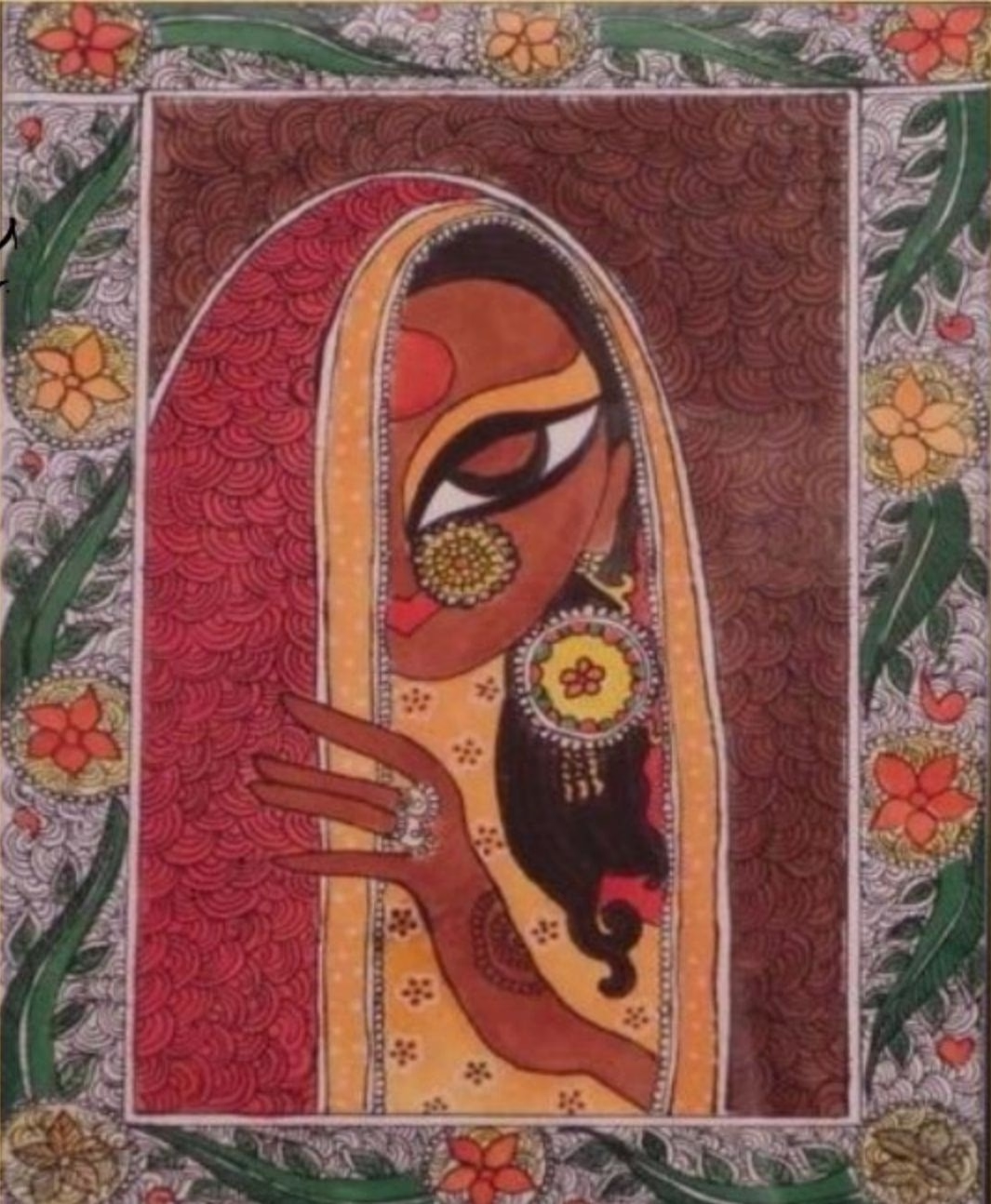
  • Madhubani Painting: Madhubani Painting