Indian Philosophy Schools: Orthodox & Heterodox Systems
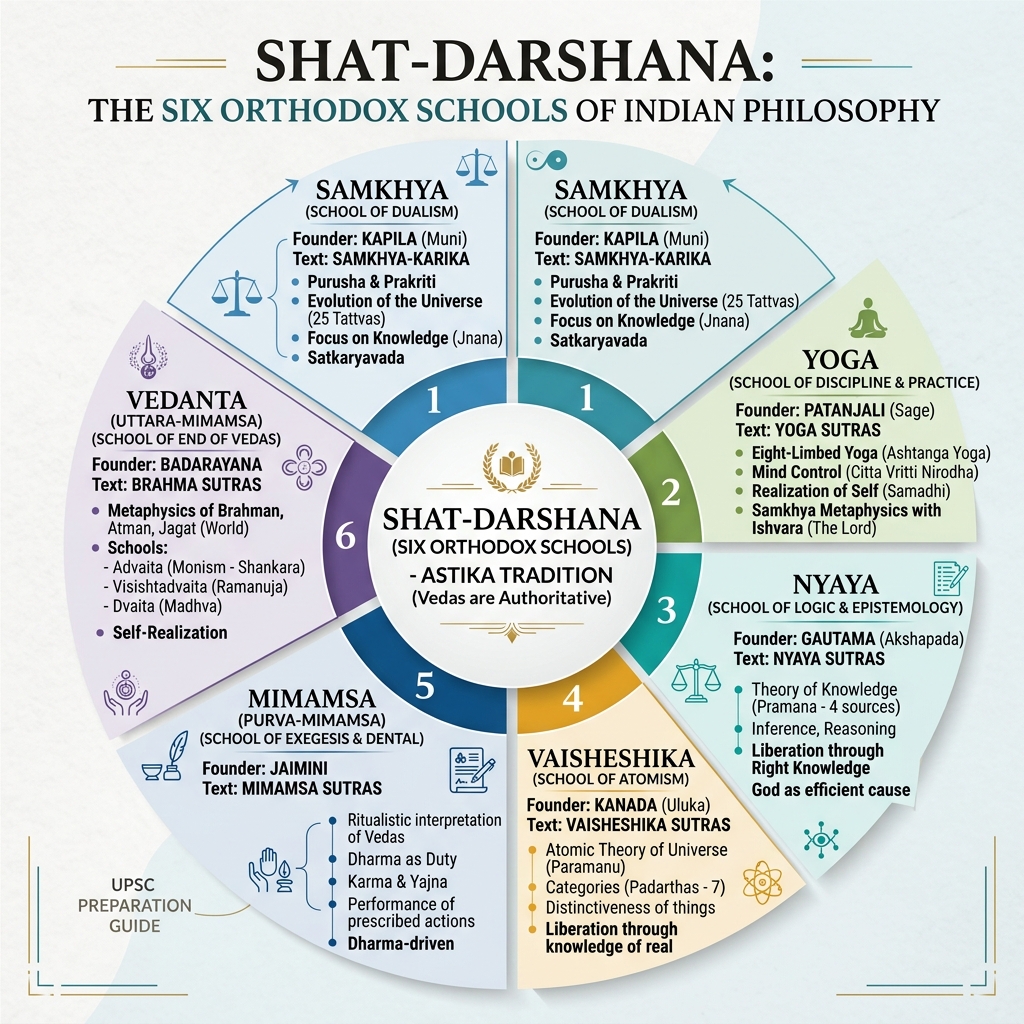
The Six Orthodox (Astika) Schools
The Six Orthodox (Astika) Schools
| Cue Words | Notes |
|---|---|
| Samkhya (Founder: Kapila) | - Oldest orthodox school; strongly dualistic (**Purusha** = pure consciousness, passive vs. **Prakriti** = matter/nature, active) - Liberation: Purusha realizes distinction from Prakriti - Rejects creator God (Atheistic Dualism) |
| Yoga (Founder: Patanjali) | - Practical application & systematic practice of Samkhya metaphysics - Mind control via **Eight-fold Path (Ashtanga Yoga):** Yama, Niyama, Asana, Pranayama, Pratyahara, Dharana, Dhyana, Samadhi |
| Nyaya (Founder: Gautama / Akshapada) | - School of logic, reasoning, epistemology - End suffering via right knowledge; 4 valid knowledge sources (*Pramanas*): Perception (*Pratyaksha*), Inference (*Anumana*), Comparison (*Upamana*), Testimony (*Shabda*) |
| Vaisheshika (Founder: Kanada / Uluka) | - Realistic atomic pluralism; physical universe composed of indivisible atoms (*Parmanu*) & elements (earth, water, fire, air, ether) - Closely associated with Nyaya school |
| Mimamsa / Purva Mimamsa (Founder: Jaimini) | - Ritualistic philosophy based on Samhita & Brahmana portions of Vedas - Vedas eternal & authorless; salvation via precise performance of Vedic sacrifices & rituals |
| Vedanta / Uttara Mimamsa (Founder: Badarayana) | - Philosophical teachings of Upanishads (end/culmination of Vedas) - Explores relationship between individual soul (*Atman*) & ultimate reality (*Brahman*); compiled in *Brahma Sutras* |
The Heterodox (Nastika) Schools
The Heterodox (Nastika) Schools
| Cue Words | Notes |
|---|---|
| Carvaka / Lokayata (Founder: Brihaspati) | - Purely materialistic & atheistic philosophy; rejects soul, god, karma, afterlife - Perception (*Pratyaksha*) = only valid source of knowledge; hedonism (maximizing present pleasure) |
| Buddhism (Founder: Siddhartha Gautama) | - Centered on **Four Noble Truths** (suffering, cause, cessation, path) & **Eightfold Path** (*Ashtangika Marga*) - Rejects Vedic sacrifices & caste hierarchies |
| Jainism (Founder: Mahavira / Rishabhadeva) |
|
Major Vedanta Sub-Schools and Commentators
Major Vedanta Sub-Schools and Commentators
| Cue Words | Notes |
|---|---|
| Advaita Vedanta (Shankaracharya) | - Absolute Non-dualism: Atman and Brahman are identical; material world is illusion (**Maya**) - Established 4 mathas/peethas: Dwaraka, Puri, Joshimath, Sringeri |
| Vishishtadvaita Vedanta (Ramanujacharya) | - Qualified Non-dualism: Brahman is supreme reality; soul & world are distinct attributes/parts of Brahman; devotional Bhakti |
| Dvaita Vedanta (Madhvacharya) | - Absolute Dualism: clear eternal distinction between Brahman (God), individual soul (*Jiva*), and matter |
| Suddhadvaita (Vallabhacharya) | - Pure Non-dualism: world is real (not illusion), a manifestation of Krishna/Brahman |
| Dvaitadvaita (Nimbarkacharya) | - Dualistic Monism (difference-in-identity): souls & matter distinct from God yet dependent on Him |
Bhakti Traditions & Medieval Reformers
Bhakti Movement & Tulsidas (1497-1623)
| Cue Words | Notes |
|---|---|
| Saguna vs Nirguna Bhakti Traditions |
|
| Tulsidas (1497-1623) — Life & Philosophy |
|
| Navavidha Bhakti (Nine Paths of Devotion) | - Tulsidas outlined nine forms of devotion to God: Shravanam (listening), Kirtanam (singing), Smaranam (remembering), Padasevam (serving feet), Archnam (worshipping), Vandanam (bowing), Dasyam (servitude), Sakhyam (friendship), Atma-Nivedanam (self-surrender) |
| Ramlila Tradition — UNESCO Recognition |
|
UPSC Recall & Traps
UPSC Recall & Traps
| Cue Words | Notes |
|---|---|
| Anekantavada & Syadvada Trap | - Strictly associated with **Jainism** (often mixed up with Buddhist concepts in MCQs) |
| Samkhya Dualism Trap | - Dualistic but **rejects a personal creator God** (NOT a theistic system) |
| Lokayata Identity | - Alternative name for **Carvaka** school of materialism |
| Pramana Sources Count by School | - Carvaka: 1 (Perception) - Buddhism / Vaisheshika: 2 (Perception, Inference) - Jainism: 3 - Nyaya: 4 - Mimamsa / Advaita: 6 |
🖼️ Supplemental Asset Directory
Supplemental Asset Directory
- The Six Orthodox Schools of Indian Philosophy (Shat-Darshana):
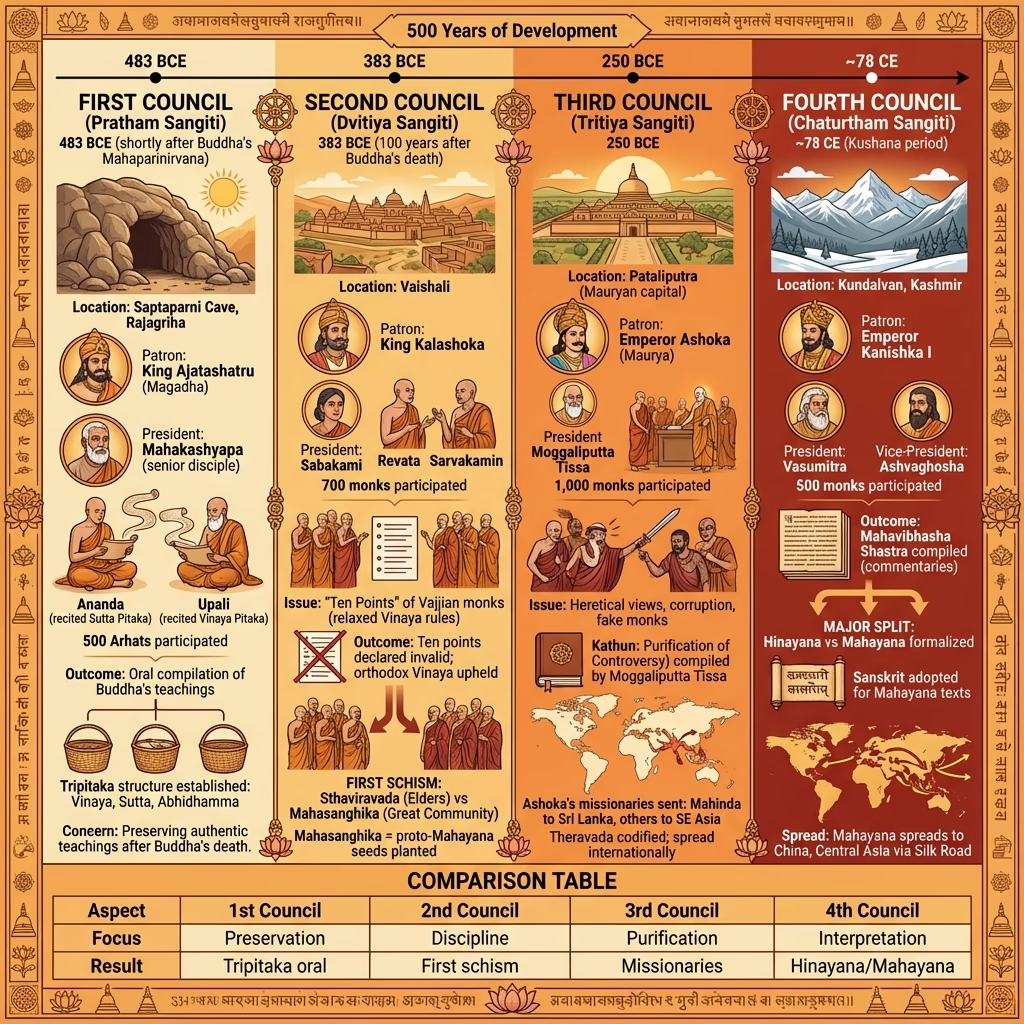
- Buddhist Councils: Locations and Major Outcomes:
- Jain Tirthankara: Iconic Iconography:
- Shankaracharya Peethas:
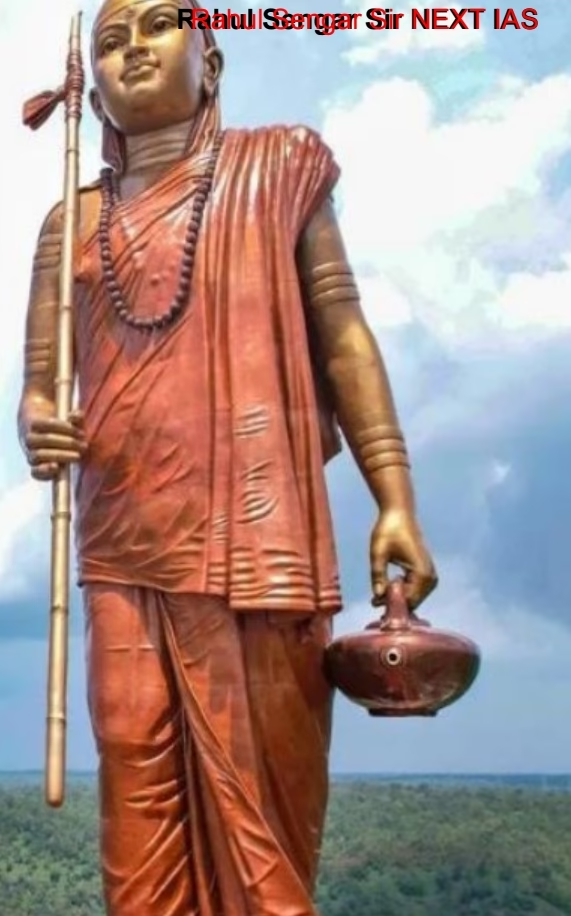
- Statue of Oneness (Shankaracharya):
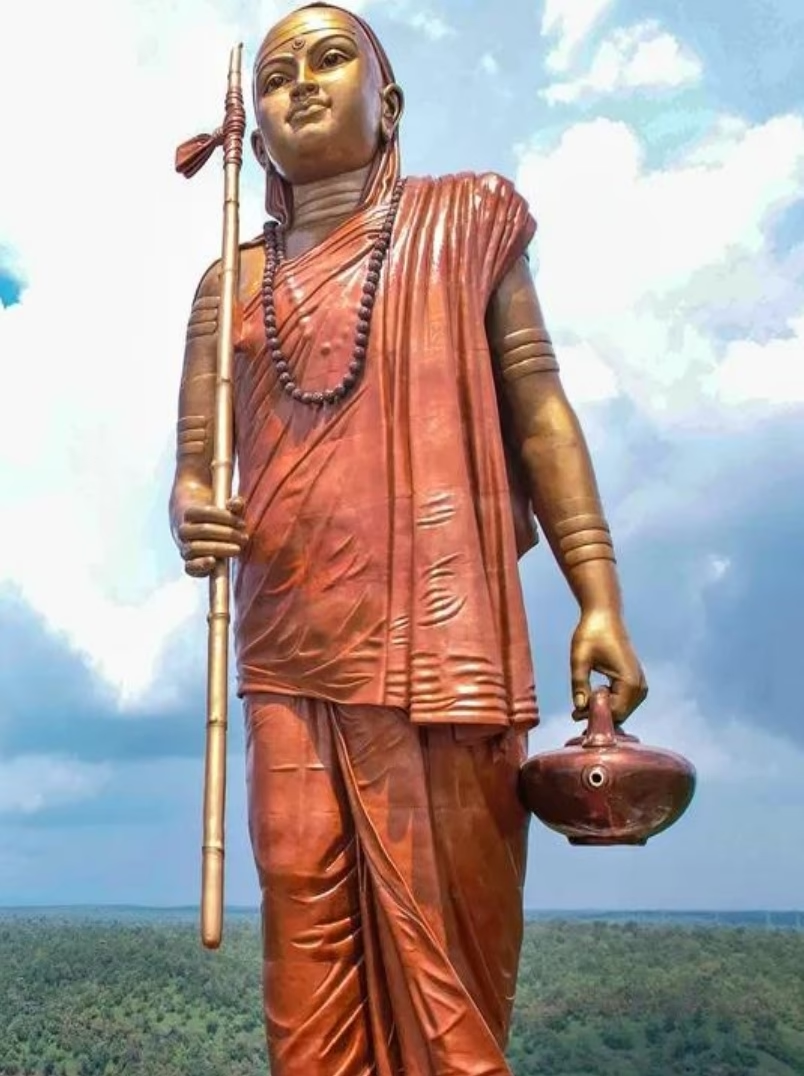
- First Buddhist Council held at Rajgir under Ajatashatru
- Second Buddhist Council held at Vaishali under Kalashoka
- Third Buddhist Council held at Patliputra under Ashoka
- Fourth Buddhist Council held at Kashmir under Kanishka
- Nagarjuna founder of Madhyamaka philosophy, basis of Mahayana Buddhism
- Guru Gobind Singh last human Guru of Sikhs; founded Khalsa Panth; established five K's code: Kesh, Kangha, Kada, Kirpan, Kachera
- Santhara is an age-old Jain practice of a vow of fasting unto death; defenders cite Article 25 (religious freedom) while critics cite Article 21 (right to life and liberty).
- The word yoga appears in the Vedic corpus (1500-500 BCE) in a context far removed from postural/meditational exercise; in the Mahabharata (300 BCE-300 CE) it is used in a sense familiar today.
- One school of thought holds that yoga is not of Vedic provenance but originated in heterodox traditions like Buddhism and Jainism during the first millennium BCE.
- The Yoga Sutra of Maharishi Patanjali, composed around 350 CE, is the oldest text solely dedicated to yoga.
- The theme of the 11th International Day of Yoga (2025) was "Yoga for One Earth, One Health".
- Jore Sahib (holy shoes of Guru Gobind Singh and Mata Sahib Kaur) will be kept at Patna Sahib Gurudwara; Guru Gobind Singh, the last human Sikh Guru, founded the Khalsa Panth and laid down the code of five Ks - Kesh, Kangha, Kada, Kirpan, Kachera.
- Sankardev developed Ankiya Naat (one-act play combining dance, music, storytelling) and originated Bhaona theatrical performance
- Sankardev developed Sattriya Dance, classical dance form recognized as one of India's eight classical dance forms
- Goswami Tulsidas wrote the Ramcharitmanas on the banks of the Ganga at Assi, Varanasi, in the Awadhi dialect; it is included in UNESCOs Memory of the World Asia-Pacific Regional Register.
- Tulsidas composed Vinay Patrika and Kavitavali in the Braj dialect, along with Gitavali, Dohavali, Janaki Mangal, Parvati Mangal, Barvai, and the Hanuman Chalisa.
- Tulsidas was a reformer and philosopher of the Ramanandi Sampradaya, in the lineage of Jagadguru Ramanandacharya.
- Tulsidas was a Vaishnava Hindu saint-poet of the Saguna Bhakti tradition, devoted to Lord Rama; he held Nirguna and Saguna bhakti as complementary, not opposed.
- Tulsidas founded the Sankatmochan Temple in Varanasi, dedicated to Lord Hanuman.
- Ramlila, a performance of the Ramayana based on Tulsidas Ramcharitmanas, was started by his disciples after his death and is listed in UNESCOs Representative List of Intangible Cultural Heritage.
- Tulsidas propagated Navavidha Bhakti (nine kinds of devotion) and embraced Advaita/Monism, describing Rama as the formless divine.
- The 500th birth anniversary of Goswami Tulsidas was celebrated in Chitrakoot.
- Srimanta Sankardev (15th century, born Aali-pukhuri, Nagaon, Assam) founded Ekasarana Dharma, a Neo-Vaishnavite bhakti movement devoted to Krishna, and composed the Kirtana Ghosha and Gunamala (a condensed Bhagavata Purana).
- Sankardev promoted equality, tolerance and love for humanity, spearheading the bhakti movement's spread across North-east India.
- Jore Sahib sacred shoes of Guru Gobind Singh and Mata Sahib Kaur kept at Patna Sahib Gurudwara
🔗 Shad-Darshana: Traditional Pairing of the Six Orthodox Schools
- The six orthodox (Astika) schools are traditionally studied in three complementary pairs, since each pair shares closely related concerns:
- Nyaya–Vaisheshika: logic/epistemology paired with physics/metaphysics (atomism)
- Samkhya–Yoga: theory (dualist metaphysics) paired with practice (meditative discipline)
- Mimamsa–Vedanta: ritual-action (Purva/Karma-Mimamsa) paired with knowledge of Brahman (Uttara Mimamsa)
- This pairing is a frequent UPSC-style association trap distinct from just listing the six schools individually.