Indian Conservation & Space Program
Biodiversity Conservation & Protected Areas
Protected Area Network & Flagship Species
Protected Area Network & Flagship Species
| Cue Words | Notes |
|---|---|
| Summarize the scale of India's National Parks and name first and largest parks. | Protected Area Network:
|
| Map critical flagship species to their specific primary conservation habitats in India. | Flagship Species Mapping:
|
Ramsar Wetlands & Biosphere Reserves
Ramsar Wetlands & Biosphere Reserves
| Cue Words | Notes |
|---|---|
| Define Ramsar Wetlands and identify the first and largest sites in India. | Ramsar Wetlands Network:
|
| Explain the Biosphere Reserve concept and WNBR inclusion. | Biosphere Reserves: Large areas of terrestrial or coastal ecosystems designated under UNESCO's Man and the Biosphere (MAB) Programme to promote sustainable development.
|
Space Technology & Satellite Capabilities
ISRO's Launch Vehicle Architecture
ISRO's Launch Vehicle Architecture
| Cue Words | Notes |
|---|---|
| Trace the technical evolution of ISRO's launch vehicle family. | Launch Vehicle Evolution:
|
Operational Satellite Series & Deep Space Missions
Operational Satellite Series & Deep Space Missions
| Cue Words | Notes |
|---|---|
| Contrast the INSAT and IRS satellite series. | Satellite Classifications:
|
| Summarize ISRO's major deep space and exploration missions. | Strategic Space Missions:
|
High-Yield UPSC Revision Pointers
- Satish Dhawan Space Centre (SDSC): Located in Sriharikota, Andhra Pradesh. India's primary spaceport due to its proximity to the equator (saving fuel) and launch window over the eastern sea (safe booster drop).
- Aryabhatta (1975): India's first scientific satellite, built by ISRO and launched using a Soviet Kosmos-3M rocket.
- Project Tiger (1973): Launched from Jim Corbett National Park to arrest the decline of the royal Bengal tiger population, pioneering the "core-buffer" strategy.
- Montreux Record Criteria: keoladeo National Park (water scarcity issues) and Loktak Lake (siltation and phumdi proliferation) remain listed on the Montreux Record.
Visual & Illustrative Assets
🖼️ Supplemental Asset Directory
- India's Endemic Animals and Conservation Areas:
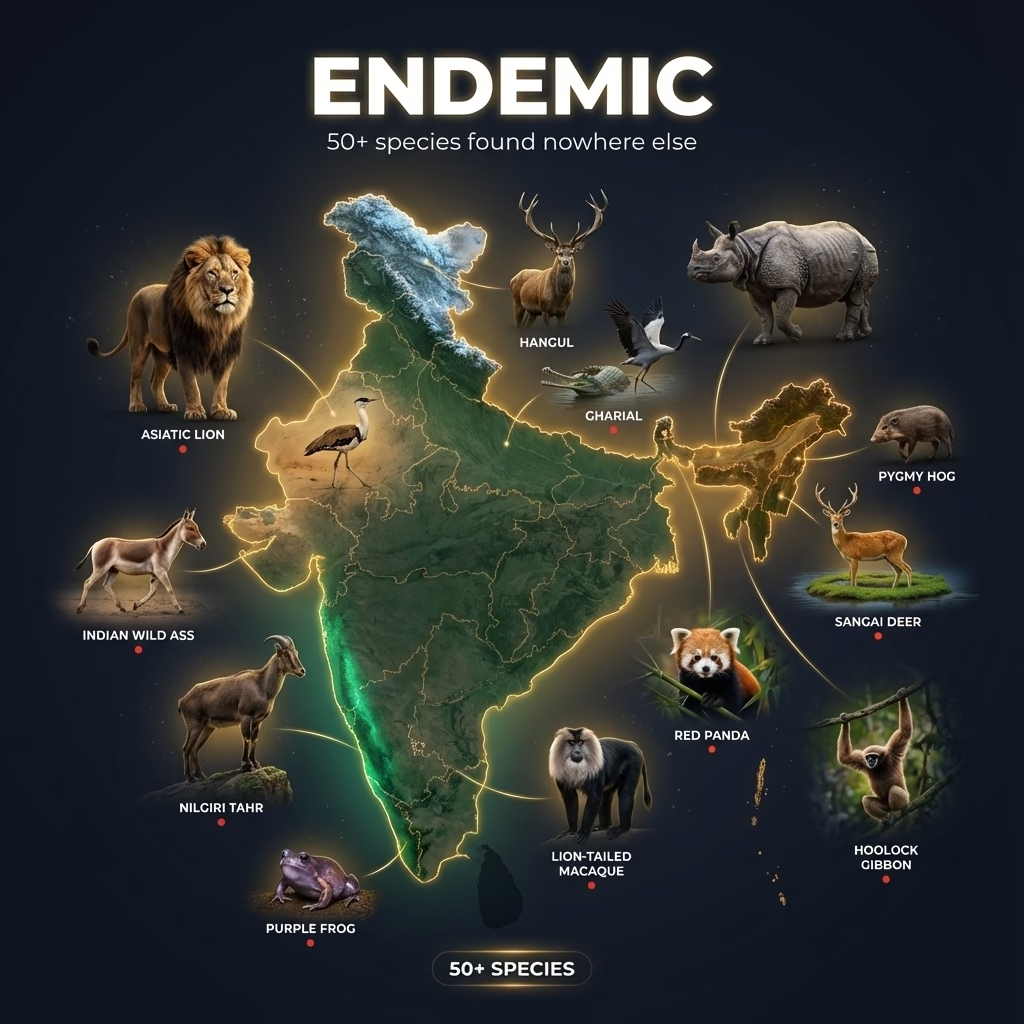
- ISRO: Launch Vehicle Evolution:
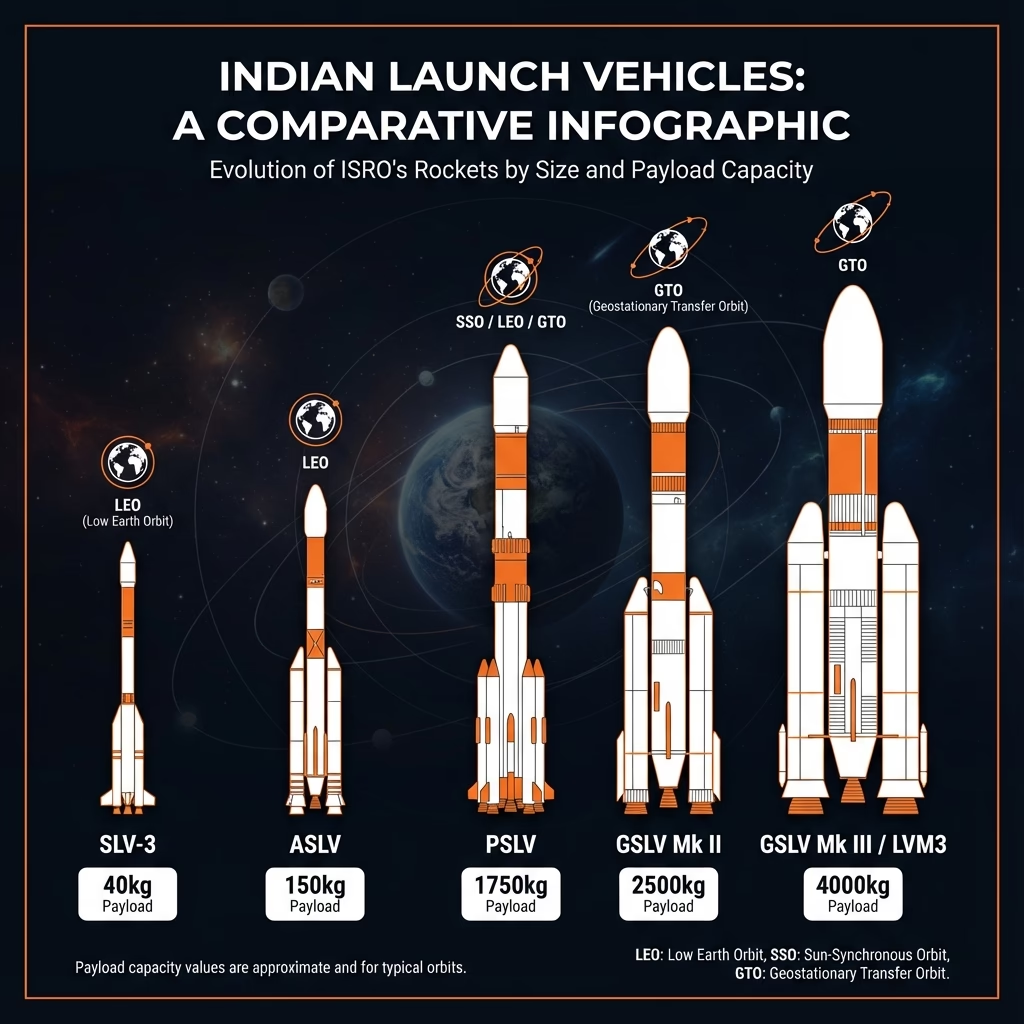
- Satellite Orbits Diagram:
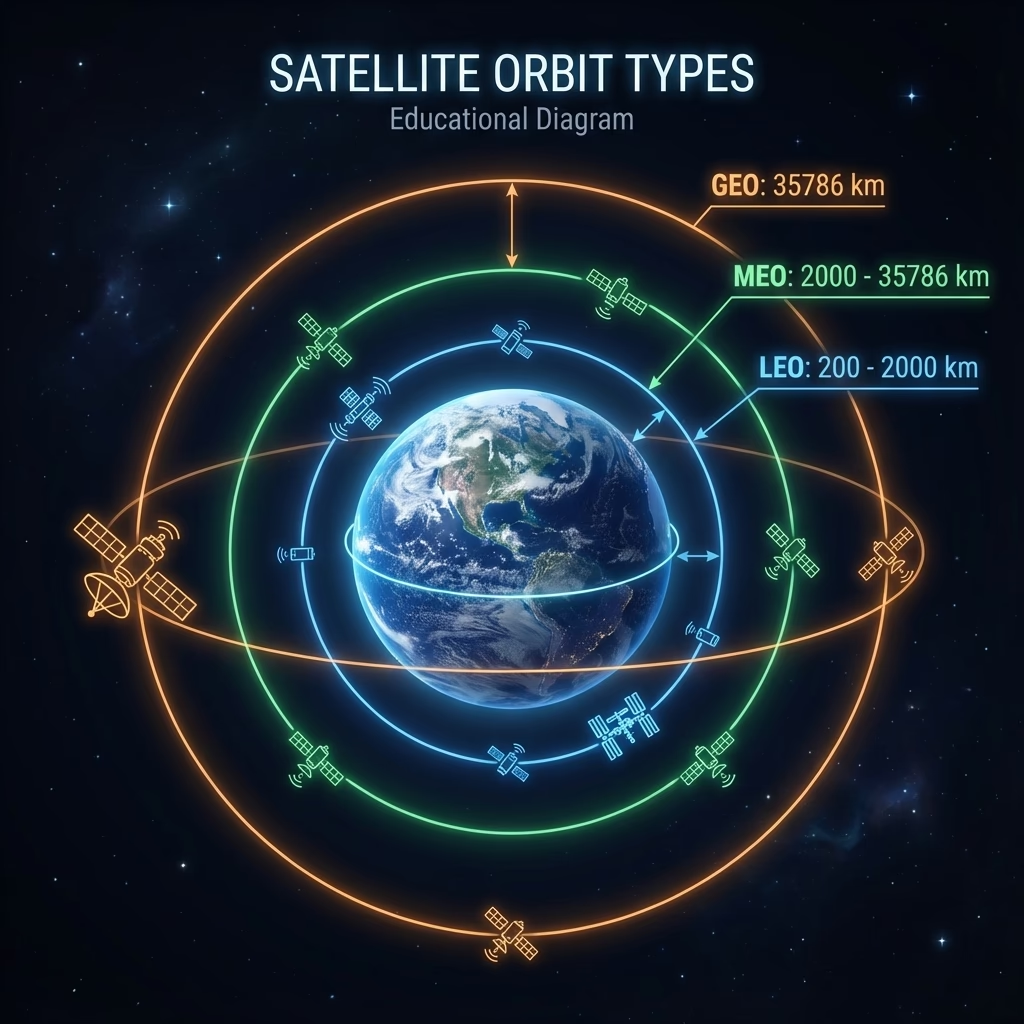
- ISRO's Major Missions and Timeline:
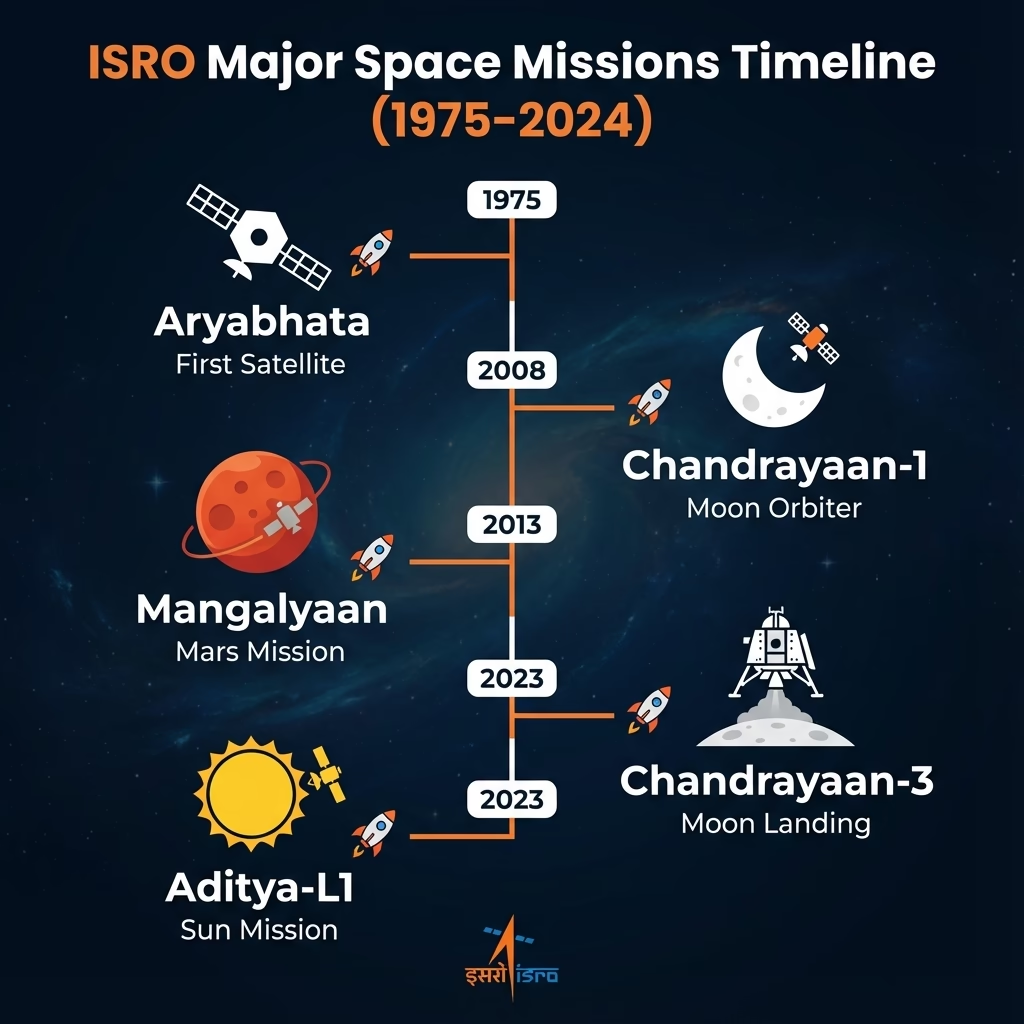
Mains Practice Questions
- "Discuss the role of Remote Sensing Satellites in disaster management and agricultural planning in India."
- Evaluate the effectiveness of the National Park system in preventing species extinction.
- "Examine the strategic significance of the Indigenous Cryogenic Engine for India's heavy-lift capabilities."
🐘 Project Elephant & Project Cheetah
- Project Elephant (1992): A centrally sponsored scheme by the Ministry of Environment, Forest and Climate Change to protect elephants, their habitats, and migratory corridors, and to address human-elephant conflict — administered across designated Elephant Reserves in states like Assam, Karnataka, and Kerala.
- Project Cheetah (2022): Reintroduced the cheetah to India (locally extinct since 1952) by translocating cheetahs from Namibia and South Africa to Kuno National Park, Madhya Pradesh — the world's first intercontinental large carnivore translocation project.
High-Yield Rapid Revision Additions
| Cue Words | Notes |
|---|---|
| Detail India's biodiversity hotspots, endemism, and ZSI collaborations. | Faunal Diversity & Hotspots:
|