Climatology: Phenomena, Clouds & Classification
Climatic Classification & Cloud Physics
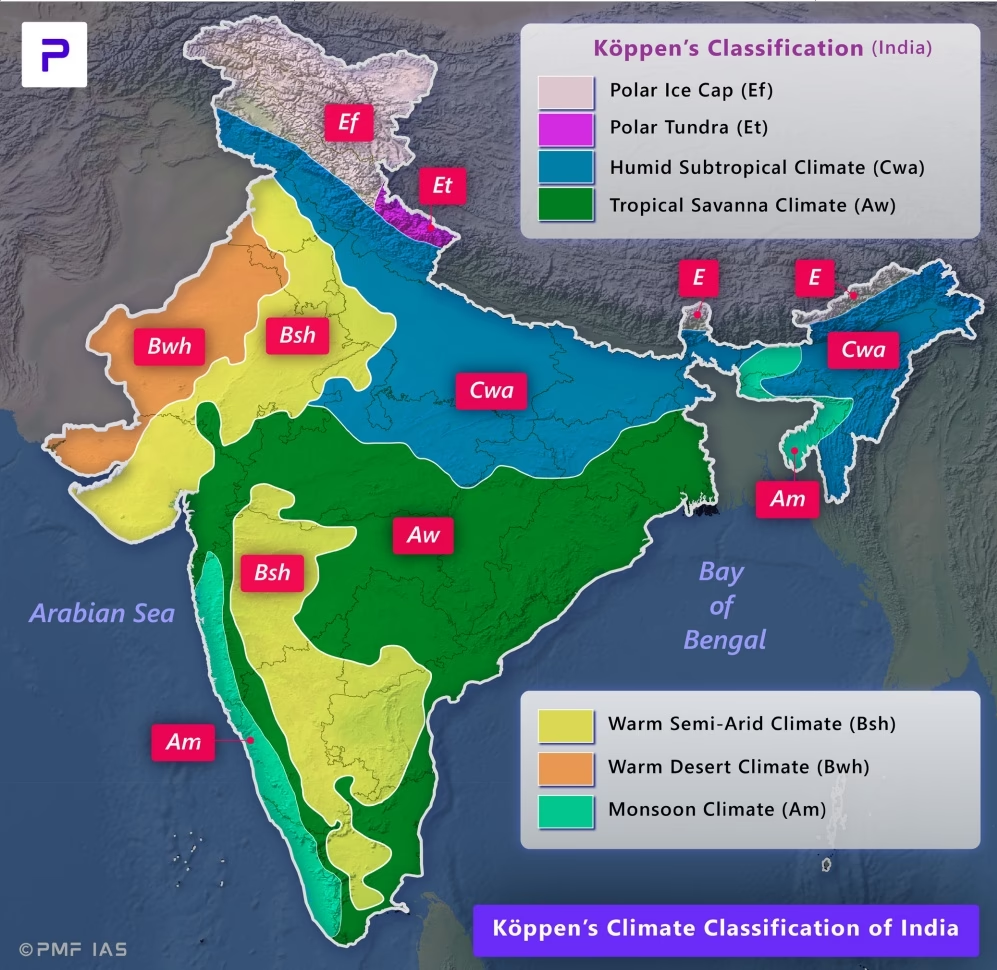
Köppen System & Climatic Zones
Köppen System & Climatic Zones
| Cue Words | Notes |
|---|---|
| Explain the basis of Köppen's Climate Classification and list the major groups. | Köppen Climate Classification: A quantitative, empirical system that uses monthly temperature and precipitation data to define vegetation-aligned climatic zones.
|
Cloud Physics & Precipitation Phenomena
Cloud Physics & Precipitation Phenomena
| Cue Words | Notes |
|---|---|
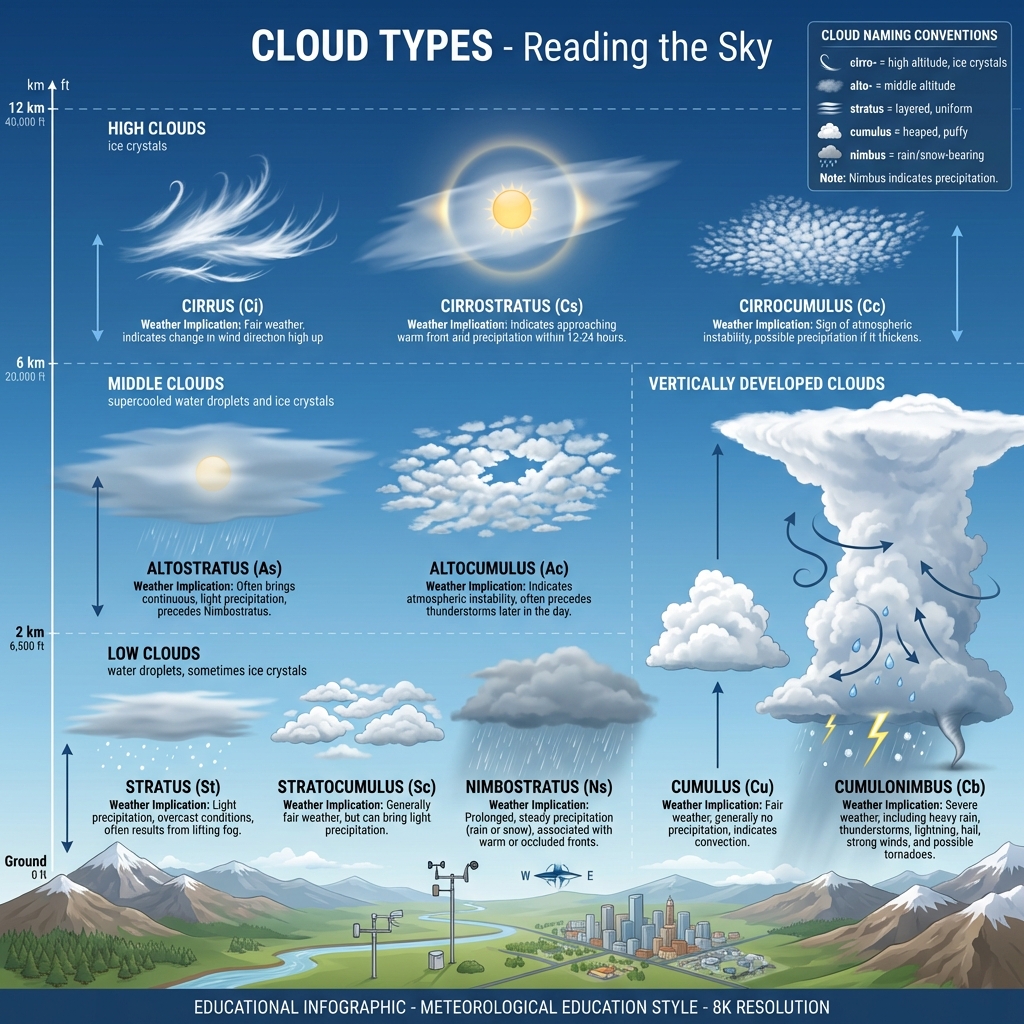
| Classify clouds by altitude and detail the characteristics of Cumulonimbus. | Cloud Classification:
|
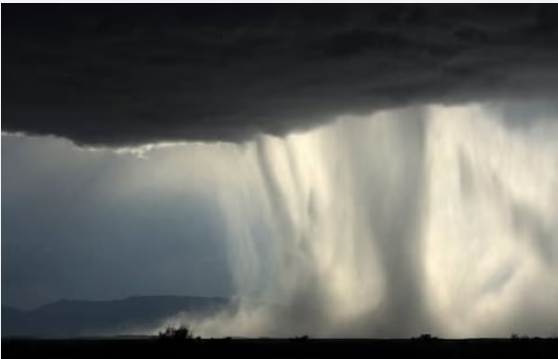
| Define Cloudburst and explain its typical physical mechanism. | Cloudburst Phenomenon: An extreme precipitation event defined by rainfall of 10 cm or more per hour over a localized area of approximately $10 \times 10\text{ km}$.
|
Extreme Weather & Atmospheric Forecasting
Climate Trends & Extreme Events
Climate Trends & Extreme Events
| Cue Words | Notes |
|---|---|
| Define GLOFs and explain the importance of the year 2025 in glacier preservation. | Glacial Lake Outburst Floods (GLOFs):
|
| What are Thirstwaves and NIO Cyclone shifts? | Emerging Trends:
|
Forecasting Architecture & Infrastructure
Forecasting Architecture & Infrastructure
| Cue Words | Notes |
|---|---|
| Highlight the history, mandate, and recent forecasting systems of IMD. | India Meteorological Department (IMD):
|
High-Yield UPSC Revision Pointers
- Mangrove Shield: UN studies show that healthy mangrove bands can reduce wave energy by up to 90% during cyclonic surges, acting as a natural coastal buffer.
- Kutumsar & Belum Caves: Notable Indian karst systems; subterranean limestone networks crucial for paleoclimate and geological studies.
- Snow Trout: A cold-water fish species in the Himalayan rivers that serves as an ecological bio-indicator for warming river channels.
- Mini-Cloudburst: Localized rain events of 5 cm or more in an hour; showing a high increase in frequency in the Western Ghats and Western Himalayas.
🌧️ Types of Rainfall by Mechanism
- Convectional Rainfall: Caused by intense surface heating — warm air rises, cools adiabatically, and condenses; typical of equatorial regions with heavy afternoon showers (e.g., daily convectional rain in the Amazon and Congo basins).
- Orographic Rainfall: Occurs when moisture-laden winds are forced to rise over a mountain barrier, cool, and precipitate on the windward side, leaving the leeward side as a rain shadow (e.g., Western Ghats' windward Konkan coast vs. leeward Deccan plateau).
- Cyclonic/Frontal Rainfall: Occurs when warm and cold air masses meet at a front, with the lighter warm air forced upward over the denser cold air, producing widespread precipitation (typical of temperate cyclones).
Visual & Illustrative Assets
🖼️ Supplemental Asset Directory
- Köppen Global Climate Classification Map:
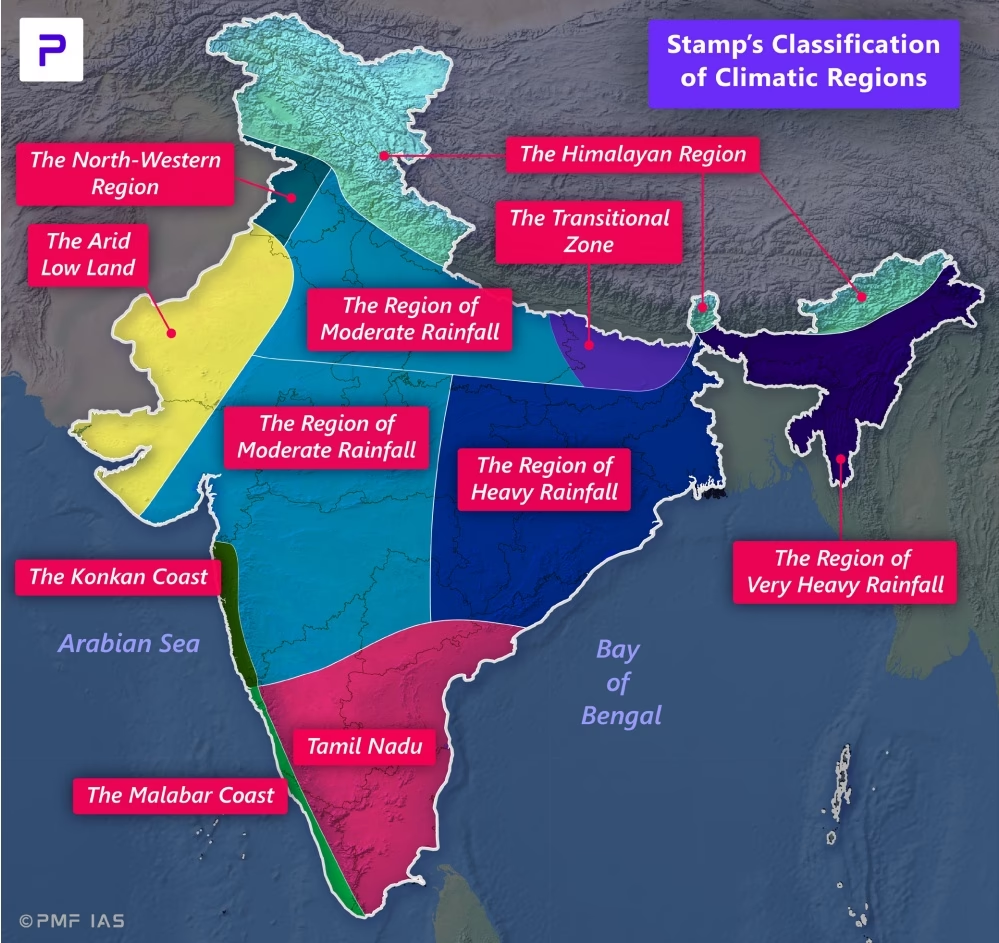
- Stamp's Classification of Indian Climate:
- Cloud Classification and Altitude Types:
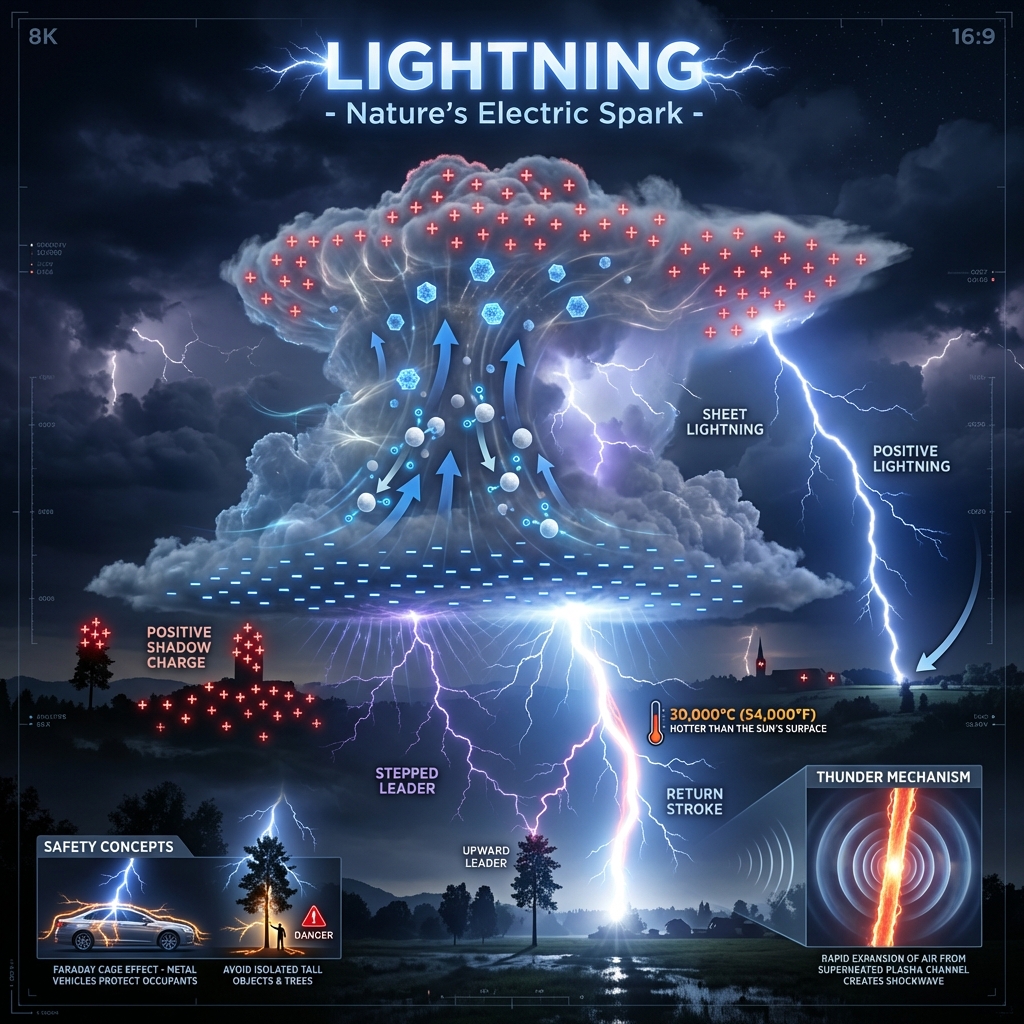
- Lightning Formation and Discharge:
- Cloudburst (Mechanism of Extreme Precipitation):
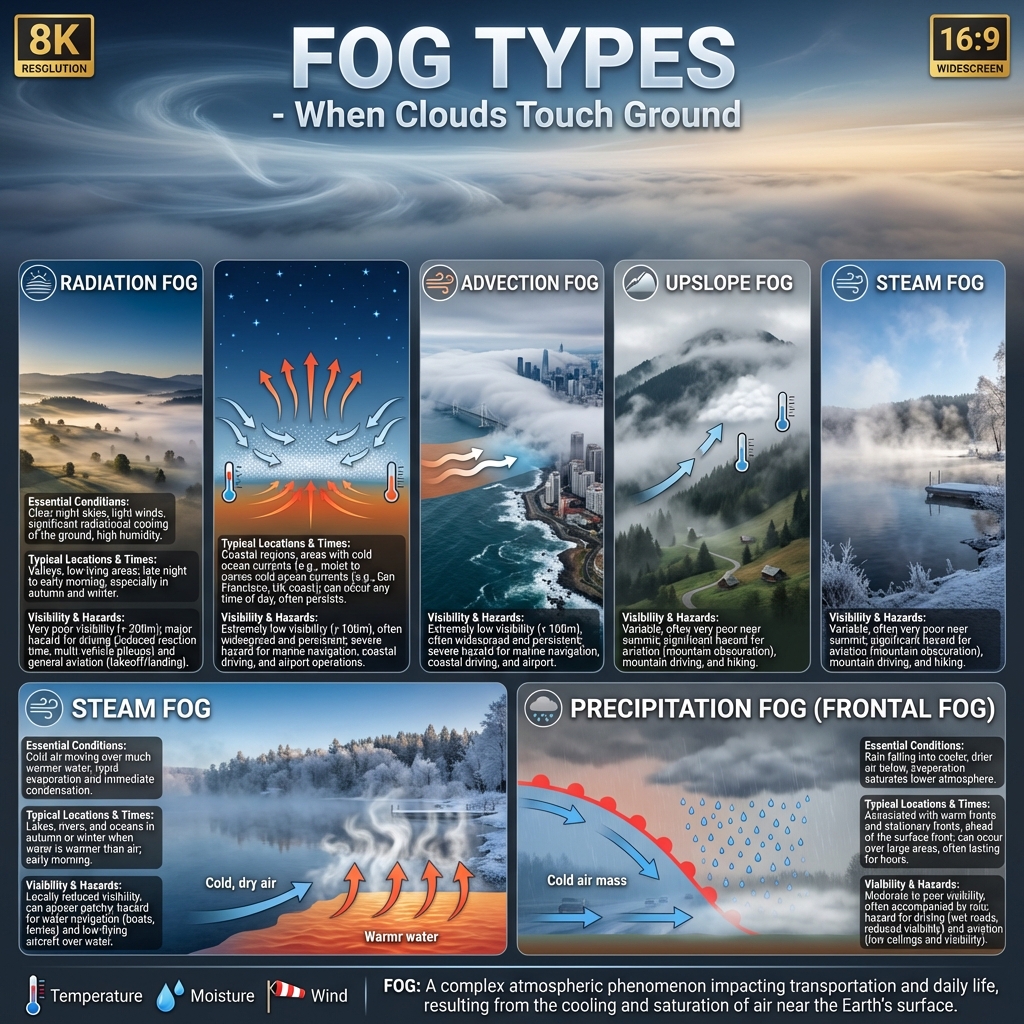
- Global Fog Types and Formation:
Mains Practice Questions
- "Explain the Köppen Classification System and its utility in understanding global climate change."
- "Discuss the atmospheric physics behind Lightning and its impact as a natural disaster."
- "Examine India's preparedness for Extreme Weather Events through the Bharat Forecasting System and Mission Mausam."
High-Yield Rapid Revision Additions
| Cue Words | Notes |
|---|---|
| Why does the East Coast receive more cyclones than the West Coast? | Cyclone Distribution: The Bay of Bengal (East Coast) is warmer and has higher sea surface temperatures compared to the Arabian Sea (West Coast), which triggers more low-pressure depressions and cyclones. |