Earth: Movements, Coordinates & Time
Earth's Shape, Composition & Coordinates
Physical Profile & Geomagnetism
Physical Profile & Geomagnetism
| Cue Words | Notes |
|---|---|
| Describe the exact shape of the Earth and the difference in its diameters. | Shape of the Earth: The Earth is an **Oblate Spheroid** (bulged at the equator, flattened at the poles). The equatorial diameter (12,756 km) is approximately 43 km larger than the polar diameter due to centrifugal force generated by rotation. |
| What is the elemental composition of the Earth as a whole? | Whole Earth Composition: Ranked by weight: Iron (35%) > Oxygen (30%) > Silicon (15%) > Magnesium (13%) > Nickel (2.4%) > Sulfur (1.9%). |
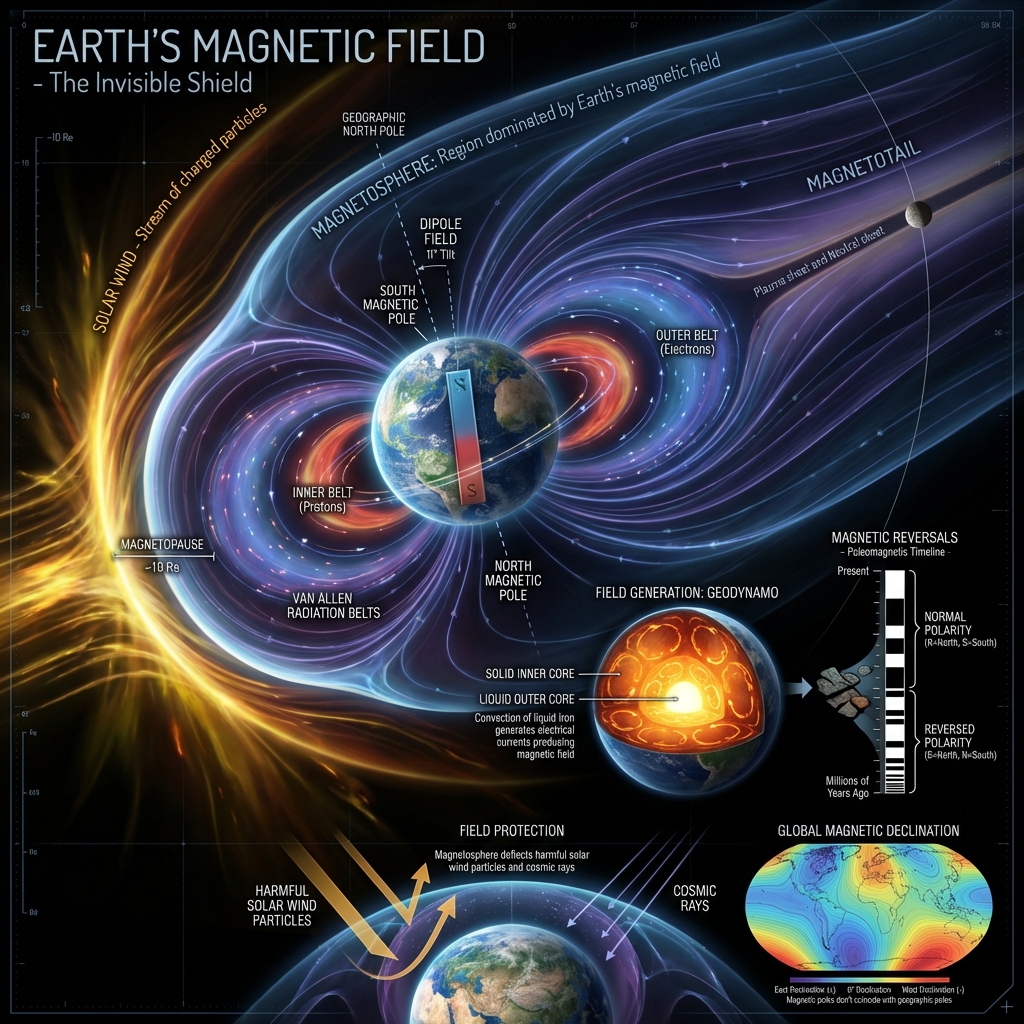
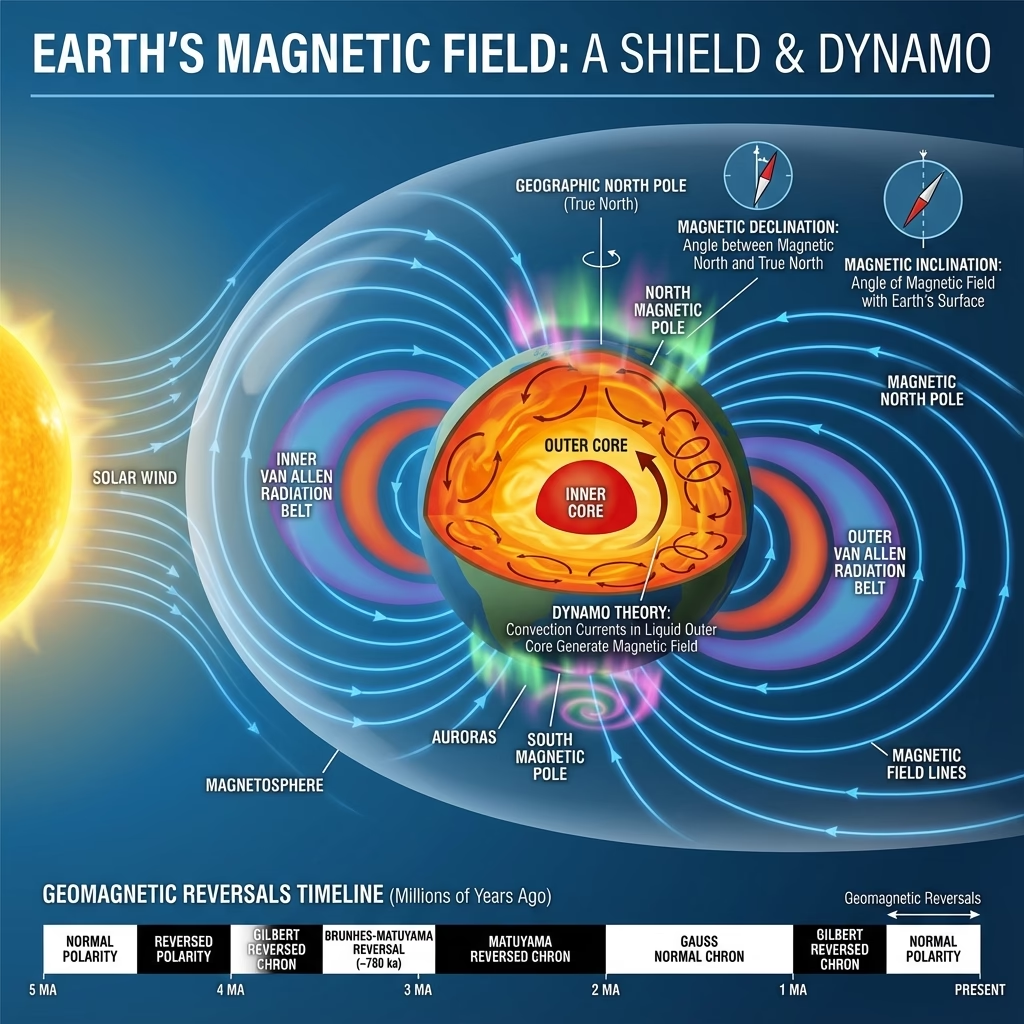
| How is the Earth's geomagnetic field generated? What is its role? | Geomagnetism:
|
Latitudes, Longitudes & Time Zones
Latitudes, Longitudes & Time Zones
| Cue Words | Notes |
|---|---|
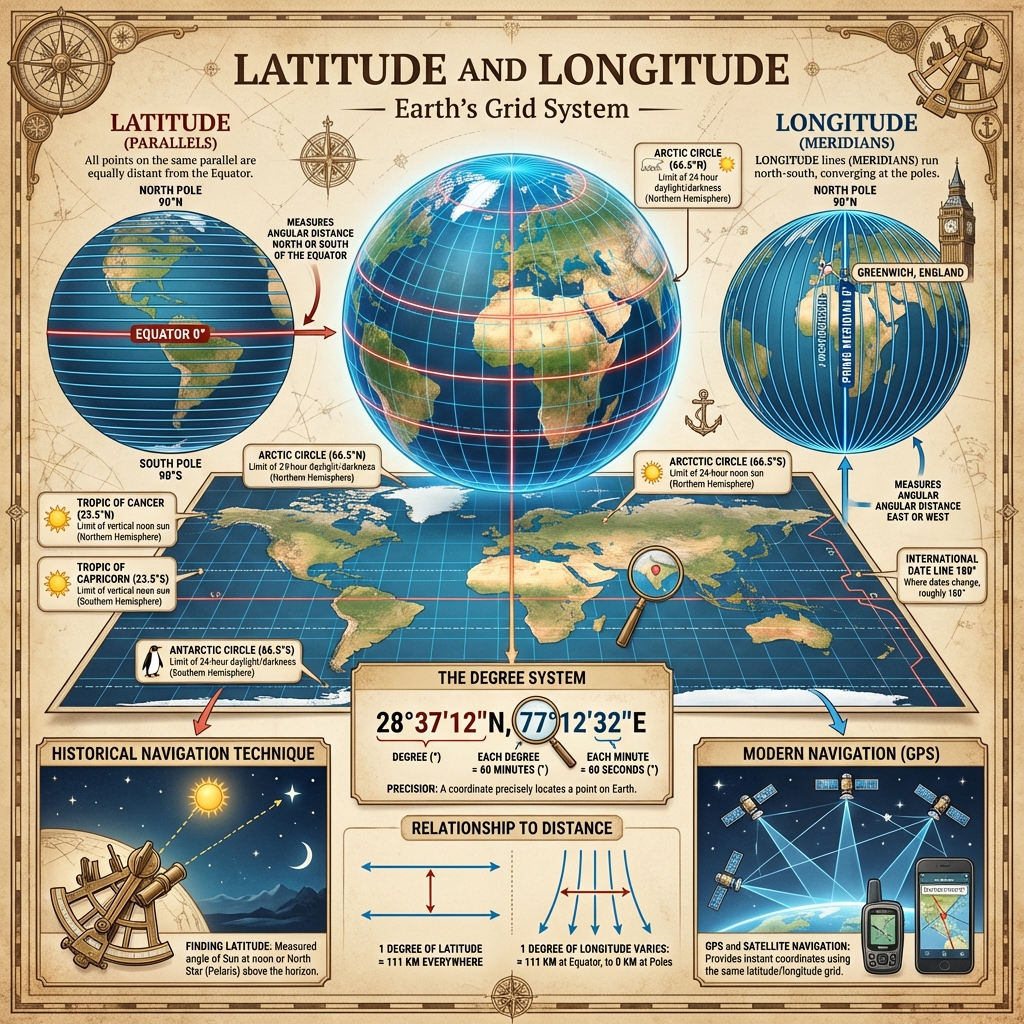
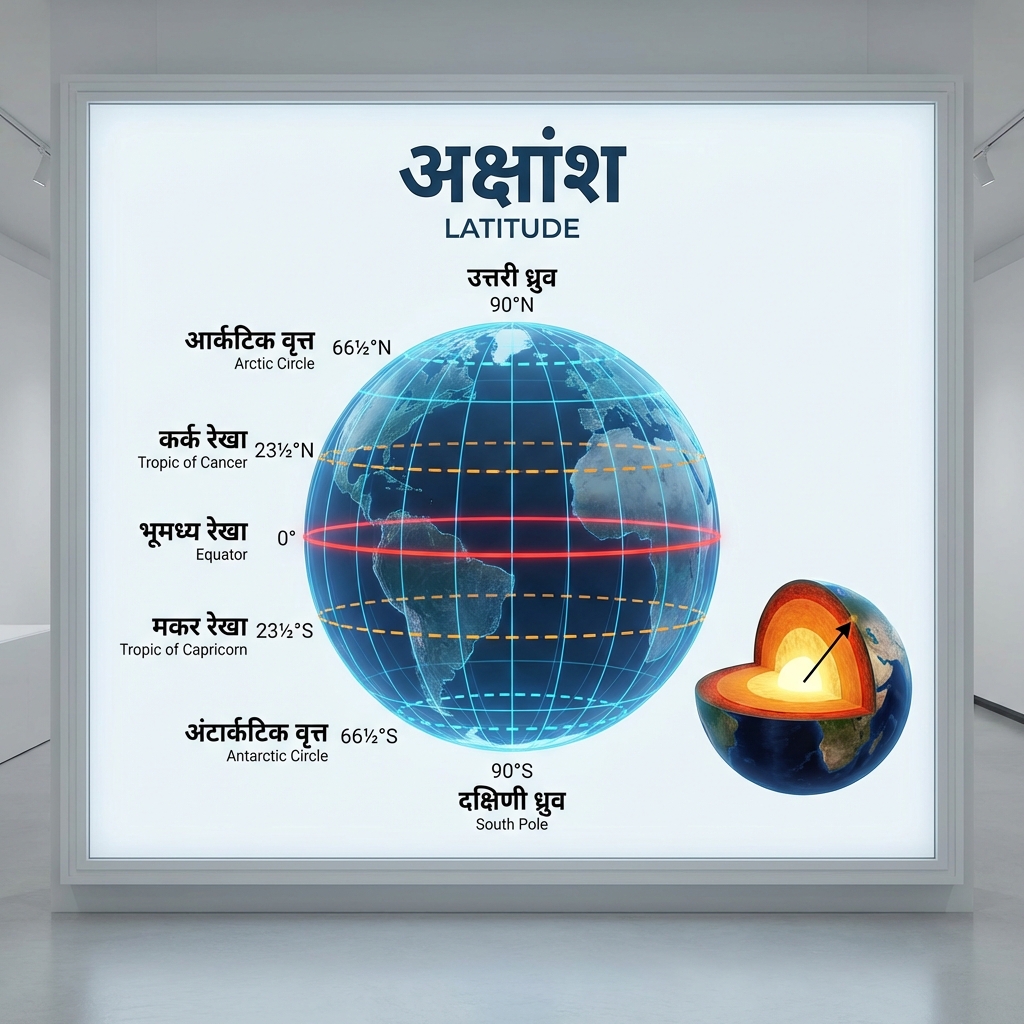
| Define Latitudes (Parallels) and specify the only latitude that is a Great Circle. | Latitudes (Parallels):
|
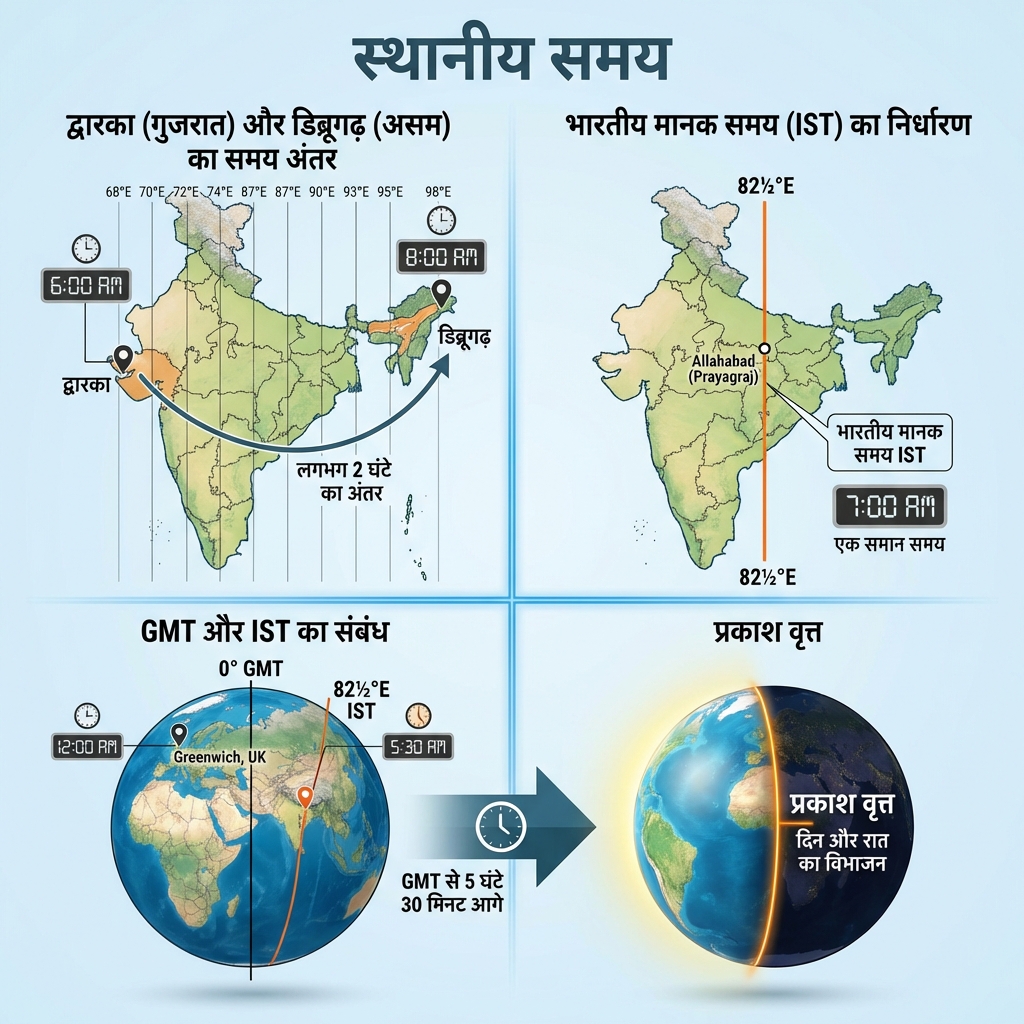
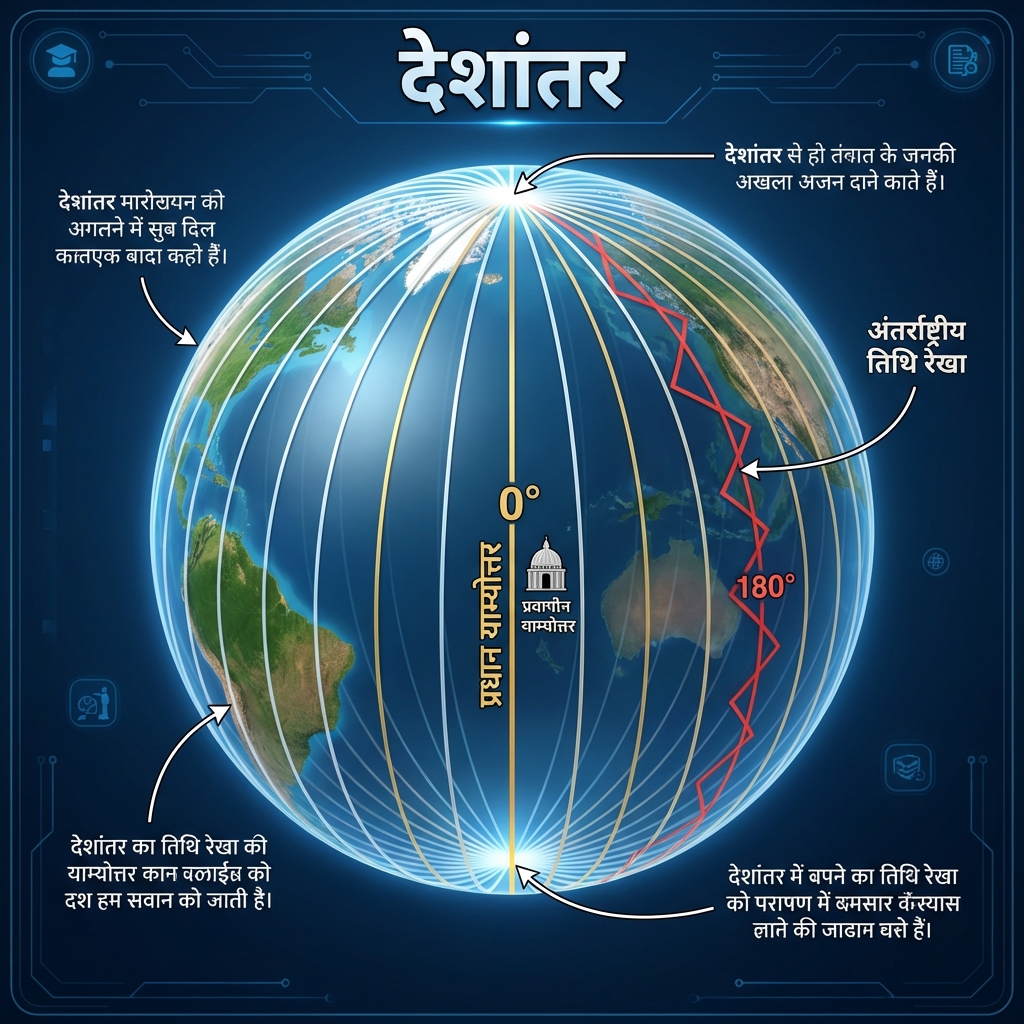
| Explain the relationship between Longitudes (Meridians) and time zones. | Longitudes and Time Calculation:
|
| Explain the Prime Meridian, Indian Standard Time (IST), and the International Date Line (IDL). | Standard Time & Date Line:
|
Earth Movements & Astronomical Cycles
Rotation, Revolution & Seasonality
Rotation, Revolution & Seasonality
| Cue Words | Notes |
|---|---|
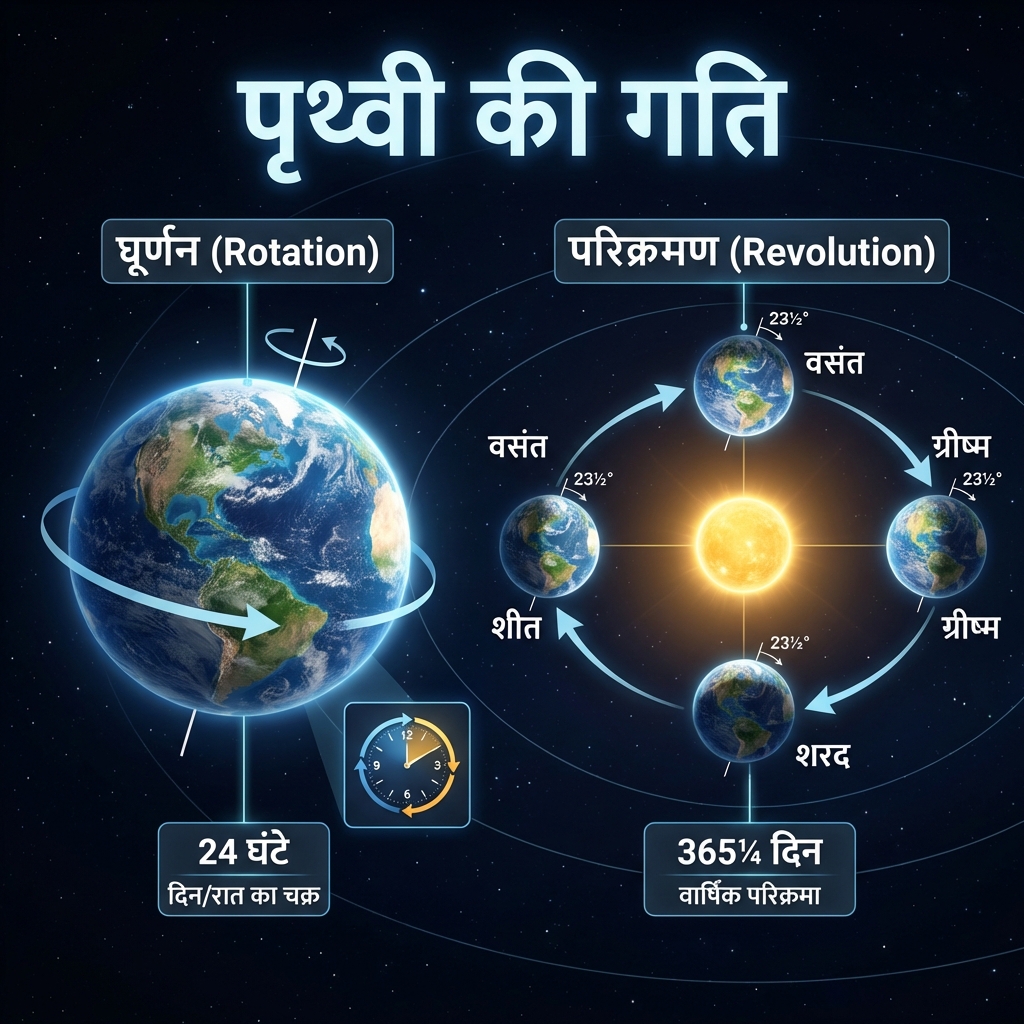
| Detail the direction and key geographical effects of Earth's Rotation. | Earth's Rotation:
|
| Distinguish between Perihelion and Aphelion. | Orbital Distance:
|
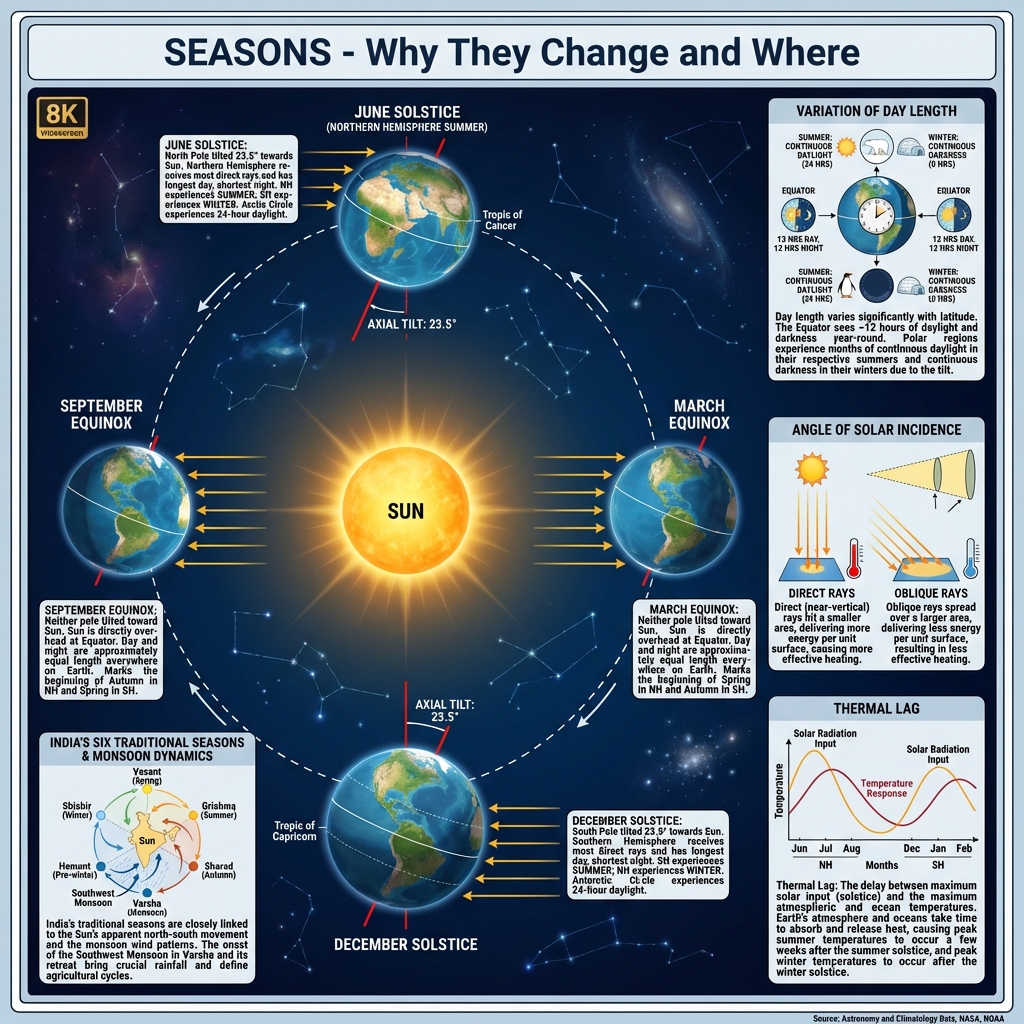
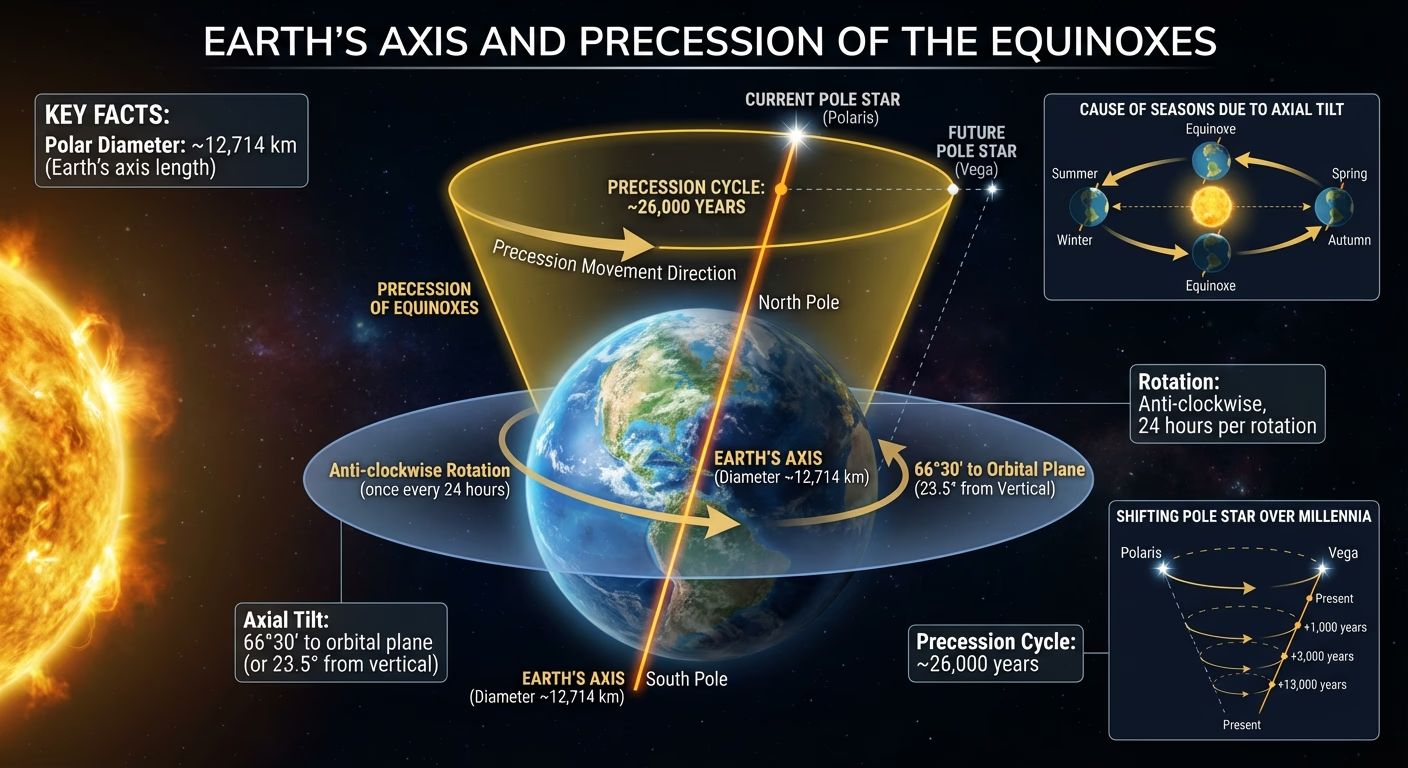
| What causes Earth's seasons? Detail Solstices and Equinoxes. | Mechanism of Seasons: Seasons are caused by Earth's orbital revolution combined with the **tilt of its axis at 23.5°** to the plane of its orbit:
|
Eclipses & Milankovitch Cycles
Eclipses & Milankovitch Cycles
| Cue Words | Notes |
|---|---|
| What is the difference between Solar and Lunar Eclipses? Why does a Lunar Eclipse appear red? | Eclipse Mechanics:
|
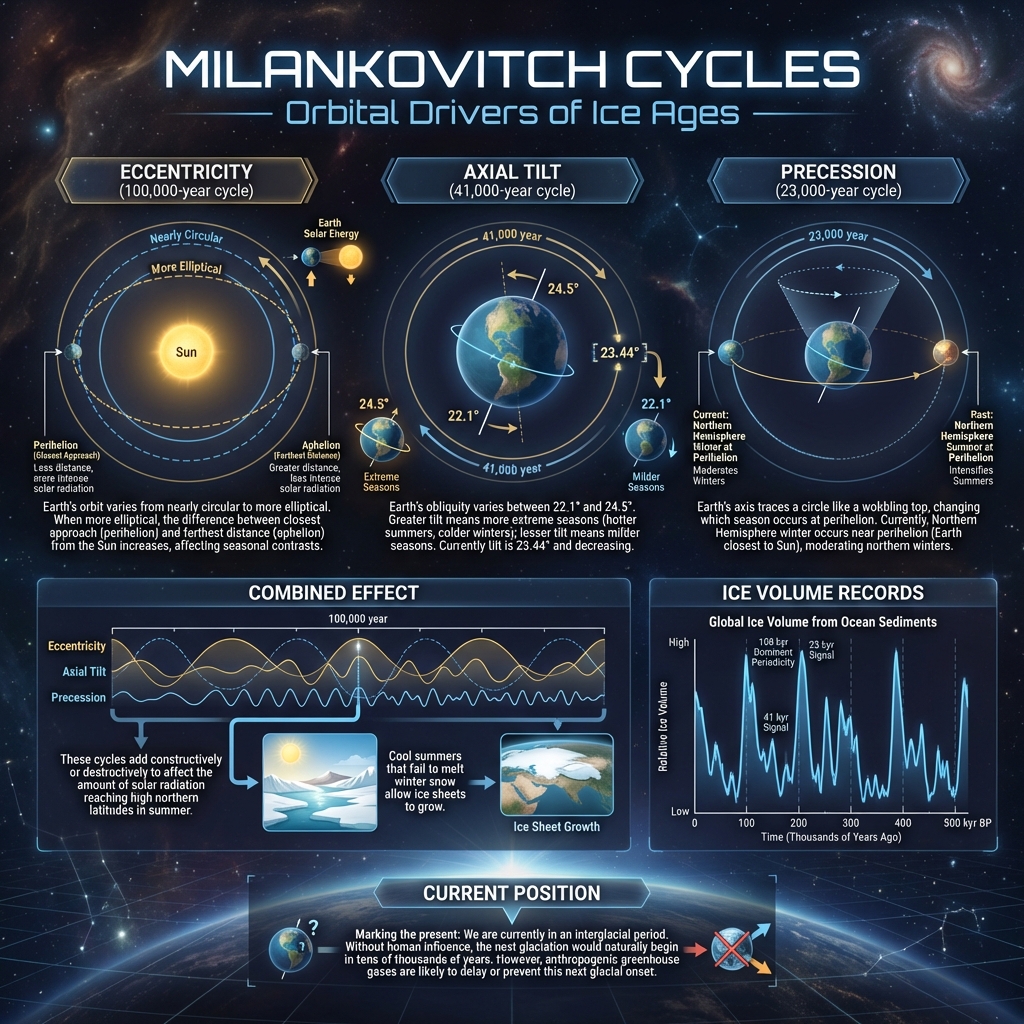
| Explain the three components of Milankovitch Cycles and their cycle periods. | Milankovitch Cycles: Long-term astronomical variations in Earth's orbit and tilt that act as primary drivers of geological-scale climate change (ice ages):
|
High-Yield UPSC Recall Pointers
- Midnight Sun: A natural phenomenon occurring in summer at latitudes north of the Arctic Circle or south of the Antarctic Circle where the Sun remains visible at local midnight.
- Geomagnetic Reversals: Shifts in Earth's magnetic field where magnetic North and South flip, recorded in seafloor rocks.
- Bering Strait & IDL: The International Date Line deviates at the Bering Strait to prevent partition of local communities into different days.
- Great Circle Route: The shortest distance between two points on a sphere, utilized by international flights to conserve fuel.
🕐 Sidereal vs Solar Day & Leap Year Rule
- Sidereal Day (23h 56m 4s): Time for Earth to complete one rotation relative to distant "fixed" stars — the true rotational period.
- Solar Day (24h): Time for the Sun to return to the same position in the sky; slightly longer than the sidereal day because Earth must rotate a bit extra to compensate for its simultaneous orbital movement around the Sun.
- Gregorian Leap Year Rule: A year is a leap year if divisible by 4, except century years, which must be divisible by 400 (e.g., 2000 was a leap year, but 1900 and 2100 are not) — a correction added since the actual solar year is ~365.2422 days, not exactly 365.25.
Visual & Illustrative Assets
🖼️ Supplemental Asset Directory
- Earth's Magnetosphere Shield:
- Dynamo Effect Core:
- Latitudes & Longitudes Grid:
- Earth's Rotation and Coordinates:
- Local Time Calculation:
- Mechanism of Seasons:
- Milankovitch Cycles Orbit:
- Axial Precession Wobble:
- Latitude Measurement:
- Longitude Measurement:
Mains Practice Questions
- "Explain how the Axial Tilt of the Earth combined with its orbital revolution is responsible for the variation in seasons and day lengths."
- "Discuss the geographic and cartographic logic behind the alignment and deviations of the International Date Line."
- "How does the Dynamo Effect in the Earth's core sustain the geomagnetic field, and what is its biological significance?"