Biogeography, Environment & Global Ecology
Biomes & Soil Geography
Global Vegetation & Biome Systems
Global Vegetation & Biome Systems
| Cue Words | Notes |
|---|---|
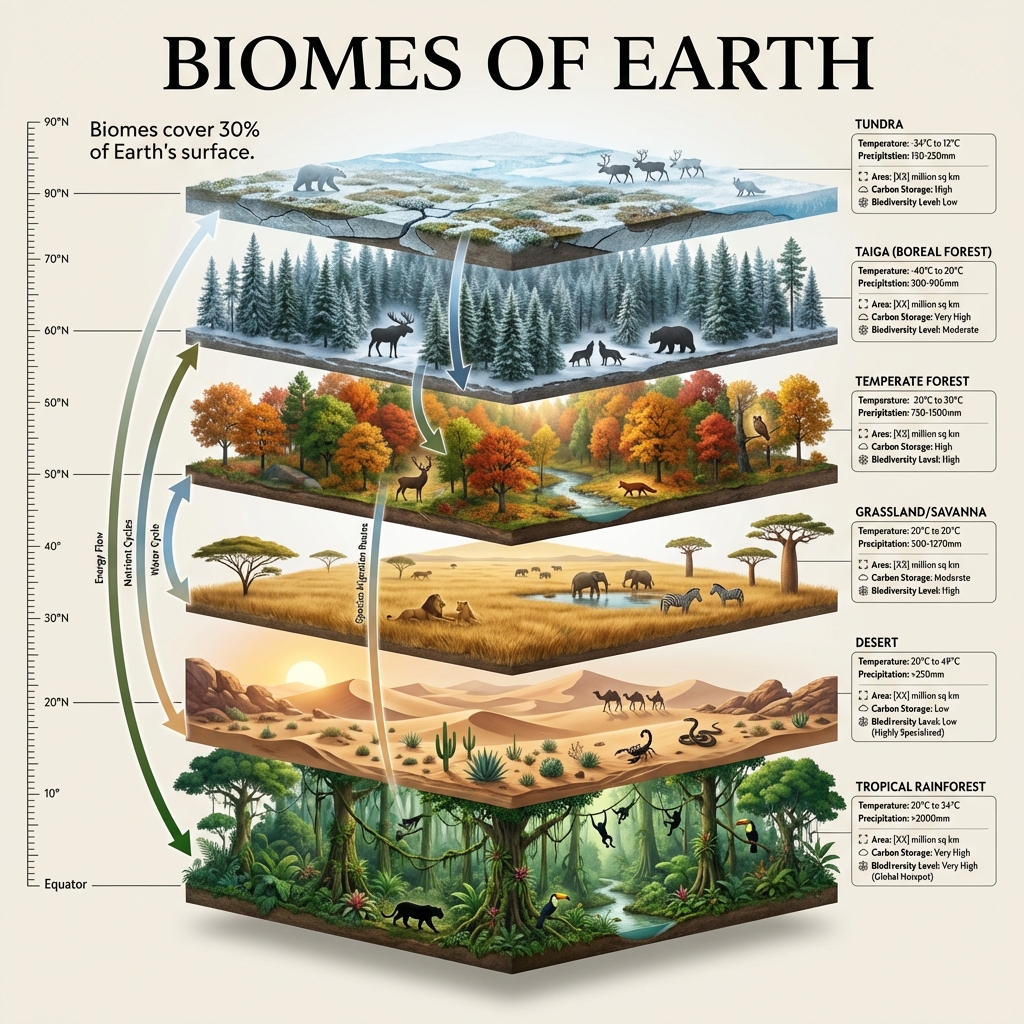
| Summarize the key characteristics and locations of major forest biomes. | Forest Biomes:
|
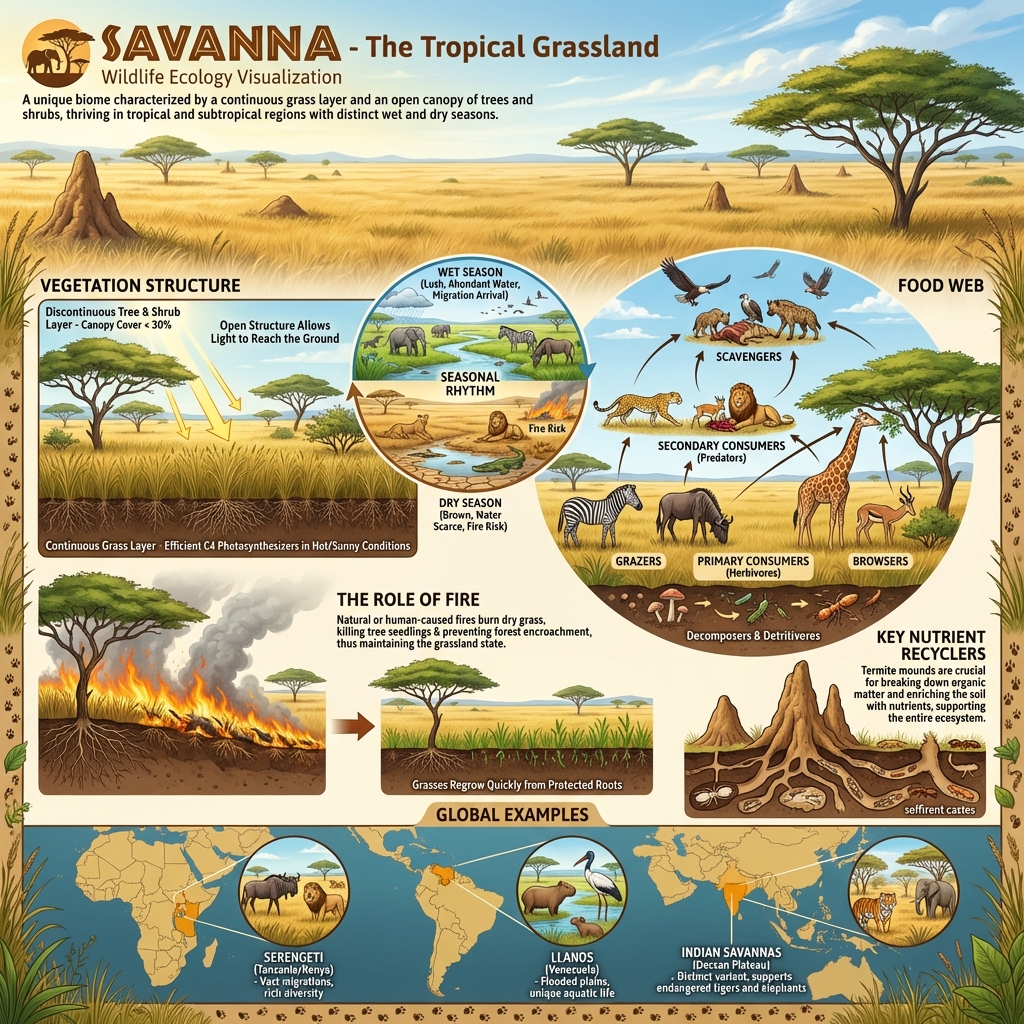
| Map global tropical and temperate grasslands across continents. | World Grassland Pastures:
|
Soil Geography & Laterization Processes
Soil Geography & Laterization Processes
| Cue Words | Notes |
|---|---|
| Define the CLORPT model of soil formation and detail soil horizons. | Soil Science Fundamentals:
|
| Explain the geochemical process of Laterization. | Laterization Process: Occurs in hot, humid tropical climates experiencing heavy seasonal rainfall. Intense leaching dissolves and removes silica and alkaline nutrients from the topsoil, leaving behind an accumulation of insoluble iron oxides and aluminum hydroxides (forming red, hard Laterite soil that is highly acidic and poor in plant nutrients). |
Ecological Principles & Global Environmental Policy
Core Ecological Concepts & Succession
Core Ecological Concepts & Succession
| Cue Words | Notes |
|---|---|
| Define Ecotone, Edge Effect, and Ecological Niche. | Ecological Concepts:
|
| Define ecological succession and differentiate between primary and secondary pathways. | Ecological Succession: The gradual, predictable process of change in the species structure and composition of an ecological community over time.
|
Environmental Degradation & Climate Frameworks
Environmental Degradation & Climate Frameworks
| Cue Words | Notes |
|---|---|
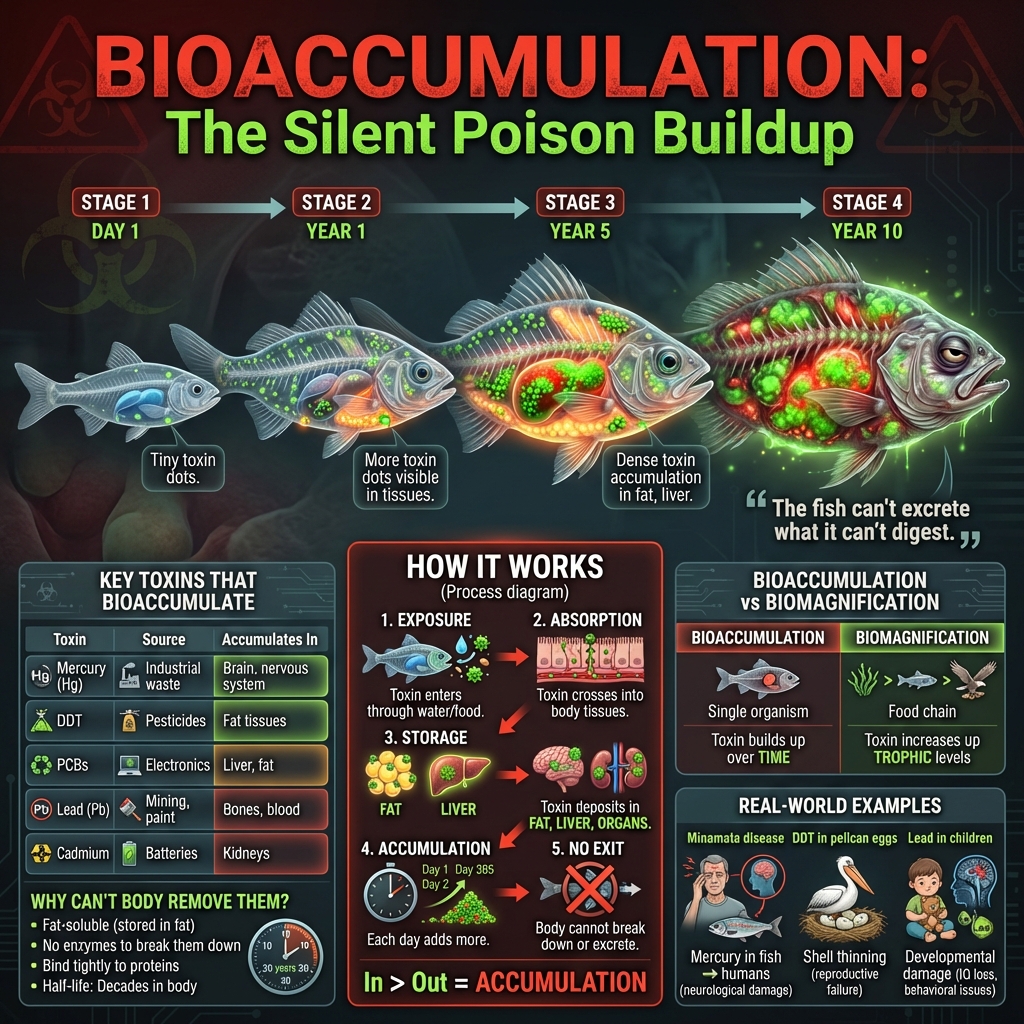
| Detail the drivers of global warming, ocean acidification, and bioaccumulation. | Environmental Degradation:
|
| Outline the core goals and mechanisms of the Paris Agreement. | Global Climate Frameworks:
|
High-Yield UPSC Revision Pointers
- Geoengineering: Large-scale deliberate modifications of Earth's climate system to combat warming (e.g., Stratospheric Aerosol Injection - SAI). Bounded by the risk of Termination Shock (rapid warming if the injection suddenly halts).
- Laterite Nutrients: Despite supporting tropical rainforests, laterite soils are geochemically sterile of base nutrients due to leaching. The vegetation relies on rapid decomposition and closed nutrient cycling.
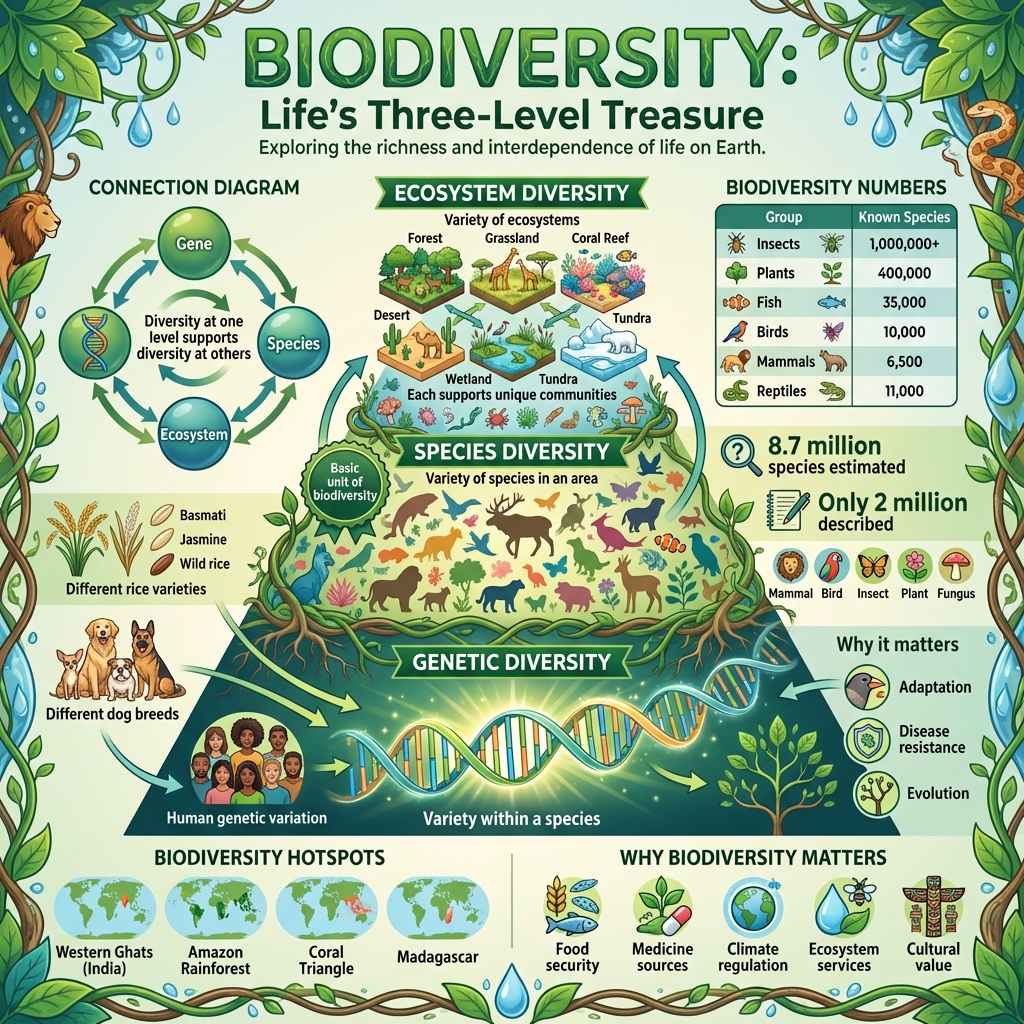
- Biodiversity Hotspots: Concept pioneered by Norman Myers. Bounded by two criteria: must contain at least 1,500 species of endemic vascular plants, and must have lost at least 70% of its primary vegetation. India contains 4 hotspots: Western Ghats, Eastern Himalayas, Indo-Burma region, and Sundaland (Nicobar).
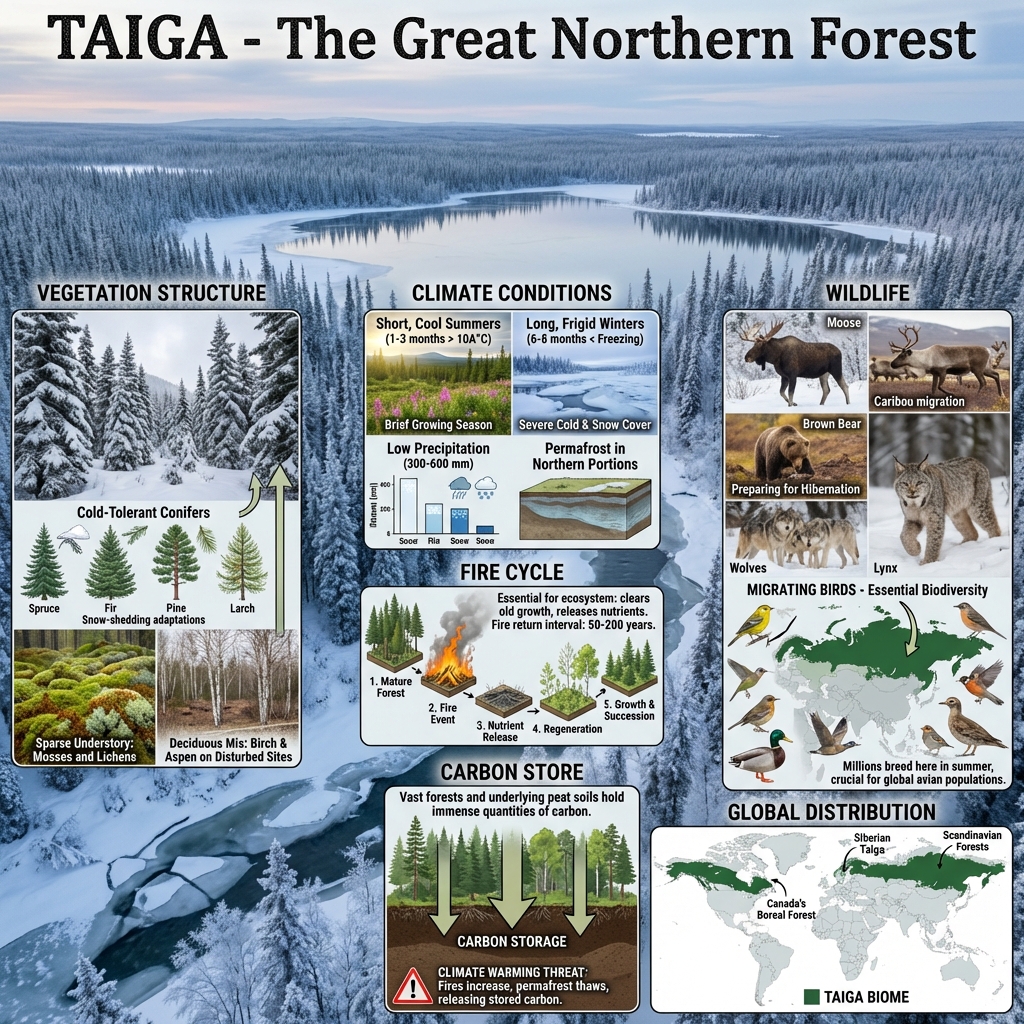
- Taiga Forestry: Pure stands of single coniferous species (softwood) make the Taiga biome the most heavily exploited forest system in the world for timber, pulp, and paper mills.
🗺️ Biogeographic Realms (Wallace's Zones)
- Alfred Russel Wallace (1876): Divided the world's terrestrial fauna into distinct biogeographic realms based on evolutionary history and species distribution, forming the basis of modern zoogeography.
- Major Realms: Palearctic (Europe, North Africa, most of Asia), Nearctic (North America), Neotropical (South & Central America), Afrotropical/Ethiopian (Sub-Saharan Africa), Indomalayan/Oriental (South & Southeast Asia, including India), Australasian (Australia, New Guinea), and Antarctic.
- Wallace Line: A faunal boundary running through the Malay Archipelago (between Bali and Lombok, and Borneo and Sulawesi) separating distinctly Asian (Indomalayan) fauna from Australian fauna, despite the narrow strait.
Visual & Illustrative Assets
🖼️ Supplemental Asset Directory
- World Biomes Overview:
- Taiga Boreal Forest Biome:
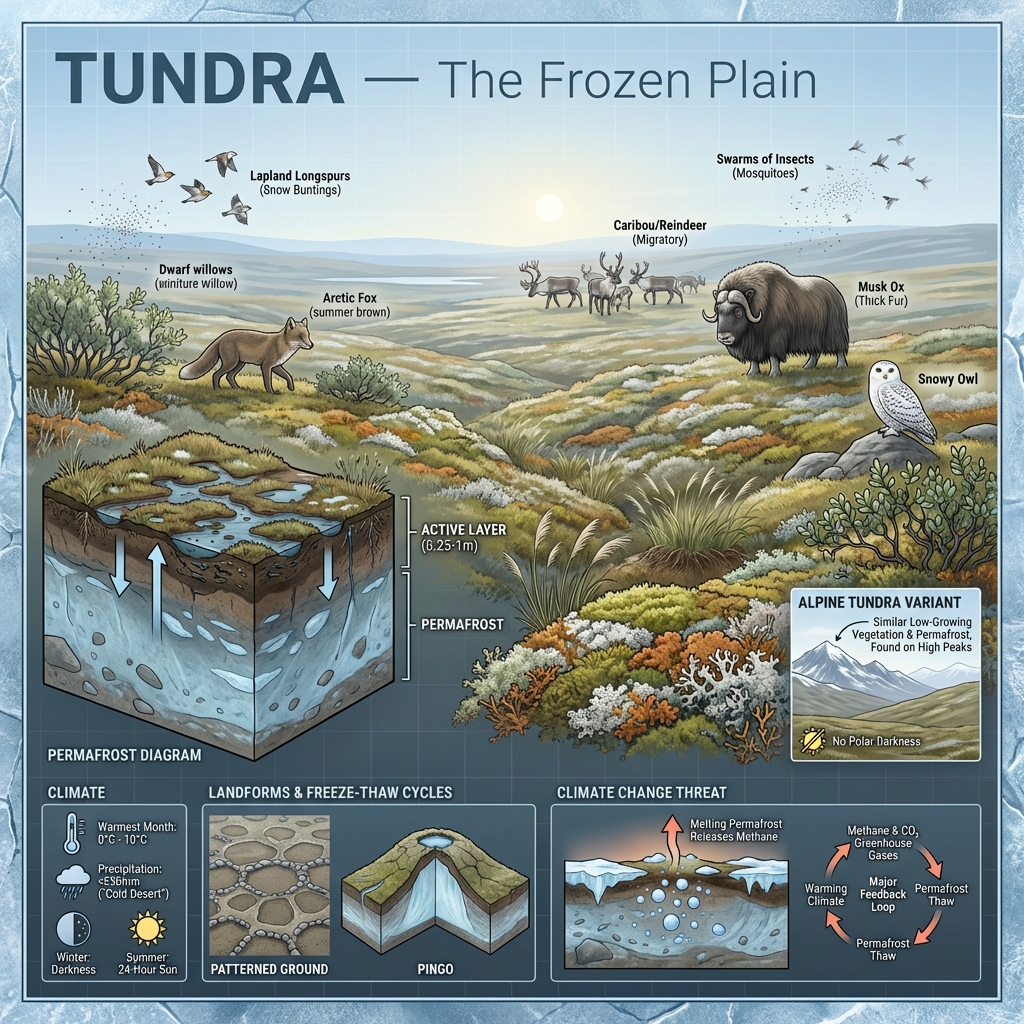
- Tundra Biome Features:
- Savanna Ecosystem Food Web:
- Soil Horizons and Profile:
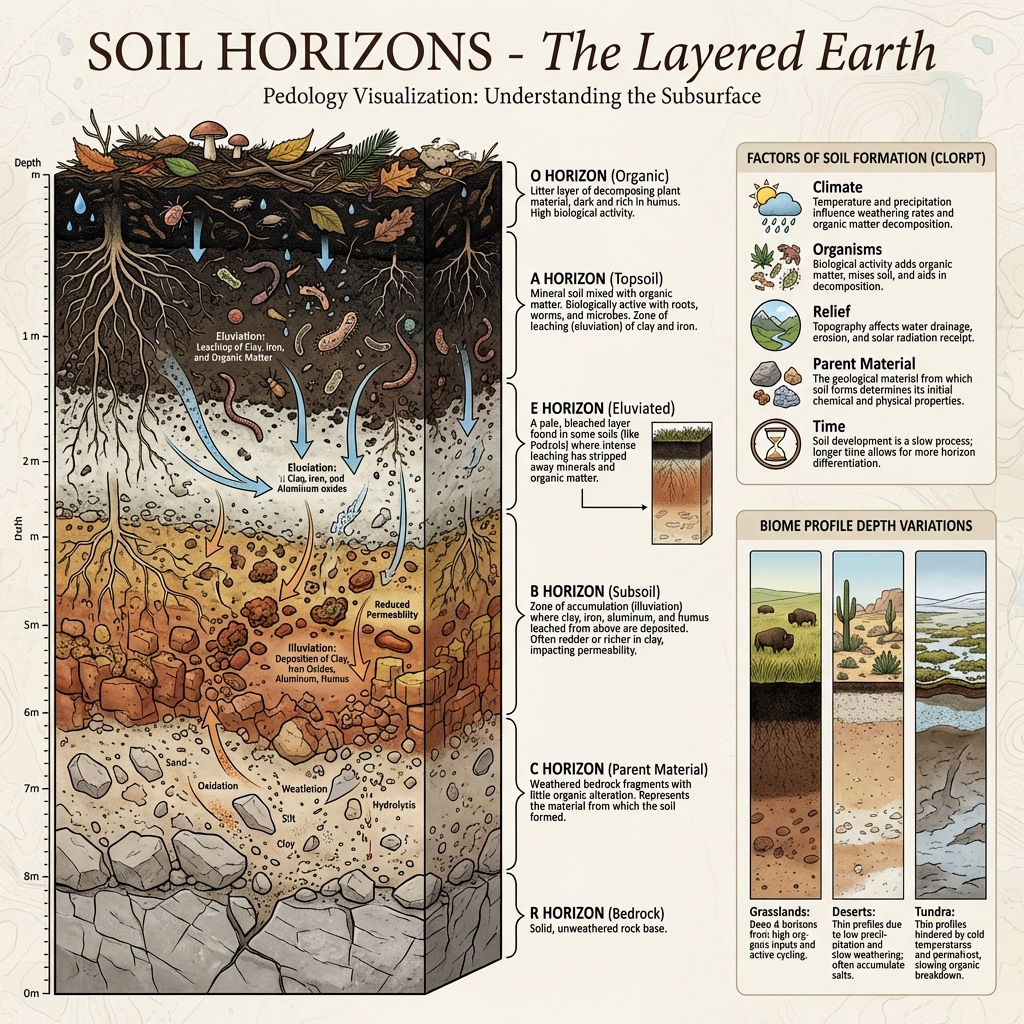
- Chernozem (Black) Soil Profile:
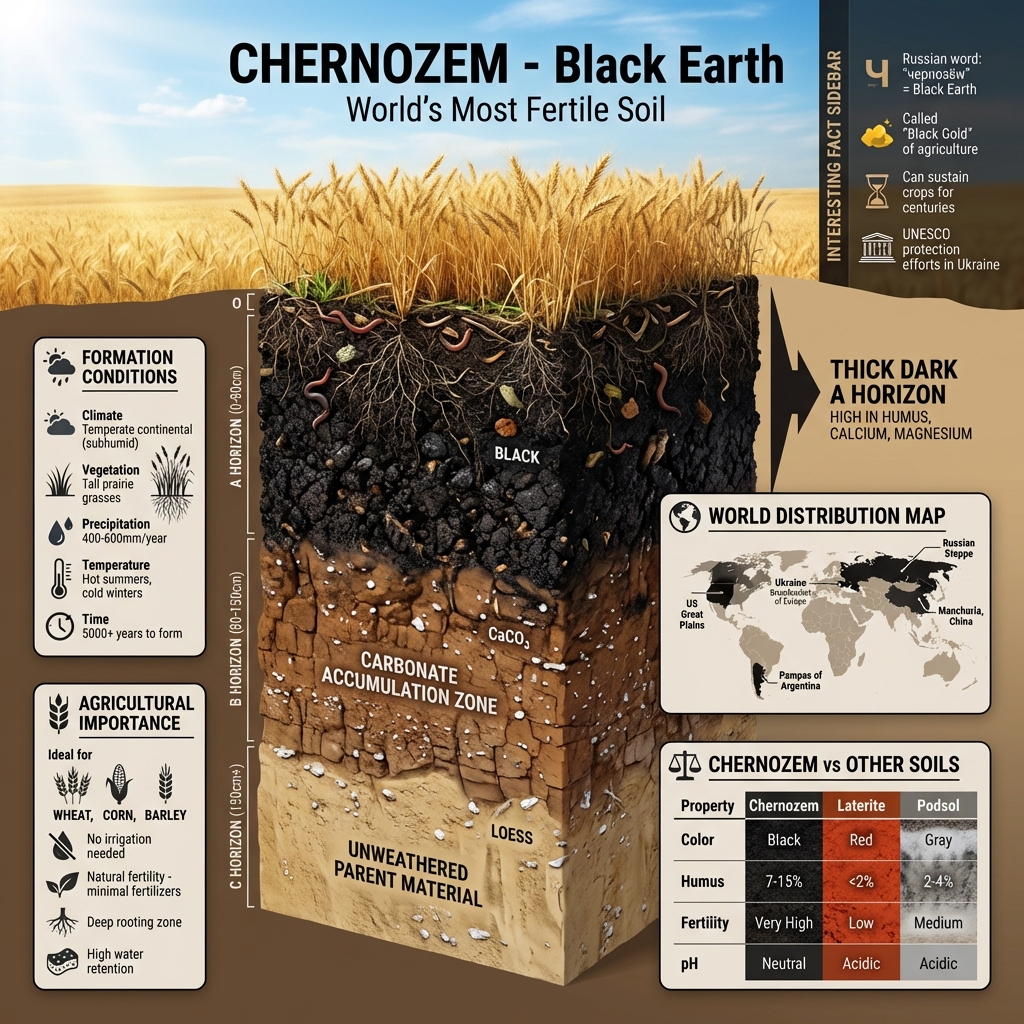
- Zonal Soils Distribution:
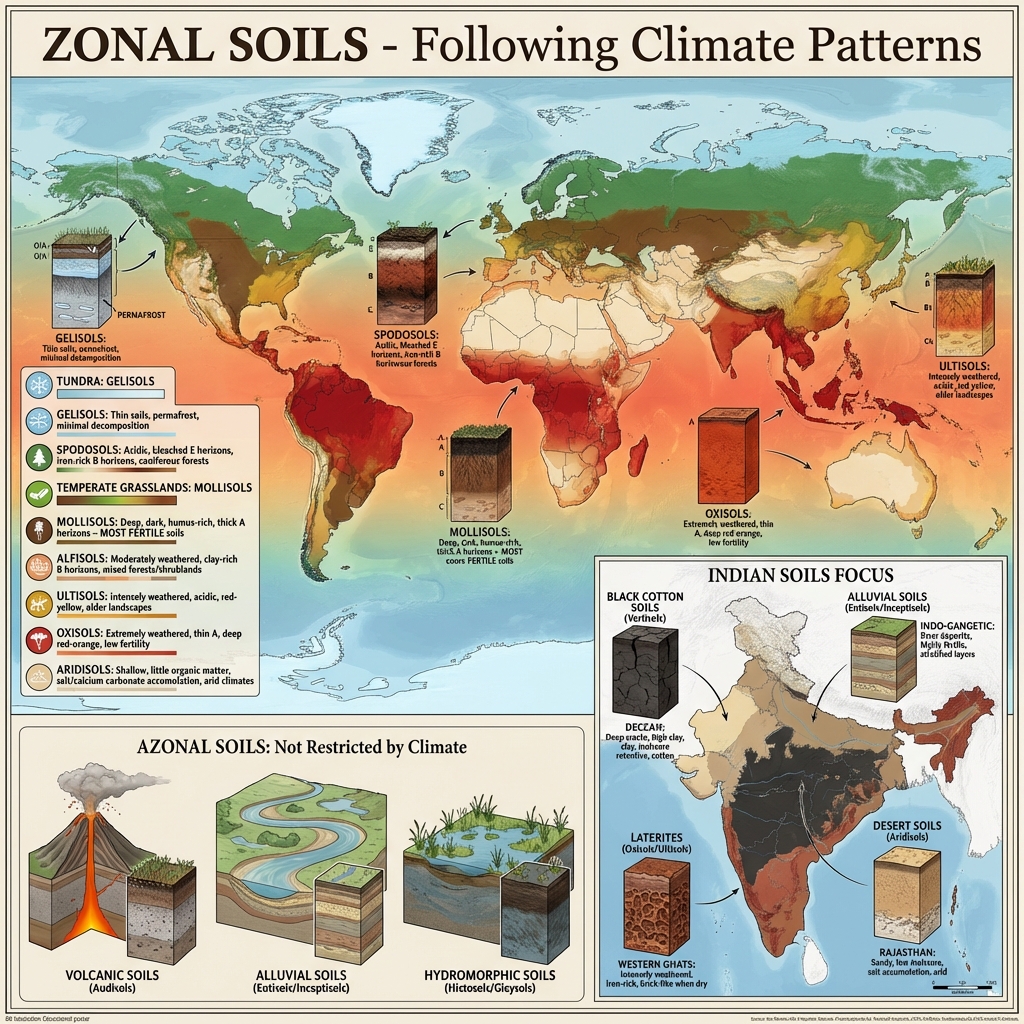
- Soil Erosion and Land Degradation:
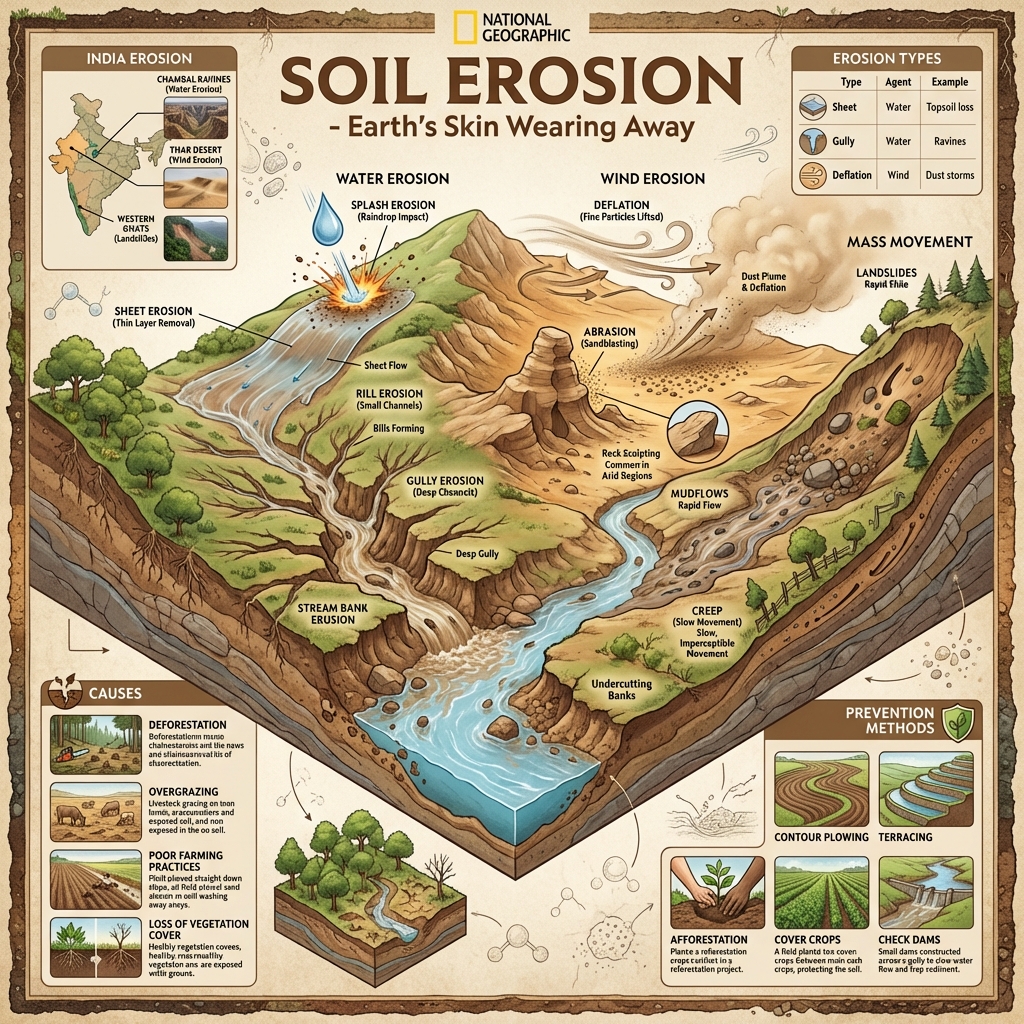
- Global Soil Distribution Map:
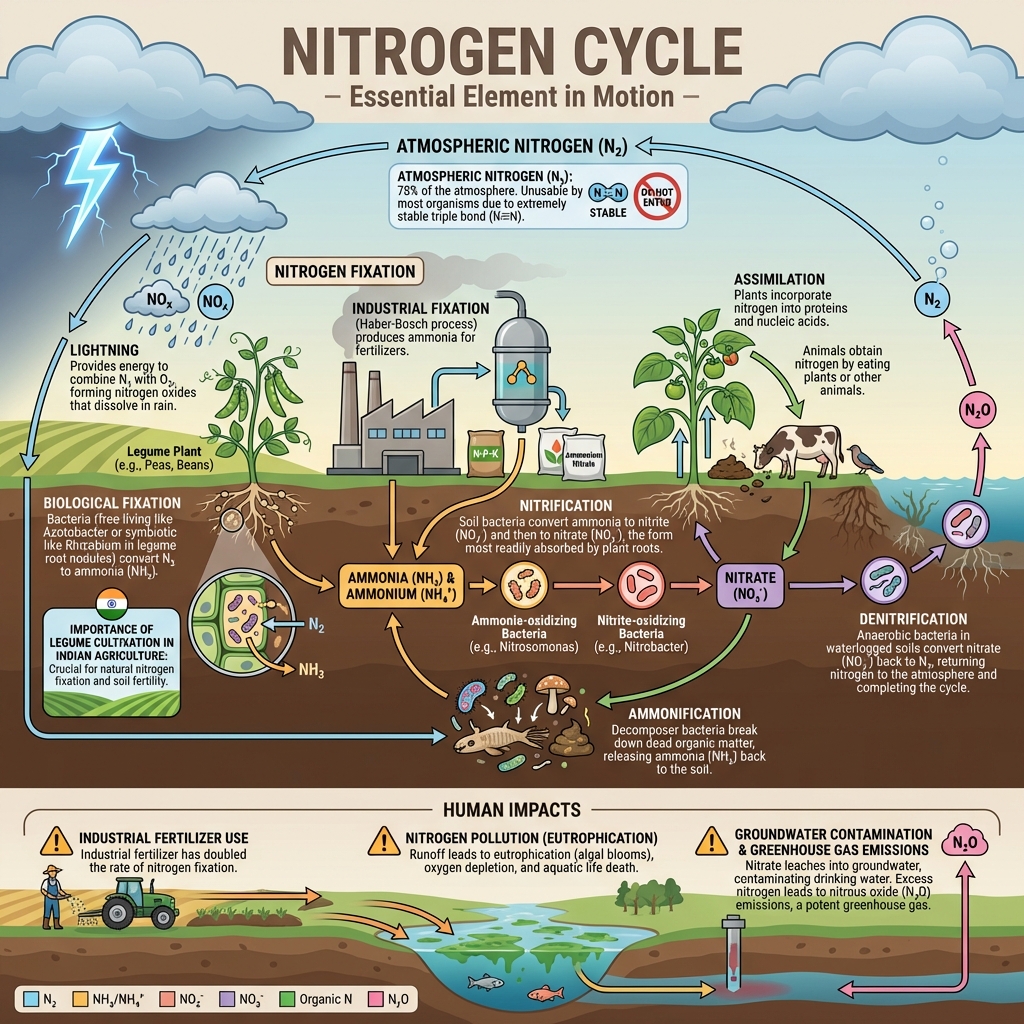
- The Nitrogen Cycle and Biogeochemistry:
- Biodiversity Levels:
- Ecological Niche vs Habitat:
- Ecological Succession Pathways:
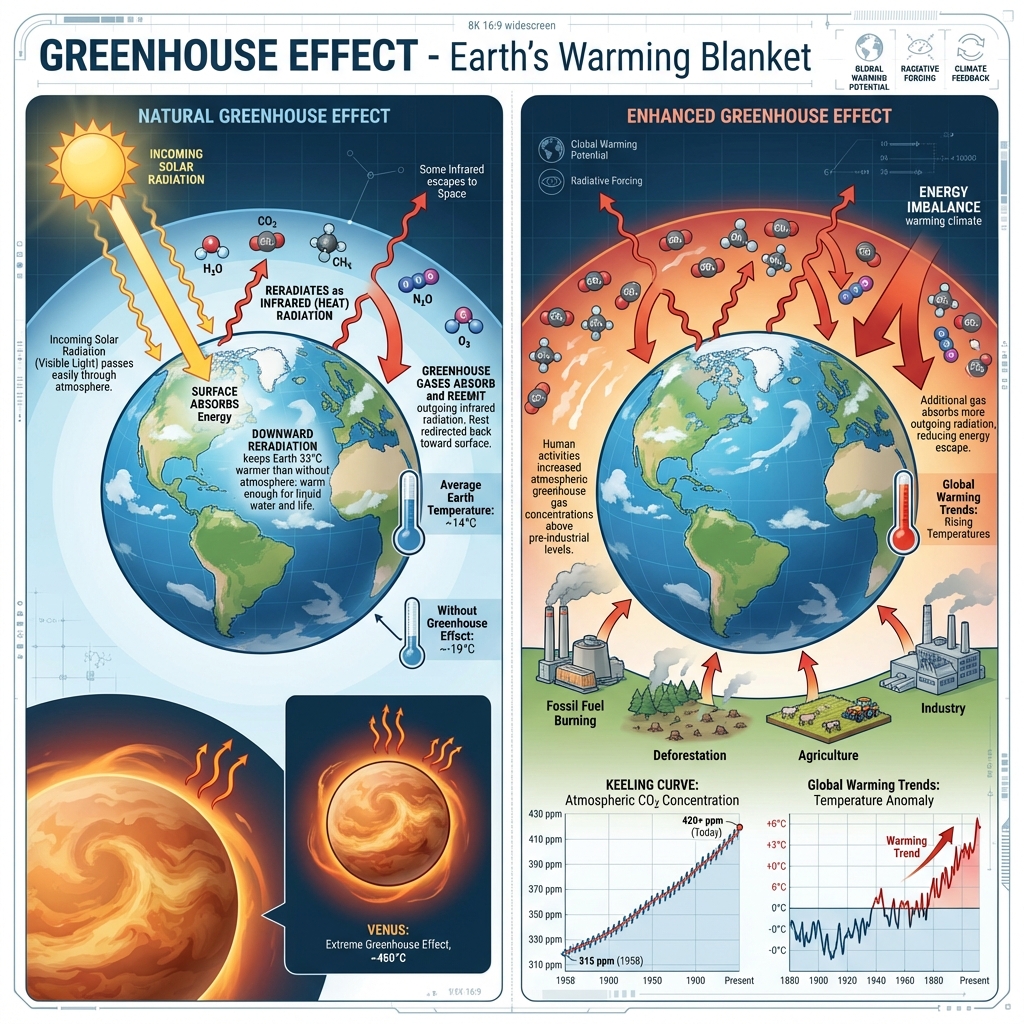
- Greenhouse Effect Explained:
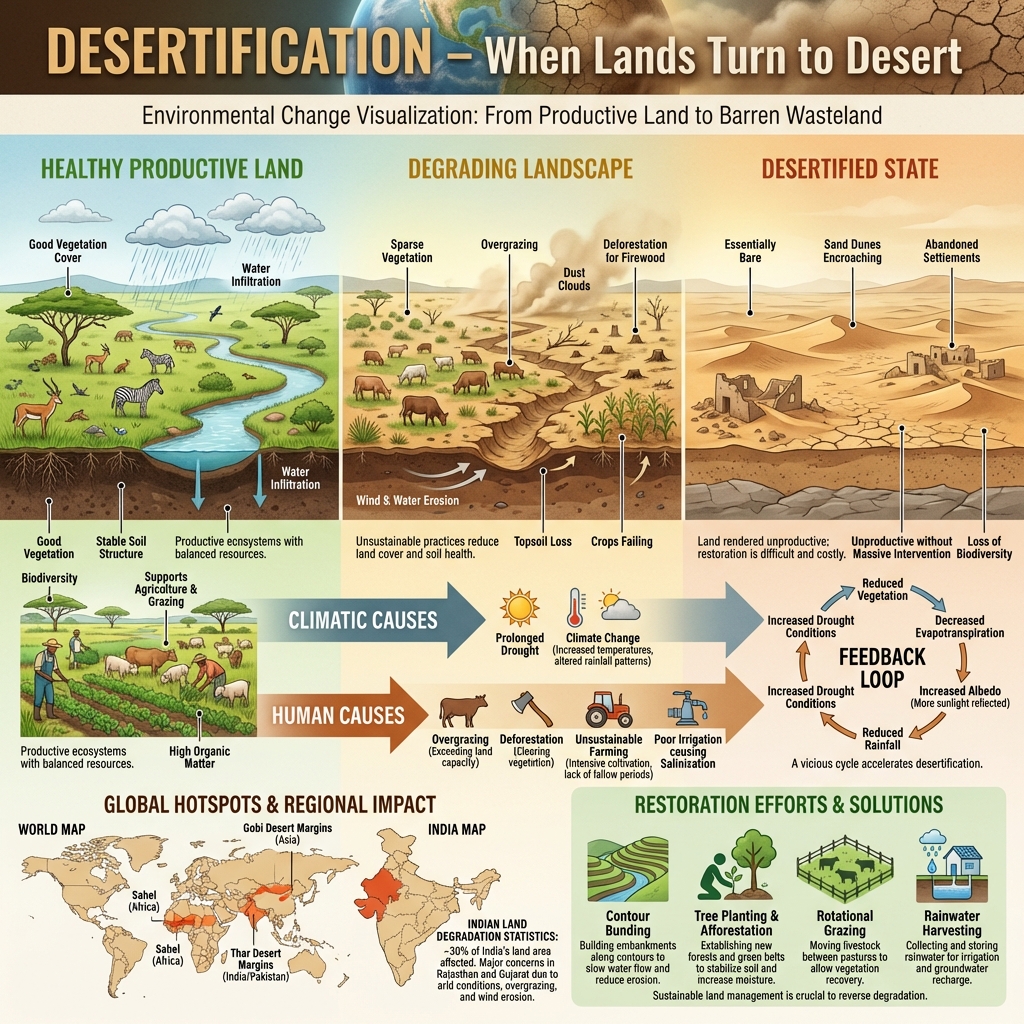
- Desertification Process and Cycle:
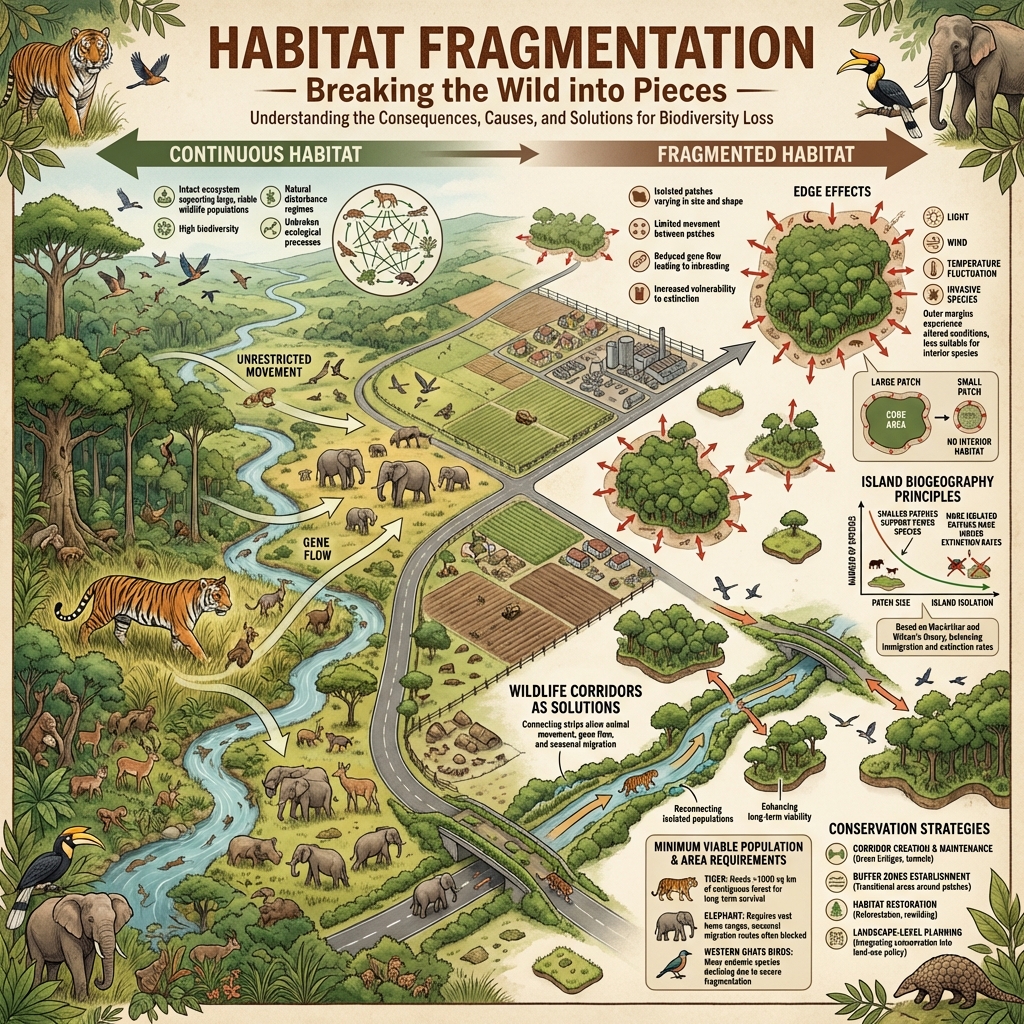
- Habitat Fragmentation and Connectivity:
- Bioaccumulation and Biomagnification:
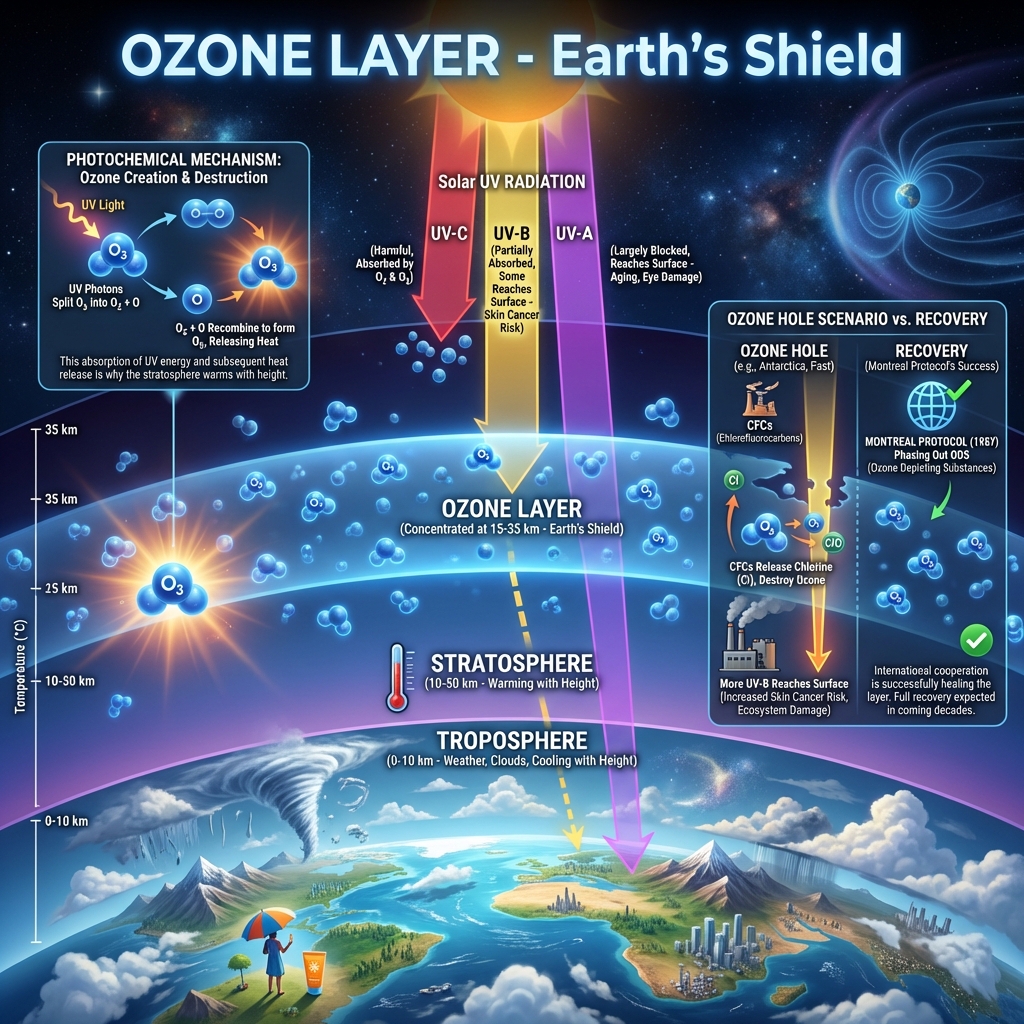
- Ozone Layer and UV Protection:
Mains Practice Questions
- "Analyze the factors influencing the distribution of Temperate Grasslands and their economic significance."
- "Discuss the Soil Profile and the processes of Laterization and Calcification."
- "Examine the role of international treaties like the Paris Agreement in addressing global climate change."